
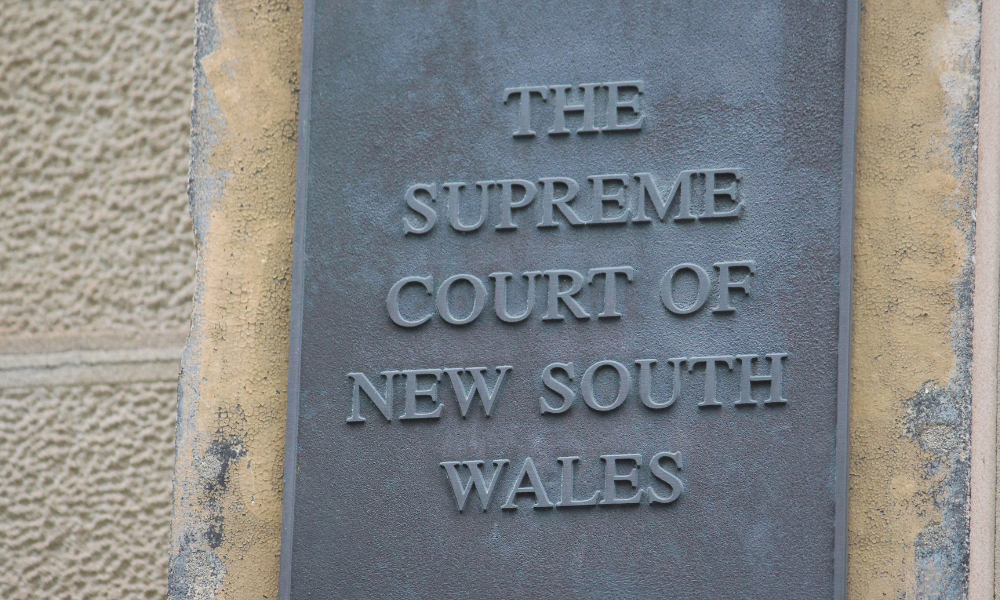
NSW Supreme Court: Rejects $11.9M Claim Against Rebel Wilson
The NSW Supreme Court, on October 23, 2026, rejected an $11.9 million claim by AI Film Production Limited against actor Rebel Wilson, finding that her personal Instagram posts fell outside the scope of consumer law and that alleged losses lacked sufficient proof. In the case of AI Film Production Limited v Wilson [2026] NSWSC 1200, the court dismissed almost all claims brought by the companies behind the film "The Deb" against Wilson, who served as co-producer, director, and actress, and her company, Camp Sugar. The core of the dispute revolved around allegations that Wilson's Instagram posts, which criticised co-producers, and anonymous websites she was purportedly behind, rendered the film unprofitable. The court distinguished between posts made on the film's promotional Instagram account, which qualified as being "in trade or commerce" under the Australian Consumer Law, and those on Wilson's personal account, which did not. While the court found that Wilson had created the websites and that many claims against a co-producer were false and malicious, and even identified malice in an Instagram story suggesting theft, the claim for injurious falsehood ultimately failed due to the absence of proof of actual damage to the businesses, as the websites did not mention the companies directly.
This ruling carries significant legal implications for practitioners, particularly concerning the application of consumer protection laws to social media activity and the stringent requirements for proving damages in commercial disputes involving reputational harm. The distinction drawn by the court between personal and promotional social media accounts under the "in trade or commerce" limb of the Australian Consumer Law (ACL) is crucial, highlighting that not all online conduct by individuals involved in commercial ventures will automatically attract ACL scrutiny. Furthermore, the case underscores the high evidentiary bar for establishing causation and quantifiable loss, especially in claims of injurious falsehood, where proving direct damage to a business, rather than just harm to individuals, is paramount. It also provides a cautionary tale regarding the complexities of disputes between co-producers in joint ventures, where personal grievances can intertwine with commercial interests.
The legal context for this decision primarily involves the Australian Consumer Law (ACL), specifically provisions relating to misleading or deceptive conduct, typically found in section 18. For a claim under the ACL to succeed, the conduct must occur "in trade or commerce," a threshold the court meticulously examined in relation to Wilson's various social media activities. Additionally, the case engaged with the common law tort of injurious falsehood, which requires proof of a false and malicious statement, publication, and, critically, actual damage to the plaintiff's business or property. The NSW Supreme Court, as a superior court of record in New South Wales, plays a vital role in interpreting and applying both statutory law and common law principles, and its decisions, while not binding on higher courts, provide persuasive authority and guidance for lower courts and legal practitioners within the jurisdiction.
The key parties involved in this matter were AI Film Production Limited, a UK-incorporated entity that financed and co-owned the film "The Deb," and Rebel Wilson, the prominent actress, co-producer, and director, along with her company, Camp Sugar. The dispute arose within the context of their joint venture to produce the film. The court's findings regarding the creation of malicious websites and Instagram posts by Wilson, despite the ultimate failure of the claims, highlight the intense personal and professional dynamics that can emerge in such collaborations. The practitioner takeaway from this case is multifaceted: attorneys should advise clients, particularly public figures and those in joint ventures, on the critical distinction between personal and commercial social media use and its legal ramifications. Furthermore, robust joint venture agreements should clearly delineate responsibilities, communication protocols, and dispute resolution mechanisms. Finally, businesses contemplating litigation based on reputational damage must be prepared to present compelling evidence of direct, quantifiable financial loss, as the court demonstrated a strict approach to proving damages, even in the presence of malicious conduct.
How does this affect you?
Get an AI analysis of this article grounded in your jurisdictions, practice areas, and any policy documents you've uploaded to Wansom.
Finish Reading the Full Story and the Expert Analysis.
Wansom is AI and can make mistakes.