
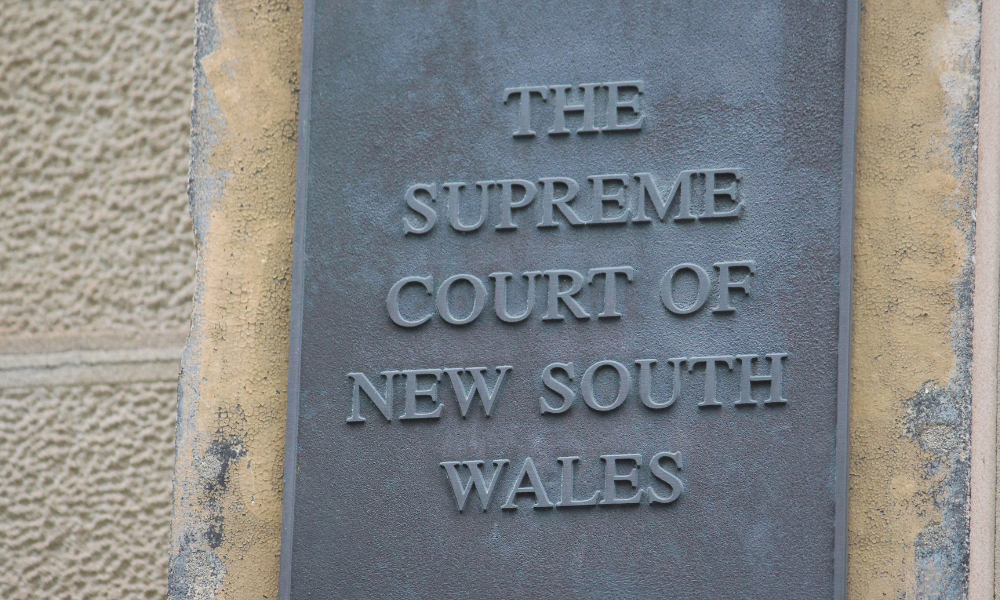
NSW Supreme Court: Rebel Wilson Social Media Not Linked to Film Losses
Summary
- The NSW Supreme Court rejected an $11.9 million claim against Rebel Wilson, finding no proof her social media posts caused financial loss.
- The court ruled that posts on Wilson's personal Instagram account did not fall under the Australian Consumer Law's 'in trade or commerce' provision.
- Claims for injurious falsehood failed due to a lack of proven actual damage to the companies, despite findings of malice in some of Wilson's actions.
- The court dismissed a 'global loss' claim for contract breaches, emphasizing the need for specific evidence of damages rather than aggregated figures.
- Wilson and her company were found to have committed technical breaches, resulting in a nominal $10 award, while the plaintiffs were ordered to pay the defendants' costs and a cross-claim.
Court Rejects Multi-Million Dollar Claim Against Rebel Wilson
This ruling clarifies the scope of the Australian Consumer Law regarding social media posts, distinguishing between personal accounts and those made 'in trade or commerce'.
The New South Wales Supreme Court has dismissed a substantial claim exceeding $11.9 million brought against actress Rebel Wilson, concluding that there was no demonstrable evidence linking her social media activities to any financial losses for the film production companies involved. The ruling, delivered on October 23, 2026, in the case of AI Film Production Limited v Wilson [2026] NSWSC 1200, largely favored Wilson and her company, Camp Sugar, against the entities behind the film "The Deb".
Wilson, who served as co-producer, director, and actress for "The Deb," was accused by UK-incorporated AI Film, the primary financier and co-owner of the film alongside Camp Sugar through a joint venture, of causing the project's unprofitability. The allegations centered on critical Instagram posts made by Wilson concerning the co-producers, as well as anonymous websites that the companies contended she orchestrated. Wilson also held a position on the joint venture's board.
Clarifying Social Media's Legal Boundaries
A central aspect of the dispute involved claims of misleading or deceptive conduct under the Australian Consumer Law (ACL). The court meticulously differentiated between posts made on the film's official promotional Instagram account, which it deemed to fall within the scope of "in trade or commerce," and those published on Wilson's personal Instagram account, which did not. The court highlighted that previous cases cited by the plaintiffs typically involved competing businesses, a scenario distinct from co-producers collaborating on the same project. While most of the qualifying statements from the promotional account were not found to be misleading or deceptive, the court did determine that Wilson was responsible for creating the anonymous websites and that nearly all their assertions about one co-producer were both false and malicious. Furthermore, an Instagram story suggesting the co-producers had misappropriated funds from the film, which the court found to be untrue, was also deemed malicious.
Despite these findings of malice, the claim for injurious falsehood ultimately failed. The court emphasized the necessity of proving actual damage, noting that the anonymous websites did not specifically name the plaintiff companies. Consequently, any harm to individuals did not translate into proven damage to the businesses themselves, thereby undermining the claim.
The Burden of Proving Damages
The court critically assessed the plaintiffs' financial claims, particularly AI Film's demand for $11,861,507.04, representing its stated expenditure. The companies failed to present expert evidence they had previously indicated they would, instead relying on a 2022 revenue forecast based on a $15 million budget, despite the film's final budget escalating to $21.8 million. The court deemed this forecast unreliable and rejected AI Film's attempt to consolidate various alleged contract breaches into a single "global loss," describing this approach as "fundamentally misconceived." This ruling underscores the stringent requirement for concrete proof of actual damages in such claims.
Claims related to directors' duties were also dismissed, as no evidence suggested Wilson leveraged her board position to pressure the companies into selling the film at a reduced price. While Wilson and Camp Sugar were found to have committed technical breaches of confidentiality, publicity, and professionalism clauses, the joint venture's production subsidiary sought only nominal damages, acknowledging its inability to prove specific losses. The court awarded a mere $10 for these technical breaches, remarking that the claim "ought not to have been brought." In a cross-claim, the subsidiary was ordered to pay Camp Sugar the outstanding $359,000 balance of its producer fee, plus interest, with the court stating that the risk of recouping outlay rested with AI Film. The plaintiff companies were also mandated to cover the defendants' legal costs.
Practical Implications
This ruling clarifies the scope of the Australian Consumer Law regarding social media posts, distinguishing between personal accounts and those made 'in trade or commerce'. Lawyers should advise clients that personal social media activity may not fall under consumer protection provisions, but also note the court's emphasis on the need for concrete proof of actual damages in claims like injurious falsehood and contract breach, particularly rejecting 'global loss' claims without specific evidence.
Source
How does this affect you?
Get an AI analysis of this article grounded in your jurisdictions, practice areas, and any policy documents you've uploaded to Wansom.
Finish Reading the Full Story and the Expert Analysis.
Wansom is AI and can make mistakes.