
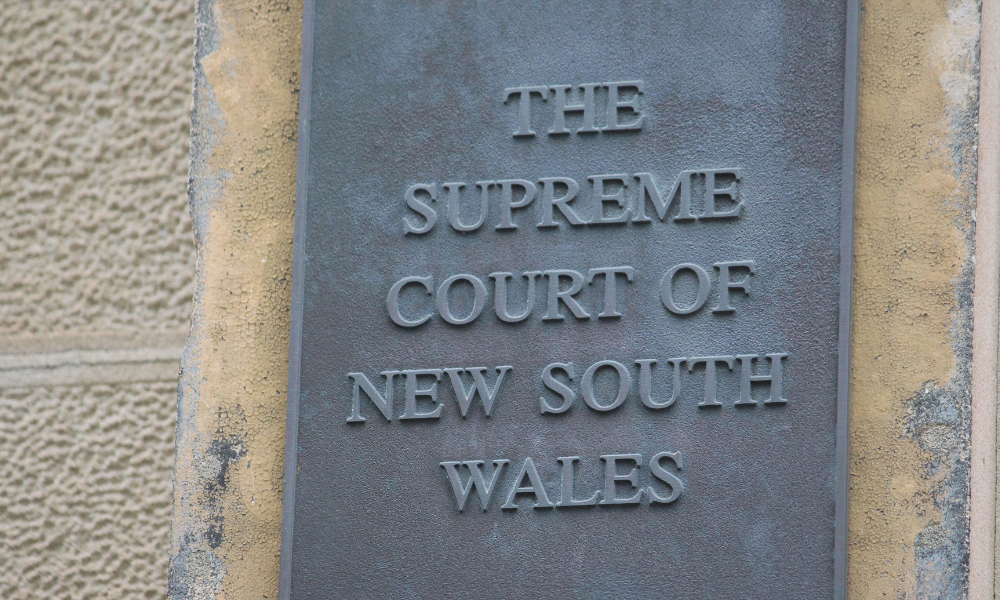
NSW Supreme Court: Eaton Unauthorized Legal Practice Injunction Issued
Summary
- The NSW Supreme Court issued a permanent injunction against a former practitioner, Mr. Eaton, for unauthorized legal practice.
- Mr. Eaton's practising certificate expired in June 2025, and his re-application was refused in April 2026 because he was deemed not a "fit and proper person."
- Evidence showed he continued to practise law and represent himself as authorized, including appearing in court and tribunal proceedings, without a certificate or professional indemnity insurance.
- The court granted the Law Society of NSW's application under s. 447(3) of the Legal Profession Uniform Law 2014 (NSW) and ordered Mr. Eaton to pay costs.
- This case highlights the strict enforcement by the Law Society against individuals operating outside the regulatory framework, emphasizing the importance of proper authorization and insurance.
What Happened
For lawyers and compliance officers, this case emphasizes the absolute necessity of strict adherence to practising certificate requirements and professional indemnity insurance obligations.
The NSW Supreme Court has issued a permanent injunction against a former legal practitioner, prohibiting him from engaging in legal practice or holding himself out as authorized to do so. This significant ruling, in the case of Council of the Law Society of NSW v Eaton (No 2) [2026] NSWSC 1199, follows findings that the individual, Mr. Eaton, continued to provide legal services without the necessary authorization. The court granted the application brought by the Law Society of NSW under section 447(3) of the Legal Profession Uniform Law 2014 (NSW).
Mr. Eaton's practising certificate had expired on June 30, 2025. Although he sought a new certificate in September 2025, the Law Society ultimately denied his application in April 2026. This refusal stemmed from a determination that he did not meet the "fit and proper person" standard required for legal practice. The Law Society's decision was based on evidence that Mr. Eaton had practised law without a valid certificate, undertaken legal work without the mandatory professional indemnity insurance, and failed to disclose pertinent information between 2022 and 2025.
An interim injunction had been put in place in May 2026 to prevent Mr. Eaton from practising while awaiting the final hearing. At the October 2026 hearing, Mr. Eaton did not appear, despite being aware of the scheduled date. The court proceeded with the matter under rule 29.7 of the Uniform Civil Procedure Rules 2005 (NSW), noting his unexplained absence. The Law Society presented compelling evidence, including Mr. Eaton's appearances as a legal representative in both tribunal and Supreme Court proceedings during September 2025. Further evidence showed him representing a friend at Mental Health Review Tribunal hearings, where he identified himself as a criminal lawyer with over two decades of experience. His LinkedIn profile in May 2026 also listed him as a full-time lawyer. While Mr. Eaton submitted written disputes to witness affidavits, the court found his arguments did not substantially refute the presented evidence. The NSW Supreme Court accepted the Law Society's evidence, concluding that Mr. Eaton had indeed continued practising and representing himself as authorized without the required certification or insurance. The permanent injunction explicitly forbids him from practising law, claiming entitlement to practice, or implying his legal business is authorized to offer legal services. Additionally, the court ordered him to cover the Law Society's costs, either as agreed or assessed.
Legal Context
The legal framework underpinning this decision is critical for maintaining the integrity of the legal profession in New South Wales. Section 447(3) of the Legal Profession Uniform Law 2014 (NSW) empowers the Law Society to seek court orders against individuals who engage in unauthorized legal practice. This provision is a cornerstone of regulatory oversight, ensuring that only qualified and properly authorized individuals provide legal services to the public. The Law Society of NSW, as the regulatory body, plays a crucial role in enforcing these standards, including the requirement for a current practising certificate and professional indemnity insurance.
A central element in the Law Society's refusal of Mr. Eaton's application for a new certificate was the determination that he was not a "fit and proper person" to practise law. This standard is fundamental to legal professional regulation, encompassing not only competence but also integrity, honesty, and adherence to ethical obligations. Mr. Eaton's actions, including practising without a certificate, operating without professional indemnity insurance, and failing to disclose relevant matters over a three-year period, directly contravened these essential requirements. These findings were instrumental in the Law Society's decision to deny his re-application and subsequently pursue the injunction.
The court's decision to issue a permanent injunction underscores the seriousness with which unauthorized legal practice is viewed. The Council of the Law Society of NSW v Eaton (No 2) case highlights the robust enforcement mechanisms available to the Law Society to protect the public from individuals who operate outside the established regulatory framework. The requirement for a practising certificate is not merely an administrative formality; it signifies that a practitioner has met specific educational, ethical, and insurance standards, which are vital for client protection.
Why It Matters
This ruling by the NSW Supreme Court regarding the Eaton unauthorized legal practice injunction serves as a stark reminder of the stringent requirements for legal practitioners and the severe consequences for non-compliance. For lawyers and compliance officers, this case emphasizes the absolute necessity of strict adherence to practising certificate requirements and professional indemnity insurance obligations. The Law Society of NSW, through its successful application, has demonstrated its unwavering commitment to actively enforcing against unauthorized legal practice, sending a clear message that such conduct will not be tolerated.
The implications of this judgment extend beyond the individual involved, reinforcing the public's right to receive legal advice from properly qualified and insured professionals. When individuals practise without a certificate, they bypass the regulatory safeguards designed to protect consumers, including the assurance of professional indemnity insurance, which is crucial for client recourse in cases of negligence or misconduct. The court's decision to impose a permanent injunction and order costs against Mr. Eaton illustrates the significant legal and financial repercussions for those who disregard these fundamental professional standards.
This case underscores the importance of maintaining public confidence in the legal system. The "fit and proper person" test is a cornerstone of this confidence, ensuring that those entrusted with legal matters uphold the highest standards of ethics and professionalism. The proactive stance taken by the Law Society of NSW, culminating in this permanent injunction, reinforces the integrity of the legal profession and safeguards the interests of the community against individuals who attempt to circumvent established regulatory processes.
Practical Implications
Lawyers and compliance officers must ensure strict adherence to practising certificate requirements and professional indemnity insurance obligations, as the NSW Supreme Court and Law Society are actively enforcing against unauthorized legal practice, with severe consequences like permanent injunctions and cost orders for non-compliance.
Source
How does this affect you?
Get an AI analysis of this article grounded in your jurisdictions, practice areas, and any policy documents you've uploaded to Wansom.
Finish Reading the Full Story and the Expert Analysis.
Get the latest legal & regulatory intelligence in Australia
Wansom is AI and can make mistakes.