
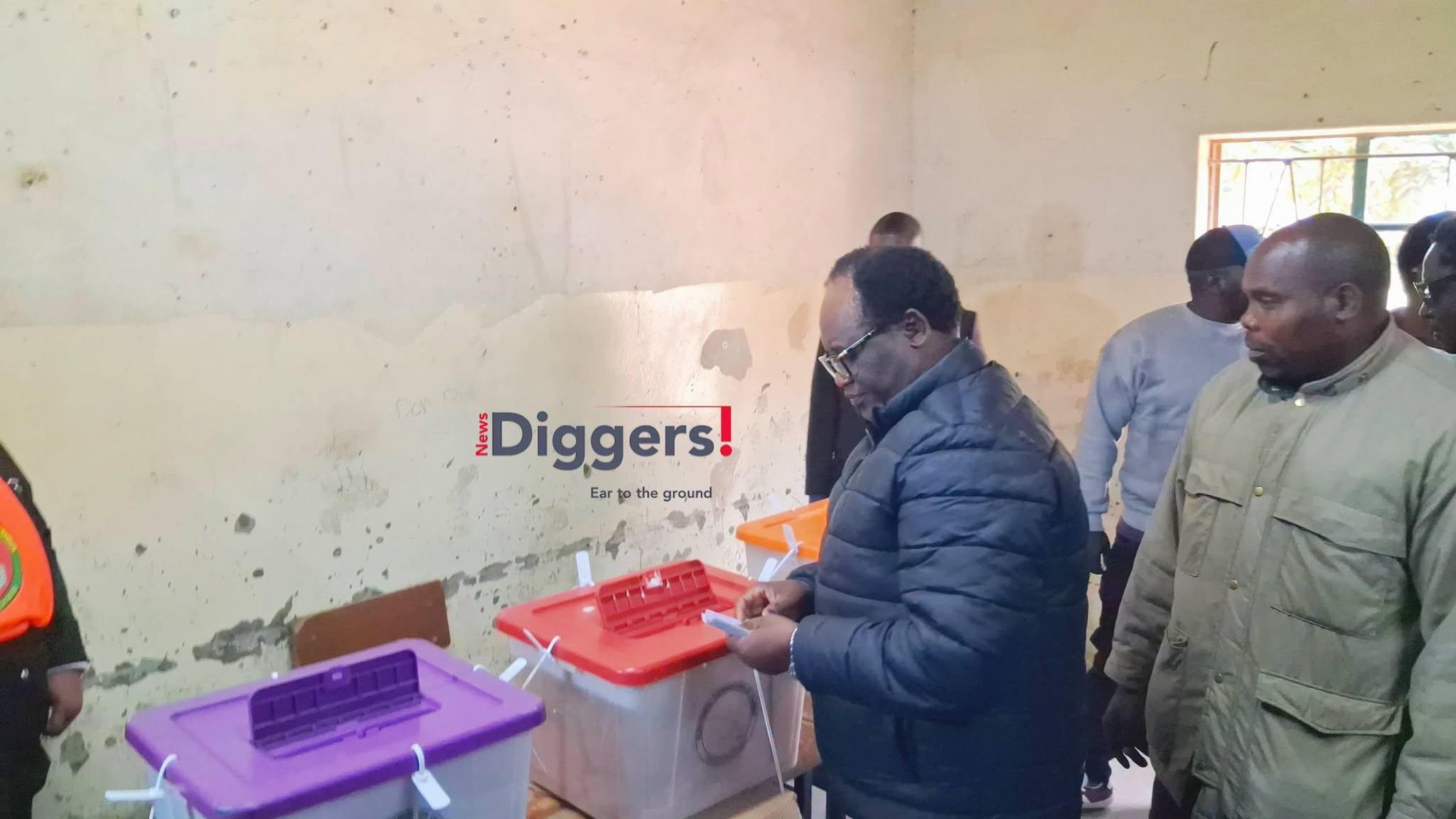
We’ll petition election results – Mundubile
Summary
- NRPUP president Brian Mundubile has rejected Zambia's 2026 presidential election results and announced his intention to file a petition.
- President-Elect Hakainde Hichilema secured a second term with 2,965,326 votes, defeating Mundubile who received 1,856,217 votes.
- The upcoming election petition will test Zambia's electoral dispute resolution mechanisms and could establish new legal precedents.
- Lawyers specializing in Zambian constitutional and electoral law are advised to closely monitor the progress of this significant legal challenge.
Election Results Rejected, Petition Forthcoming
Lawyers specializing in Zambian constitutional or electoral law should closely monitor the filing and progress of this petition, as it will inevitably test the country's electoral dispute resolution mechanisms.
Brian Mundubile, who leads the National Reconciliation Party for Unity and Prosperity (NRPUP), has formally rejected the recently announced outcomes of Zambia's 2026 presidential election. Following the declaration of results, Mundubile stated his intention to file an official petition challenging the electoral process and its conclusion, setting the stage for a significant legal battle in the nation's highest courts. This move initiates a formal **Mundubile election petition Zambia 2026**, which will scrutinize the integrity of the recent polls.
President-Elect Hakainde Hichilema has been declared the victor, securing a second term in office. The official figures indicate that Hichilema garnered 2,965,326 votes, successfully defeating his closest contender, Mundubile, who received 1,856,217 votes. Despite the clear margin, Mundubile's rejection signals a belief that the announced figures do not accurately reflect the will of the electorate, prompting the upcoming **Zambia presidential election challenge**.
The decision by **Brian Mundubile rejects 2026 results** marks a critical juncture in Zambia's post-election period. Such a challenge, particularly for a presidential election, is a serious undertaking that demands robust legal arguments and compelling evidence. The **NRPUP election dispute Zambia** will now shift from the political arena to the judicial one, where the merits of the petition will be rigorously examined.
Legal Framework for Electoral Disputes
Zambia's constitutional and electoral laws provide a clear framework for addressing disputes arising from presidential elections. When a candidate formally rejects results and announces an intention to petition, it triggers a specific legal process designed to ensure fairness and uphold democratic principles. This process typically involves filing a petition with the designated electoral court, which, in Zambia's case, is often the Constitutional Court, tasked with adjudicating such high-stakes matters. The **Zambia electoral court challenge** will require Mundubile's legal team to present specific grounds for their rejection, which could range from alleged irregularities in voting or counting to issues concerning voter registration or campaign conduct.
The judicial review of presidential election results is a cornerstone of democratic accountability, offering a crucial avenue for redress when candidates believe the electoral process has been compromised. The court's role is not merely to recount votes but to assess whether the election was conducted in substantial compliance with the law and if any alleged breaches materially affected the outcome. This upcoming **Hakainde Hichilema 2026 election dispute** will test the robustness of these legal provisions and the capacity of the judiciary to impartially resolve complex political contests. The procedural requirements, including strict timelines for filing and hearing petitions, are designed to ensure swift resolution and prevent prolonged political uncertainty.
Implications for Zambian Electoral Law
The impending **Mundubile election petition Zambia 2026** holds significant implications for the country's legal landscape and democratic future. Lawyers specializing in Zambian constitutional or electoral law should closely monitor the filing and progress of this petition, as it will inevitably test the country's electoral dispute resolution mechanisms. The court's eventual ruling could establish new precedents or interpretations of existing electoral law, influencing how future elections are conducted and how disputes are handled.
Any judicial pronouncement on the validity of the 2026 presidential election results will contribute to the body of **Zambia electoral law precedent**. This could clarify ambiguities, strengthen procedural safeguards, or highlight areas where legislative reform might be necessary. The outcome will not only determine the immediate political future but also shape public confidence in the electoral system and the judiciary's independence. A transparent and fair resolution of this **Zambia presidential election challenge** is vital for reinforcing democratic norms and ensuring the peaceful transfer or continuation of power in the nation.
Practical Implications
Lawyers specializing in Zambian constitutional or electoral law should closely monitor the filing and progress of Brian Mundubile's election petition, as it will test the country's electoral dispute resolution mechanisms and could establish new precedents or interpretations of electoral law.
Source
Source: Original reporting via ZNBC
How does this affect you?
Get an AI analysis of this article grounded in your jurisdictions, practice areas, and any policy documents you've uploaded to Wansom.
Finish Reading the Full Story and the Expert Analysis.
Get the latest legal & regulatory intelligence in Zambia
Wansom is AI and can make mistakes.