
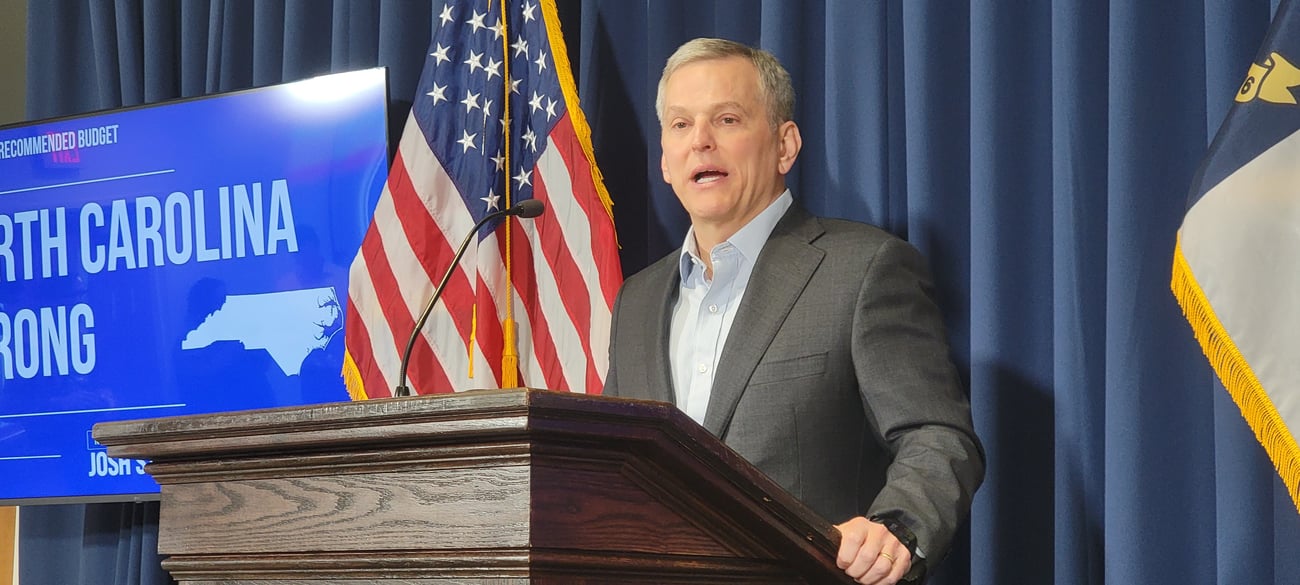
NC Governor Stein: Challenges Judicial Appointment Power Law
Summary
- North Carolina Governor Josh Stein has challenged a state law restricting his power to appoint appellate judges before the state's Supreme Court.
- The 2024 law, passed by the General Assembly, requires the governor to choose appellate nominees from a list provided by the departing judge's political party, a change from previous practice.
- Governor Stein's legal team argues the state constitution grants the governor sole authority over appellate vacancies, a position supported by 150 years of precedent.
- Legislative counsel contends the General Assembly has the right to define the pool of nominees, as the governor still makes the final appointment.
- The case will determine the division of power between the executive and legislative branches concerning judicial appointments, impacting the future composition of North Carolina's appellate courts.
The Challenge to Judicial Appointments
Lawyers practicing in North Carolina should closely monitor the resolution of this constitutional challenge, as it will clarify the division of power between the executive and legislative branches regarding judicial appointments.
North Carolina Governor Josh Stein recently brought a significant constitutional challenge before the state's Supreme Court, contesting a legislative enactment that restricts his authority over appellate judicial appointments. The governor argues that the law, which dictates how vacancies on the state Supreme Court and Court of Appeals are filled, infringes upon the executive branch's established powers. This legal confrontation centers on the fundamental division of power regarding the North Carolina governor judicial appointment power.
The contested legislation was passed by the NC General Assembly during its 2024 lame-duck session, ostensibly as hurricane relief, but it also served to diminish the influence of incoming Democratic officials, including Governor Stein. Historically, the governor possessed the discretion to appoint any qualified lawyer from their own political party to fill an appellate vacancy. However, the new law mandates that the governor must now select from a pre-approved list of three candidates, all of whom must belong to the same political party as the departing judge. This change represents a substantial shift in the long-standing process for filling judicial seats.
Constitutional Debate and Historical Precedent
Representing Governor Stein, attorney Sarah Boyce contended that the executive branch holds the exclusive authority to fill appellate vacancies, asserting that the legislature cannot impose limitations that effectively transfer the selection power to itself. Boyce highlighted that the framers of the North Carolina Constitution specifically granted the General Assembly the power to fill district court vacancies, yet deliberately reserved appellate appointments for the governor. She further noted that for a century and a half, the legislature acknowledged its inability to dictate qualifications for the governor’s appointment power. This perspective underscores the core of the Josh Stein appellate vacancy challenge.
Conversely, D. Martin Warf, counsel for legislative leaders Speaker Destin Hall and Senate leader Phil Berger, argued that the legislature possesses the inherent right to establish parameters for the governor's selections. Warf maintained that no provision within the state constitution explicitly prohibits the General Assembly from defining the pool of nominees. He emphasized that the governor retains the ultimate power to make the appointment, questioning whether Article 4 Section 19 NC Constitution explicitly forbids the legislature from shaping the candidate pool. Warf suggested that requiring a replacement from the same political party as the outgoing judge ensures continuity and respects the voters' original partisan choice until the next election.
Associate Justice Allison Riggs pointed out that North Carolina voters overwhelmingly rejected a 2018 constitutional amendment that would have created a judicial merit commission to recommend candidates for vacancies, with approximately two-thirds opposing it. Riggs, a Democrat, observed that the court's composition has shifted since 2018, and voters had previously indicated their preference for the governor to handle these appointments. Boyce further criticized the new law, stating it effectively delegates the governor’s appointment authority to political operatives within party executive committees, arguing that if this precedent stands, the legislature could transfer this power to any entity, including itself or other state officials, which she deemed inconsistent with the constitution's plain text. Governor Stein's brief also asserted that the constitution forbids the legislature from altering the appellate vacancy process, noting that eight years prior, the legislature itself acknowledged the governor's "sole" authority unless the constitution was amended.
Implications for North Carolina Governance
The outcome of this North Carolina Supreme Court appointment case carries significant weight for the balance of power between the executive and legislative branches in the state. A ruling in favor of the governor would reaffirm the executive's traditional authority in judicial appointments, potentially limiting the legislature's ability to influence the composition of the state's highest courts. Conversely, a decision upholding the NC General Assembly judicial appointments law would grant the legislature greater control over the selection process, potentially leading to more ideologically aligned judicial benches.
Lawyers practicing in North Carolina should closely monitor the resolution of this constitutional challenge, as it will clarify the division of power between the executive and legislative branches regarding judicial appointments. The ruling could significantly impact the process for filling appellate court vacancies, potentially influencing the ideological composition of the state's highest courts and affecting future legal strategies or interpretations of state law. This case represents a critical juncture in defining the scope of the North Carolina governor judicial appointment power.
Practical Implications
Lawyers practicing in North Carolina should monitor the outcome of this constitutional challenge, as it will clarify the division of power between the executive and legislative branches regarding judicial appointments. The ruling could significantly impact the process for filling appellate court vacancies, potentially influencing the ideological composition of the state's highest courts and affecting future legal strategies or interpretations of state law.
Source
How does this affect you?
Get an AI analysis of this article grounded in your jurisdictions, practice areas, and any policy documents you've uploaded to Wansom.
Finish Reading the Full Story and the Expert Analysis.
Get the latest legal & regulatory intelligence in United States
Wansom is AI and can make mistakes.