
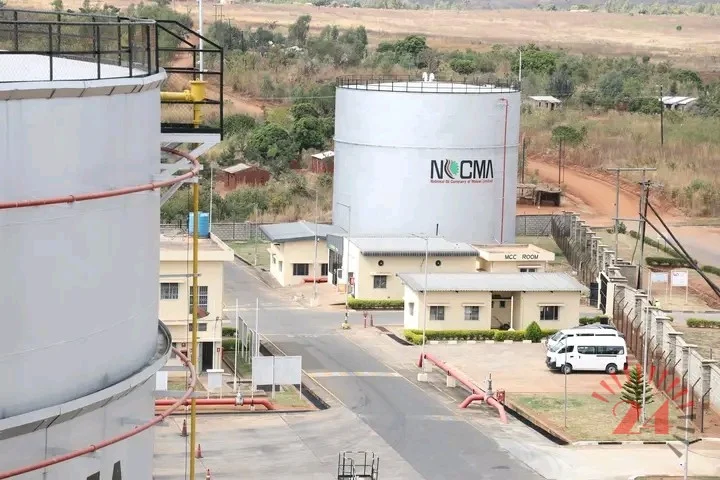
NOCMA: K0.7 Billion Scam Malawi Investigation Deepens
Summary
- The National Oil Company of Malawi (NOCMA) is embroiled in an alleged K0.7 billion scam involving a fraudulent payment.
- Initially presented as fraud, the incident now raises questions about potential negligence, collusion, or a carefully planned operation.
- Investigators are scrutinizing who verified new bank details and why the K700 million was released without proper checks.
- The scam highlights potential corporate governance concerns within NOCMA and broader vulnerabilities in Malawi's public sector financial controls.
The Alleged K0.7 Billion Scam at NOCMA
The fact that K700 million could be disbursed under such questionable circumstances strongly suggests potential vulnerabilities in NOCMA's internal financial protocols and control mechanisms.
The National Oil Company of Malawi (NOCMA) finds itself at the center of a significant financial controversy, grappling with an alleged K0.7 billion scam. This incident, which has quickly garnered public attention, revolves around a fraudulent payment that has triggered profound questions regarding the state-owned enterprise's financial oversight and operational integrity. What was initially presented as a straightforward fraudulent transaction has rapidly escalated, prompting a more extensive and deeper inquiry into the precise circumstances surrounding the disbursement of these public funds. The scale of the alleged NOCMA K0.7 billion scam Malawi suggests that the issues extend beyond a simple oversight.
The substantial sum in question, amounting to K700 million, represents a considerable financial loss for NOCMA and, by extension, the Malawian public. This alleged NOCMA K700 million fraud Malawi has moved beyond the initial characterization of a mere fraudulent payment, now strongly suggesting potential systemic failures within the organization's financial architecture. The evolving narrative indicates that the initial understanding of the event may have significantly understated its complexity and the potential underlying vulnerabilities.
Unraveling the Details and Emerging Questions
As the investigation into the NOCMA K700 million fraud Malawi deepens, the focus has broadened considerably from merely identifying a fraudulent payment to meticulously scrutinizing the entire chain of processes and the individuals involved. Authorities are now posing critical questions that point towards a spectrum of possibilities, including outright negligence, deliberate collusion among parties, or even a meticulously planned operation designed to illicitly divert public funds. A central line of inquiry involves determining precisely who authorized and verified the new bank details to which this substantial sum was ultimately transferred, and what protocols were followed, or perhaps, bypassed.
Furthermore, a pivotal aspect of the ongoing inquiry centers on understanding why such a significant payment was released without what appear to be adequate and standard checks and balances. The fact that K700 million could be disbursed under such questionable circumstances strongly suggests potential vulnerabilities in NOCMA's internal financial protocols and control mechanisms. This detailed line of questioning aims to uncover whether the incident represents an isolated lapse in judgment or is indicative of more pervasive corporate governance concerns within the state entity, potentially signaling a broader Malawi public sector fraud investigation.
Broader Implications for Public Sector Integrity
The unfolding NOCMA K0.7 billion scam Malawi carries profound implications for public sector financial management and oversight not just within NOCMA, but across the entire nation. The very nature of the questions now being raised—encompassing allegations of negligence, the possibility of deliberate collusion, and the specter of a carefully orchestrated scheme—highlights significant weaknesses in the institutional mechanisms designed to safeguard public funds. For compliance officers and legal counsel advising entities that engage with Malawian state-owned enterprises, this incident serves as a critical warning, underscoring the urgent need for robust internal controls, particularly concerning payment verification and comprehensive fraud detection systems.
This situation could indeed signal the impetus for broader Malawi public sector fraud investigation efforts, as the vulnerabilities exposed at NOCMA may not be unique to this specific institution. The incident serves as a stark reminder that even seemingly straightforward fraudulent payments can often mask deeper, more systemic issues related to corporate governance concerns and operational laxity within state-run bodies. Ensuring heightened accountability, implementing stringent financial safeguards, and fostering a culture of transparency within all state institutions are paramount steps to prevent similar occurrences and to rebuild and maintain public trust in government financial operations.
Practical Implications
Compliance officers and legal counsel advising entities engaging with Malawian state-owned enterprises should review internal controls for payment verification and fraud detection, as this NOCMA scandal indicates significant vulnerabilities and potential for collusion within public sector financial operations.
Source
Source: Original reporting via Malawi24
How does this affect you?
Get an AI analysis of this article grounded in your jurisdictions, practice areas, and any policy documents you've uploaded to Wansom.
Wansom is AI and can make mistakes.