
Ninth Circuit: Portland ICE Tear Gas Ban Lifted
Summary
- The Ninth Circuit Court of Appeals vacated two preliminary injunctions that had restricted federal agents from using tear gas and chemical munitions at the Portland ICE facility.
- The court found that both protesters and nearby residents were unlikely to succeed on the merits of their claims.
- Federal agents are not required to face an "imminent threat of physical harm" before using nonlethal force to clear crowds.
- The court ruled that there is no recognized substantive due process right to be free from exposure to nonlethal crowd-control gases during disruptive demonstrations.
- Residents of a low-income housing complex across from the facility had alleged their homes were repeatedly filled with chemical irritants.
Court Overturns Restrictions on Federal Agents
This decision effectively grants federal agents in the Ninth Circuit greater latitude in deploying devices like tear gas and pepper balls to manage crowds, even if such actions have an impact on nearby residents.
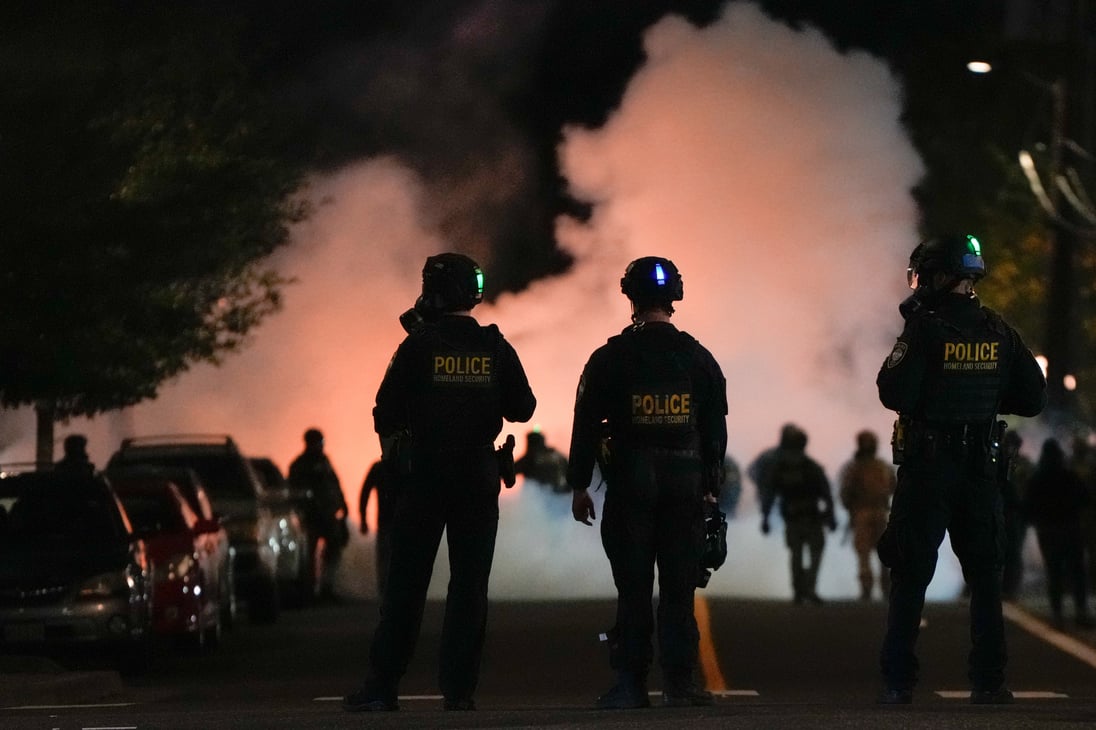
A federal appeals court has reversed lower court orders that previously restricted federal agents from deploying tear gas and other chemical munitions against crowds gathered outside the U.S. Immigration and Customs Enforcement (ICE) facility in Portland, Oregon. This decision, handed down by a panel of the Ninth Circuit Court of Appeals, vacates two preliminary injunctions that had been in place since February and March, effectively clearing the way for federal agents to use such crowd-control measures. The appellate court, characterized by a conservative majority and including judges appointed by former President Trump, determined that the plaintiffs in both cases were unlikely to prevail on the merits of their claims.
The rulings address two distinct legal challenges. One lawsuit was brought by a coalition of protesters and journalists who alleged that federal officers used tear gas, pepper balls, and similar devices in retaliation for their exercise of First Amendment rights during demonstrations. The second case originated from residents of a low-income housing complex situated directly across from the ICE building. These residents contended that federal agents intentionally and repeatedly deployed chemical munitions in close proximity to their homes, thereby infringing upon their right to bodily integrity by exposing them to airborne toxic substances.
The Ninth Circuit's twin decisions, which reaffirmed earlier orders issued at the end of April after arguments were heard four months prior, represent a significant development for federal agents' crowd control capabilities. A lone judge, appointed by President Biden, dissented from both rulings, underscoring the divided judicial opinion on the matter.
Legal Grounds for Chemical Munitions Use
The Ninth Circuit's majority opinion articulated specific legal justifications for vacating the injunctions, drawing clear boundaries around the First Amendment and substantive due process rights in the context of federal agents' crowd control actions. In the case brought by protesters and journalists, U.S. Circuit Judge Kenneth Lee, a Trump appointee, concluded that the record did not support the claim that agents retaliated against individuals for exercising their First Amendment rights. Instead, Judge Lee characterized the plaintiffs as "unfortunate collateral casualties" of federal agents' efforts to manage "an unruly and sometimes violent crowd." He further clarified that law enforcement agents are permitted to use nonlethal force to disperse crowds and restore order, stating they are not required to wait for "an imminent threat of physical harm" before acting. This interpretation broadens the permissible scope of nonlethal force federal facilities can employ.
Regarding the claims from residents, U.S. Circuit Judge Eric Tung, also a Trump appointee, authored the opinion, asserting that individuals do not possess a substantive due process right to be free from the government’s use of nonlethal crowd-control devices during disruptive demonstrations. The court found that the alleged right to be free from exposure to gases released from non-lethal crowd-control devices, when used in response to disruptive crowds, is not "deeply rooted in our nation’s history or tradition." Furthermore, Judge Tung stated that the deployment of such devices to prevent escalating violence and protect federal property does not "shock the conscience," a high legal standard for substantive due process violations. The court was not persuaded that residents had a protectable right to be free from exposure to tear gas, as no such right has been previously recognized.
Impact on Protests and Residents
The backdrop to these legal battles involves a prolonged period of intense protest activity at the Portland ICE facility. Between June 2025 and February 2026, the facility was the site of at least 150 demonstrations, some of which attracted several thousand participants. During these events, federal agents tasked with protecting the facility frequently resorted to using tear gas and pepper balls to disperse crowds, leading to the complaints that formed the basis of the lawsuits. The residents of the neighboring apartment complex specifically detailed how their homes were repeatedly filled with chemical irritants due to the agents' use of what they considered excessive munitions.
This Ninth Circuit chemical munitions ruling carries significant implications for future interactions between federal agents and protesters, particularly concerning the use of nonlethal force at federal facilities. The decision effectively grants federal agents in the Ninth Circuit greater latitude in deploying devices like tear gas and pepper balls to manage crowds, even if such actions have an impact on nearby residents. Skye Perryman, president and CEO of Democracy Forward, the organization representing the residents, voiced profound disappointment with the outcome. She emphasized that the ruling leaves the residents of Gray’s Landing without the protections they sought after their homes were polluted and daily lives disrupted by chemical munitions deployed by federal agents. Perryman affirmed that the residents intend to continue their legal fight, despite the appellate court's current stance.
Practical Implications
This ruling clarifies that federal agents in the Ninth Circuit can use nonlethal crowd-control devices like tear gas at federal facilities without violating First Amendment or substantive due process rights, even if it impacts nearby residents. Lawyers advising clients involved in protests or those living near federal installations should note the expanded permissible scope of federal agents' force and the limited grounds for challenging such actions.
Source
Source: Original reporting based on CN.
How does this affect you?
Get an AI analysis of this article grounded in your jurisdictions, practice areas, and any policy documents you've uploaded to Wansom.
Finish Reading the Full Story and the Expert Analysis.
Get the latest legal & regulatory intelligence in United States
Wansom is AI and can make mistakes.