
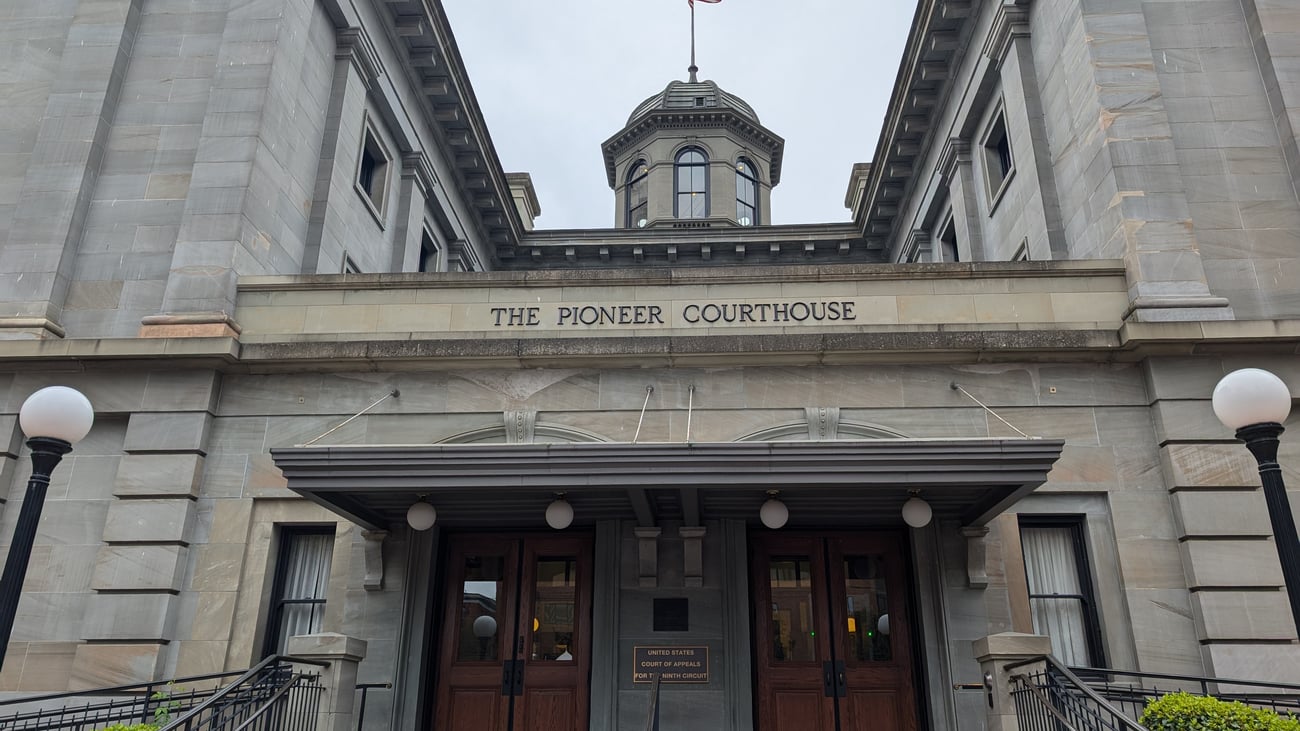
Ninth Circuit: Idaho Public Access Court Filings Must Be Immediate
Summary
- The Ninth Circuit Court of Appeals ruled that Idaho's "process-first" policy, which delayed public access to new court filings, violates the First Amendment.
- This decision activates an injunction from U.S. District Court Judge David Nye, requiring immediate public access to court pleadings upon receipt.
- Judge Margaret McKeown's opinion emphasized that the responsibility for confidentiality in filings rests with the filer, not the court system.
- The court applied the `Press-Enterprise` test, finding Idaho failed to demonstrate an overriding reason or lack of reasonable alternatives for its policy.
- This ruling reinforces a precedent for immediate judicial records transparency, building on a similar 2020 Ninth Circuit decision concerning California courts.
Ninth Circuit Affirms Immediate Public Access to Court Filings
The right of public access to judicial proceedings ensures that the individual citizen can effectively participate in and contribute to our republican system of self-government.
The Ninth Circuit Court of Appeals has issued a significant ruling, striking down Idaho's "process-first" policy which had previously delayed public access to new court filings. This decision, emerging from a multi-year legal battle initiated by Courthouse News, mandates that new court pleadings must be made immediately available to the public upon receipt, affirming a fundamental First Amendment right to judicial records transparency.
This recent judgment effectively activates an injunction originally issued by U.S. District Court Judge David Nye five years ago. Judge Nye had ruled in favor of Courthouse News after extensive proceedings, but his injunction was paused pending Idaho's appeal. The Ninth Circuit's three-judge panel, comprising Judges Margaret McKeown, Jennifer Sung, and U.S. District Judge Sidney Fitzwater (sitting by designation from the Northern District of Texas), heard arguments last December, ultimately siding with Judge Nye's initial determination. Jon Fetterly and Katherine Keating of Bryan Cave represented Courthouse News, while Keely Duke of Duke Evett argued on behalf of Idaho.
The court's decision represents a powerful endorsement of the free discussion of government affairs, rejecting Idaho's attempts to keep new court filings from public view. The ruling emphasizes that the right of public access to judicial proceedings is central to citizens' ability to participate effectively in self-governance, placing it squarely within the protections of the First Amendment.
Legal Context and the Press-Enterprise Test
In her opinion, Judge Margaret McKeown directly addressed and dismissed Idaho's arguments against immediate public access, particularly its defense rooted in privacy concerns. The court clarified that the responsibility for ensuring confidentiality within a pleading rests with the filer, not with the court clerk or the state's judiciary. This crucial distinction underscores that the burden of protecting sensitive information lies with the party submitting the document, rather than allowing the court system to delay public access.
The Ninth Circuit's analysis applied the stringent `Press-Enterprise` test, a foundational standard for public access cases. This test requires that any denial of public access must be supported by an overriding reason, and even then, no reasonable alternative to withholding access can exist. Idaho failed to meet this standard, as Courthouse News successfully demonstrated that numerous state and federal courts already provide immediate access to new pleadings through mechanisms like public queues or automatic docketing.
Judge McKeown's opinion explicitly stated that Idaho did not prove its "process-first" policy survived `Press-Enterprise` scrutiny, nor did it demonstrate that automatically accepting newly filed complaints was an unreasonable alternative. This legal framework reinforces that delaying access to court filings is unconstitutional when viable, immediate alternatives are available.
Broader Implications for Judicial Transparency
This ruling sets a significant precedent for judicial records transparency, particularly within the Ninth Circuit. By unequivocally rejecting policies that delay public access to court filings, the court has reinforced the principle that the public has a right to know what is being filed in their courts as soon as it arrives. This ensures that the news contained within these documents remains timely and relevant, rather than becoming stale due to administrative delays.
This is not the first time the Ninth Circuit has addressed such issues. A similar legal battle, `Courthouse News v. Planet`, unfolded in California over nearly a decade, culminating in a 2020 Ninth Circuit opinion. That case, which challenged Ventura County's practice of withholding new pleadings, also established the First Amendment right of access, creating a foundational principle that this Idaho decision now further solidifies. The consistent application of these principles underscores a strong judicial commitment to immediate public access to court filings across the Western states.
Practical Implications
The Ninth Circuit's affirmation of immediate public access to court filings, rejecting 'process-first' policies and placing the onus of confidentiality on the filer, establishes a strong precedent for transparency in judicial proceedings. Lawyers and compliance officers in the Ninth Circuit (and potentially other jurisdictions) should be aware that new court filings will be immediately accessible to the public, necessitating careful consideration of information contained in pleadings and potential public scrutiny from the moment of filing.
Source
How does this affect you?
Get an AI analysis of this article grounded in your jurisdictions, practice areas, and any policy documents you've uploaded to Wansom.
Finish Reading the Full Story and the Expert Analysis.
Wansom is AI and can make mistakes.