
Ninth Circuit: Affirms DMCA Copilot Copyright Appeal Dismissal
Summary
- The Ninth Circuit Court of Appeals dismissed Digital Millennium Copyright Act claims against GitHub Copilot and OpenAI Codex.
- The court ruled that DMCA 1202 does not apply when AI tools create new works that never contained copyright management information, rather than altering existing works.
- Judge Eric Miller authored the unanimous opinion, affirming a trial judge's decision in Oakland, California.
- The appellate court explicitly left open the possibility for programmers to pursue traditional copyright infringement claims, such as those based on substantial similarity.
- Plaintiffs, anonymous open-source programmers, were found to have standing, but would need more evidence for summary judgment.
Court Rejects DMCA Claims Against AI Code Generators
The Ninth Circuit's ruling explicitly leaves open the possibility for programmers to pursue traditional copyright infringement actions against AI developers.
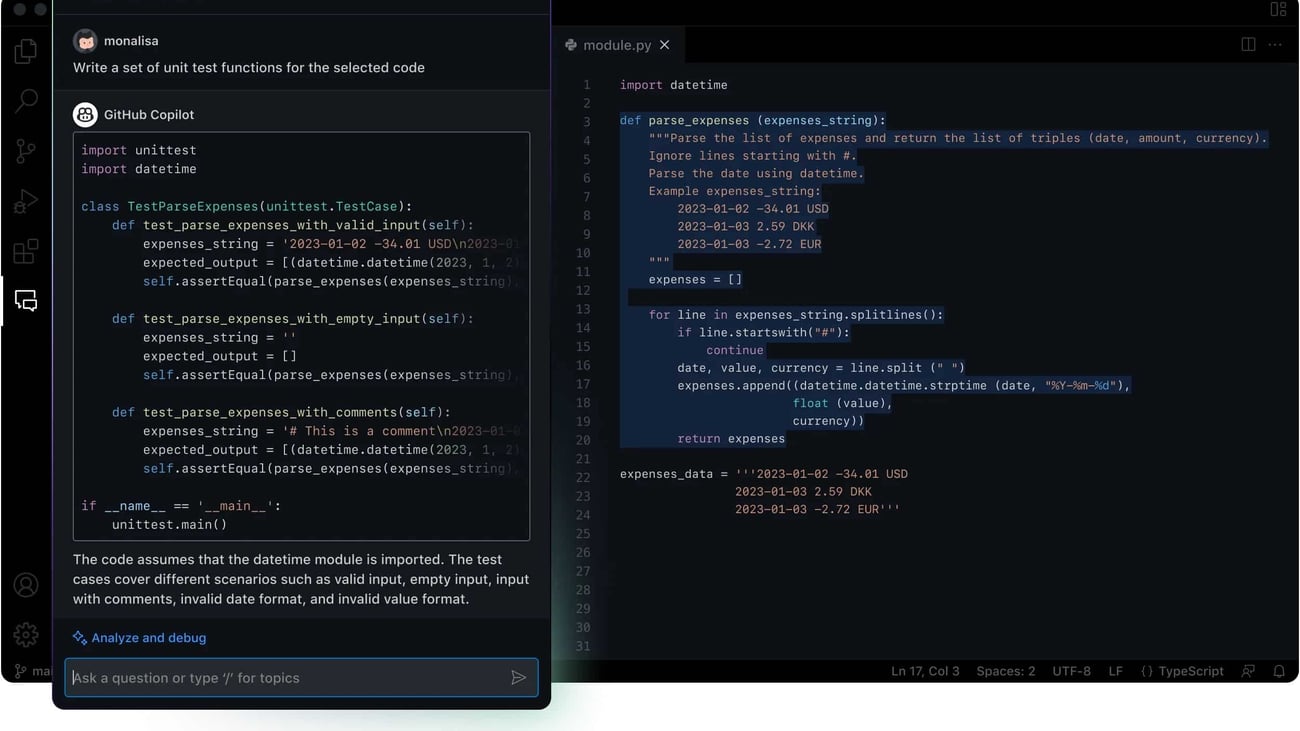
The Ninth Circuit Court of Appeals has affirmed a lower court's decision, dismissing claims brought under the Digital Millennium Copyright Act (DMCA) against artificial intelligence tools developed by GitHub and OpenAI. A panel of appellate judges upheld the ruling from a trial judge in Oakland, California, which found that a group of anonymous open-source software programmers could not successfully argue that the AI tools, specifically Copilot and Codex, infringed their copyrights by reproducing their work without proper attribution. This significant decision clarifies the boundaries of DMCA 1202 in the context of AI-generated content.
The lawsuit, initiated in 2021 by the programmers against Microsoft, GitHub, and OpenAI, alleged "software piracy on an unprecedented scale." The plaintiffs sought over $9 billion in penalties, contending that GitHub Copilot, an AI-powered coding assistant unveiled in 2021, sometimes produces licensed code without providing necessary credit. Copilot is trained on vast public repositories of code scraped from the web, including GitHub itself, where some code is published under licenses mandating attribution for reuse.
The Legal Rationale Behind the Dismissal
Central to the Ninth Circuit's unanimous decision was the interpretation of DMCA Section 1202, which prohibits the removal or alteration of copyright management information (CMI) from a protected work. U.S. Circuit Judge Eric Miller, a Donald Trump appointee, authored the opinion, explaining that the AI tools in question do not remove or alter CMI from an *existing* copy of a protected work. Instead, they generate *new* works that simply never contained such information. Judge Miller emphasized that the coders described an AI tool that creates new content rather than looking up and reproducing stored material.
The court clarified that while the 1998 Digital Millennium Copyright Act forbids creating a copy of a protected work and then removing or altering CMI—such as the creator's name, owner, or terms of use—this specific prohibition does not extend to the creation of entirely new works. Judge Miller explicitly stated that the new work produced by AI "cannot reasonably be described as a copy of that code from which the copyright management information has been removed or altered." The panel, which also included Senior U.S. Circuit Judge Sydney Thomas, a Bill Clinton appointee, and U.S. District Judge Stanley Blumenfeld Jr., a Donald Trump appointee from the Central District of California, declined to expand DMCA claims to encompass "run-of-the-mill" copyright infringement, citing the potential for "ruinous liability" under the law's enhanced statutory damages.
Remaining Avenues for Copyright Claims
Despite the setback for DMCA claims, the Ninth Circuit's ruling explicitly leaves open the possibility for programmers to pursue traditional copyright infringement actions against AI developers. Judge Miller noted in the opinion that "Copilot’s output may in some cases be substantially similar to existing code," and while the court expressed no view on whether such similarity would support a copyright infringement claim, it acknowledged that many copyright cases revolve around the creation of works substantially similar to a plaintiff's without attribution. This distinction is crucial, as it means AI developers and users are not entirely shielded from broader copyright risks related to AI generated code copyright.
Furthermore, the appellate court affirmed that the plaintiffs possessed standing to bring their claims. The panel recognized that the programmers cited academic research indicating that large language models can sometimes "emit the memorized training data verbatim." This argument was deemed sufficient to overcome a motion to dismiss for lack of standing, demonstrating that the plaintiffs faced a substantial risk of injury from Copilot reproducing their code without attribution. However, the court cautioned that if the lawsuit were to advance to summary judgment, the plaintiffs would be required to present more substantial evidence to substantiate their claims. This aspect of the ruling underscores that while the DMCA 1202 avenue is closed for this specific type of claim, other legal challenges remain viable for addressing software copyright Ninth Circuit issues.
Practical Implications
This ruling clarifies that DMCA claims against AI tools for generating code are unlikely to succeed if based solely on the *absence* of copyright management information (CMI) in new AI-generated works. However, it explicitly leaves the door open for traditional copyright infringement claims (e.g., substantial similarity), meaning lawyers should advise clients that AI developers and users remain exposed to broader copyright risks beyond DMCA 1202.
Source
How does this affect you?
Get an AI analysis of this article grounded in your jurisdictions, practice areas, and any policy documents you've uploaded to Wansom.
Finish Reading the Full Story and the Expert Analysis.
Get the latest legal & regulatory intelligence in United States
Wansom is AI and can make mistakes.