
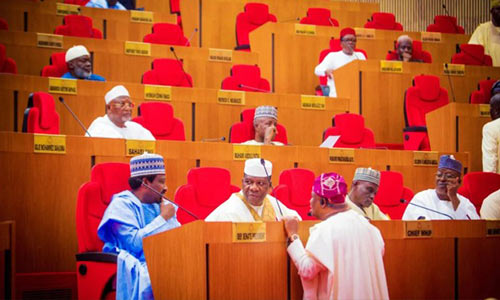
Nigerian Senate: No Electoral Act Amendment Before 2027 Elections
Summary
- The Nigerian Senate has ruled out amending the Electoral Act before the 2027 general elections.
- Senator Yemi Adaramodu, Chairman of the Senate Committee on Media and Public Affairs, announced this decision.
- The National Assembly considers its work on the electoral law to be complete for the upcoming cycle.
- This stance remains firm despite recent Supreme Court judgments concerning party membership and candidate nominations.
- The current Electoral Act will serve as the legal framework for the 2027 elections, providing certainty for all stakeholders.
Senate Confirms No Electoral Act Amendments Before 2027 Elections
Lawyers advising political parties or candidates for the 2027 Nigerian elections can confidently proceed with their strategies based on the current Electoral Act, as the Senate has confirmed no amendments will be made before then, despite recent Supreme Court judgments on party membership and nominations.
The Nigerian Senate has unequivocally stated that it will not undertake any amendments to the existing Electoral Act prior to the 2027 general elections. This declaration provides a clear signal regarding the stability of the legal framework governing the upcoming electoral cycle, effectively ruling out any legislative changes to the electoral law 2027. The decision was communicated by Senator Yemi Adaramodu, who serves as the Chairman of the Senate Committee on Media and Public Affairs, indicating a firm and unified position from the legislative body on this critical matter.
Senator Adaramodu's statement underscored that the National Assembly considers its work on the electoral law to be complete and finalized for the current legislative session. This means that the current provisions of the Electoral Act will remain in force for the 2027 elections, despite recent judicial pronouncements that had raised questions about certain aspects of electoral processes. The Senate's stance aims to prevent any last-minute alterations that could introduce uncertainty or instability into the pre-election environment, ensuring a predictable legal landscape for all participants.
Supreme Court Judgment Sparks Amendment Speculation
The Senate's decision comes in the wake of a recent Supreme Court judgment that had introduced new considerations regarding party membership registers and the process of candidate nominations. This judicial pronouncement had led to significant speculation within political circles about the necessity of revisiting the Electoral Act to align it with the court's interpretations or to address any ambiguities that may have arisen concerning these crucial electoral components. The issues surrounding the validity of party membership and the procedures for selecting candidates were central to these discussions, prompting calls for potential legislative intervention.
Despite these fresh questions and the potential implications for political parties and their aspirants, particularly concerning the intricacies of the Supreme Court judgment party membership requirements, the National Assembly has opted against reopening the statute for review. The judicial ruling had highlighted areas that some believed warranted legislative clarification or adjustment to ensure seamless implementation. However, the Senate has chosen to maintain the current legislative text, asserting that the framework is settled for the immediate future and will not be subject to a Nigerian Senate Electoral Act amendment at this juncture.
Certainty for the 2027 Election Legal Framework
The Senate's definitive position ensures that the Electoral Act 2022 Nigeria will serve as the foundational legal document for the 2027 elections without any legislative modifications. This provides crucial certainty for all stakeholders involved in the electoral process, including political parties, aspiring candidates, and the Independent National Electoral Commission, as they prepare for the upcoming polls. The absence of a Nigerian Senate Electoral Act amendment before the next general election means that the rules of engagement are established and will not be subject to change as the election cycle progresses, fostering a stable environment.
This commitment to a stable electoral law 2027 framework allows political entities to plan their strategies and campaigns with a clear understanding of the legal parameters that will govern their actions. Lawyers advising political parties or candidates for the 2027 Nigerian elections can confidently proceed with their strategies based on the current Electoral Act, as the Senate has confirmed no amendments will be made before then, despite recent Supreme Court judgments on party membership and nominations. This provides certainty regarding the legal framework for election planning and potential litigation, effectively avoiding the disruption that last-minute legislative changes could otherwise cause.
Practical Implications
Lawyers advising political parties or candidates for the 2027 Nigerian elections should proceed with their strategies based on the current Electoral Act, as the Senate has confirmed no amendments will be made before then, despite recent Supreme Court judgments on party membership and nominations. This provides certainty regarding the legal framework for election planning and potential litigation.
Source
How does this affect you?
Get an AI analysis of this article grounded in your jurisdictions, practice areas, and any policy documents you've uploaded to Wansom.
Finish Reading the Full Story and the Expert Analysis.
Get the latest legal & regulatory intelligence in Nigeria
Wansom is AI and can make mistakes.