
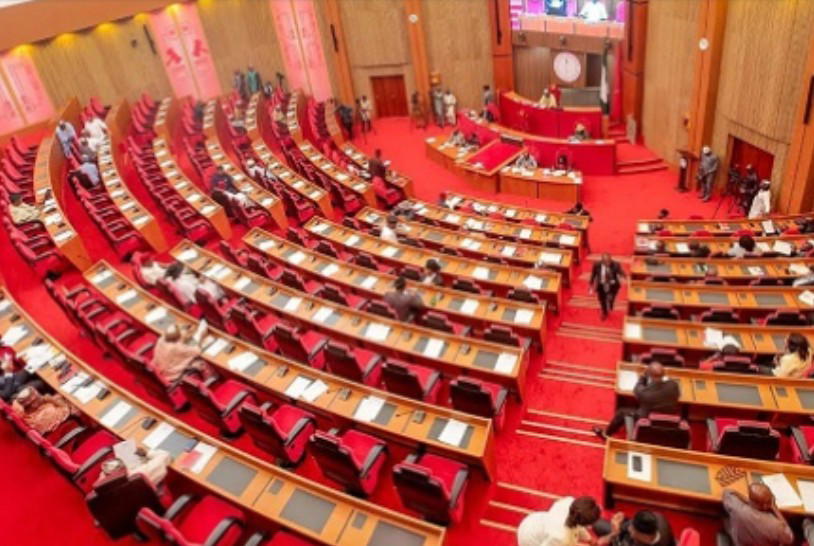
NASS: Proposes 74 Additional Women Seats in Nigeria
Summary
- The National Assembly Committee on the Review of the 1999 Constitution has proposed creating 74 additional seats for women.
- These 74 seats would be allocated to the Senate and House of Representatives at the federal level.
- The proposal also includes three additional seats reserved for women in each State House of Assembly.
- Senate Leader Senator Opeyemi Bamidele announced this initiative as part of the constitutional review process.
Proposed Expansion of Women's Legislative Seats
This legislative push for increased women's representation in the Nigeria National Assembly and State Houses of Assembly marks a pivotal moment in the nation's political evolution towards greater inclusivity.
The National Assembly Committee responsible for the ongoing review of the 1999 Constitution has advanced a significant proposal aimed at substantially increasing female representation across Nigeria's legislative bodies. This pivotal initiative, publicly announced by Senate Leader Senator Opeyemi Bamidele, seeks the establishment of 74 additional seats specifically designated for women within the federal legislature. This strategic move represents a direct and concerted effort to enhance the participation of women in national decision-making processes, thereby addressing long-standing disparities in political representation that have characterized Nigerian governance.
Details of the Constitutional Amendment Proposal
The comprehensive scope of this proposal extends beyond the federal level, advocating for the establishment of three additional seats reserved exclusively for women in each State House of Assembly across the federation. This dual-level approach signifies a broad and deliberate effort to bolster women's political presence from the grassroots to the national stage. The inclusion of these state-level provisions ensures that the transformative impact of these reforms would be felt across all tiers of government, potentially fostering a significantly more representative political landscape throughout Nigeria.
The specific allocation of 74 additional women seats Nigeria-wide at the federal level, coupled with the distinct state-specific provisions for Nigerian State House of Assembly women, forms a core component of the ongoing 1999 Constitution review process. This particular aspect of the review focuses on implementing electoral adjustments meticulously designed to correct historical patterns of underrepresentation. The initiative aims to create dedicated and protected pathways for women to enter legislative roles, thereby enabling them to influence policy development and governance outcomes more directly and effectively.
Significance for Nigerian Women Representation
This legislative push for increased women's representation in the Nigeria National Assembly and State Houses of Assembly marks a pivotal moment in the nation's political evolution towards greater inclusivity. If ultimately enacted, the proposed 1999 Constitution review women seats would fundamentally reshape the demographic and ideological composition of legislative bodies, potentially leading to a more diverse range of perspectives and priorities being considered in lawmaking. The announcement by Senator Opeyemi Bamidele regarding these additional seats underscores a clear recognition within the National Assembly of the imperative to empower women politically and ensure their voices are heard.
The creation of these dedicated positions, including those specifically for Nigerian State House of Assembly women, could serve as a powerful catalyst for broader societal changes, actively encouraging greater female participation in public life and leadership roles across various sectors. This constitutional amendment, if successfully passed, would not only provide more tangible opportunities for women to serve in elected office but also send a profound and unequivocal message about the intrinsic value of gender inclusivity in democratic governance. It represents a concrete and measurable step towards achieving more equitable political representation across the entire country.
Practical Implications
Lawyers should monitor the progress of this proposed constitutional amendment regarding women's parliamentary representation, as its enactment would significantly alter the electoral landscape and potentially influence future legislative priorities in Nigeria, impacting areas like electoral law and human rights.
Source
How does this affect you?
Get an AI analysis of this article grounded in your jurisdictions, practice areas, and any policy documents you've uploaded to Wansom.
Wansom is AI and can make mistakes.