
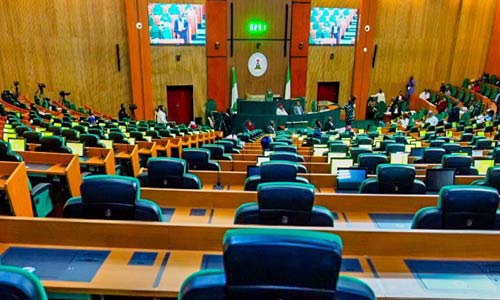
Nigeria's Reps Committee Urges INEC to Disqualify Non-Compliant 2027 Candidates
The House of Representatives Committee on Electoral Matters in Nigeria has called on the Independent National Electoral Commission (INEC) to audit candidates submitted by political parties for the 2027 general elections and disqualify those whose names do not appear in the membership registers earlier submitted to the Commission.
This directive carries significant legal weight as it represents a legislative push to enforce electoral integrity and internal party democracy, directly impacting the candidate selection process for the upcoming general elections. For practitioners, this signals a stricter regulatory environment where compliance with party membership rules will be paramount, potentially reducing pre-election litigation stemming from irregularities in candidate nomination. It underscores the legislature's intent to ensure that only genuinely registered party members are put forward as candidates, thereby strengthening the credibility of the electoral process and party structures.
The legal context for this call is rooted in the Electoral Act and, as the committee noted, a recent Supreme Court judgment. While the specific judgment is not detailed in the excerpt, it implicitly refers to a definitive judicial interpretation affirming the importance of party membership registers in candidate nomination. Sections of the Electoral Act, such as those dealing with the submission and maintenance of party registers (e.g., Section 77) and the conditions for candidate nomination (e.g., Section 84), are central to this issue. The House Committee, exercising its oversight function, is urging INEC, the independent electoral umpire, to rigorously apply these established legal provisions and judicial precedents.
The key parties involved are the House of Representatives Committee on Electoral Matters, which issued the directive; the Independent National Electoral Commission (INEC), which is tasked with implementing it; political parties, whose nomination processes will be scrutinized; and prospective candidates for the 2027 general elections. The Supreme Court, through its referenced judgment, also plays a crucial role in shaping the legal framework being enforced.
Practitioners advising political parties and aspirants must immediately review their clients' compliance with party membership registration requirements and the Electoral Act. Parties should ensure their membership registers are meticulously maintained, up-to-date, and accurately reflect their members, as these will be the basis for INEC's audit. Aspirants must verify their inclusion in these official registers to avoid disqualification. This development also foreshadows potential grounds for pre-election petitions if INEC fails to enforce this directive or if parties flout the rules, making proactive legal counsel essential.
How does this affect you?
Get an AI analysis of this article grounded in your jurisdictions, practice areas, and any policy documents you've uploaded to Wansom.
Finish Reading the Full Story and the Expert Analysis.
Get the latest legal & regulatory intelligence in Nigeria
Wansom is AI and can make mistakes.