
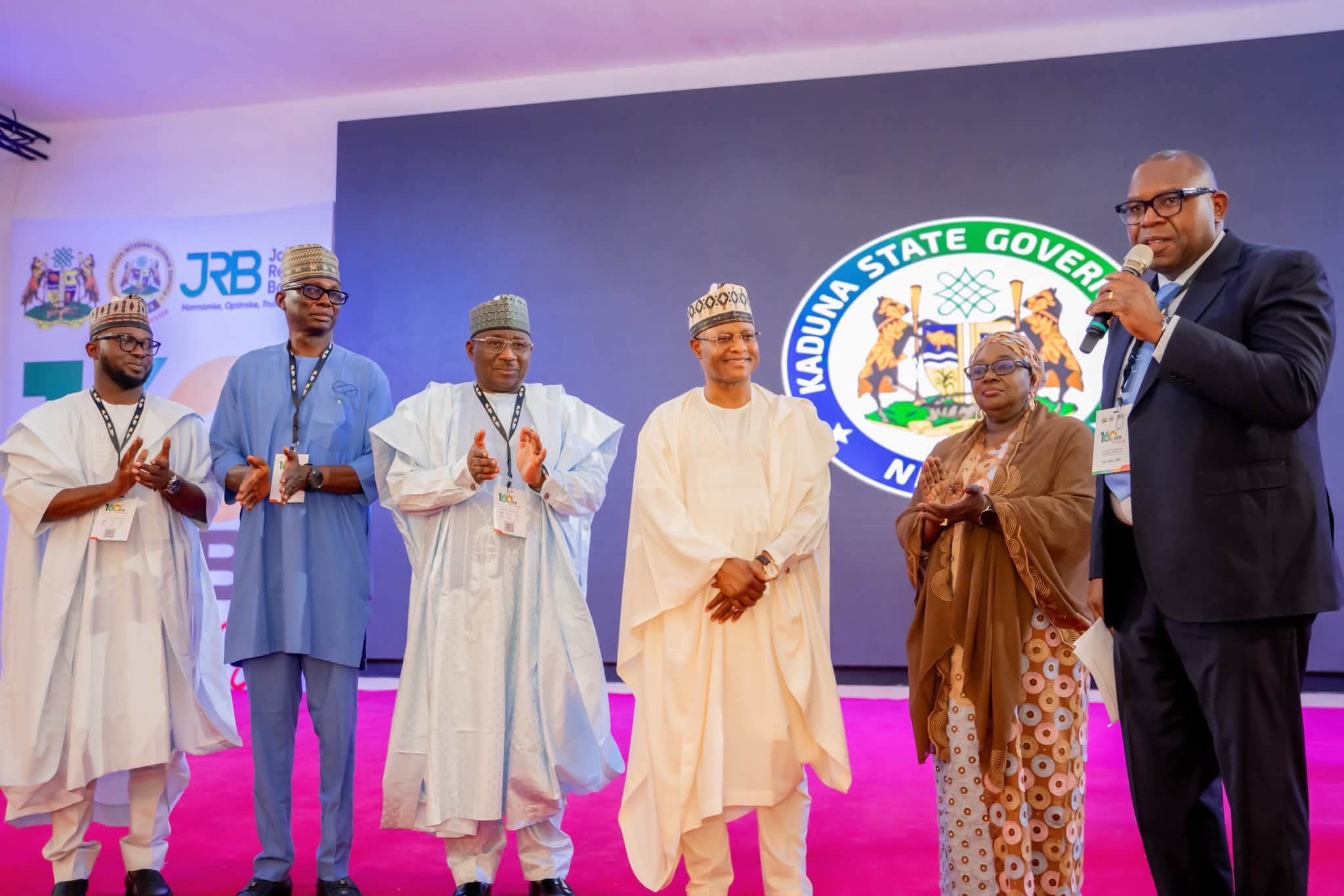
Nigeria: 18 States Complete Model Harmonised Taxes Law Domestication
Summary
- The Joint Revenue Board (JRB) Executive Secretary reported significant progress in Nigeria's tax reform implementation.
- Eighteen State Houses of Assembly have successfully domesticated the model harmonised taxes and levies law.
- This legislative action is a crucial step towards achieving a unified tax administration system across Nigeria.
- Both the Kaduna governor and the JRB Executive Secretary affirmed that these reforms are intended to eliminate multiple taxation.
What Happened
Both the Kaduna governor and the JRB Executive Secretary have explicitly stated that these tax reforms are designed to ultimately put an end to the problem of multiple taxation.
Recent developments indicate significant progress in Nigeria's ongoing tax reform efforts aimed at streamlining fiscal operations across the federation. The Executive Secretary of the Joint Revenue Board (JRB) recently provided an update on the implementation of the model harmonised taxes and levies law, a critical component of the broader initiative to address fiscal inconsistencies. This update revealed that a substantial number of states have now formally adopted the framework into their local statutes.
Specifically, eighteen State Houses of Assembly have successfully completed the process of domesticating the model harmonised taxes and levies law. This legislative action by individual states represents a crucial step towards achieving a unified tax administration system nationwide. The domestication signifies the formal integration of the harmonised framework into state-level legal structures, paving the way for its practical application.
Legal Context
The domestication of the model harmonised taxes and levies law by State Houses of Assembly is a pivotal legal development within Nigeria's federal system. This process involves the legislative bodies of individual states enacting the provisions of the model law, thereby giving it legal force and effect within their respective jurisdictions. The overarching goal of this Nigeria model harmonised taxes law domestication is to foster greater coherence and predictability in the tax landscape, directly tackling the pervasive issue of Nigeria multiple taxation reform.
The Joint Revenue Board harmonised law serves as a blueprint designed to standardize various taxes and levies collected at the state and local government levels. Its implementation is intended to eliminate overlapping taxes and levies that have historically burdened businesses and individuals, creating an environment of uncertainty and increasing compliance costs. By ensuring that State Houses of Assembly tax domestication occurs, the federal government, through the JRB, aims to achieve Nigerian inter-state tax harmonisation, reducing the complexity and administrative burden associated with operating across different states.
Why It Matters
The progress in domesticating the model harmonised taxes and levies law holds profound implications for the Nigerian economy and its taxpayers. Both the Kaduna governor and the JRB Executive Secretary have explicitly stated that these tax reforms are designed to ultimately put an end to the problem of multiple taxation. This long-standing issue has been a significant impediment to business growth and investment, as entities often face similar or identical levies from different tiers of government, leading to inefficiencies and disincentives.
With eighteen states having already adopted the harmonised framework, a clearer and more consistent tax environment is beginning to emerge in these jurisdictions. This development is expected to reduce compliance costs for businesses, enhance transparency, and potentially stimulate economic activity by making it easier to operate across state lines. The ongoing Kaduna tax reforms multiple taxation efforts, for instance, align with this broader national objective, demonstrating a commitment at various levels of government to create a more investor-friendly and equitable tax system through comprehensive Nigeria multiple taxation reform. The continued domestication by the remaining states will further solidify this positive trajectory, offering much-needed relief and clarity to taxpayers nationwide.
Practical Implications
Lawyers and compliance officers should monitor which of the 18 states have domesticated the model harmonised taxes and levies law to advise clients on updated tax obligations and potential relief from multiple taxation across Nigerian states.
Source
How does this affect you?
Get an AI analysis of this article grounded in your jurisdictions, practice areas, and any policy documents you've uploaded to Wansom.
Finish Reading the Full Story and the Expert Analysis.
Wansom is AI and can make mistakes.