
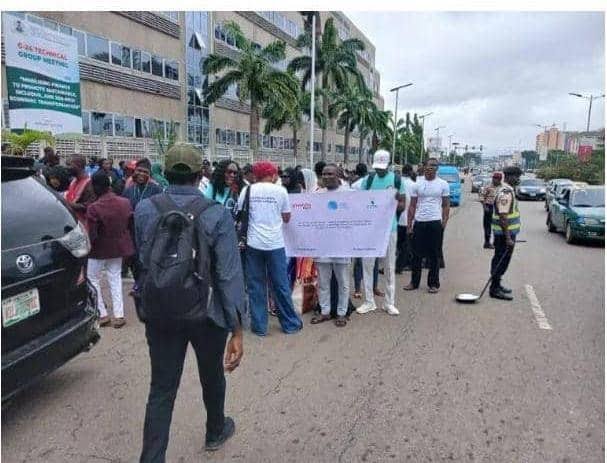
'Stop Giving Loans to Nigeria', Actionaid, Others Protest Nigeria's Rising Debt, Borrowing
Summary
- ActionAid Nigeria, alongside market women, university students, and other civil society groups, protested at the Federal Ministry of Finance over Nigeria's rising debt.
- Protesters urged the Nigerian government to reconsider further borrowing and called on the World Bank and IMF to stop extending additional loans.
- The demonstration highlighted concerns that continued borrowing places a growing burden on Nigerians and impacts the national economy.
- Civil society groups demanded the government explore alternatives to borrowing and prioritize measures to address economic pressures.
- The protest reflects increasing public scrutiny over Nigeria's debt profile and government borrowing policies.
Civil Society Demands Halt to Nigeria's Borrowing
The ActionAid Nigeria protest stop loans initiative is a clear signal of increasing civil society pressure on Nigeria's debt management.
A coalition of civil society groups, including ActionAid Nigeria, market women, and university students, recently staged a significant protest at the entrance of the Federal Ministry of Finance. The demonstration, held on a Thursday, was a direct response to Nigeria's escalating debt stock and the Federal Government's ongoing borrowing practices. Protesters voiced strong opposition to continued loan acquisition, asserting that it imposes an increasing burden on the Nigerian populace.
The core message of the ActionAid Nigeria protest was to stop loans, with participants urging the Federal Government to immediately reconsider any further borrowing. Simultaneously, they directed an appeal to international financial institutions, specifically the World Bank and the International Monetary Fund (IMF), to cease extending additional loans to Nigeria. The Federal Ministry Finance protest underscored deep-seated concerns regarding the nation's financial trajectory and its implications for citizens.
During the protest, participants gathered at the ministry's premises to articulate their anxieties over the country's accumulating debt. They highlighted the adverse effects this debt has on both the economy and the daily lives of Nigerians. The collective call from these civil society groups was for the government to actively seek out alternative financial strategies instead of relying on further borrowing, and to prioritize initiatives that would alleviate the economic pressures currently faced by the population.
Mounting Pressure Over Nigeria's Debt Profile
The demonstration forms part of a broader, growing movement among civil society groups in Nigeria, reflecting heightened concerns over the nation's overall debt profile and the government's borrowing policies. The protesters' message, encapsulated in their plea to international lenders to "let Nigeria breathe," underscores a perception that the country is being suffocated by its financial obligations.
This ActionAid Nigeria protest stop loans initiative is a clear signal of increasing civil society pressure on Nigeria's debt management. The persistent rise in Nigeria's debt stock has become a focal point for public scrutiny, with various organizations questioning the sustainability and necessity of the current borrowing trajectory. The engagement of the World Bank IMF Nigeria borrowing practices in this public discourse highlights the international dimension of these concerns.
Such public outcry could potentially lead to future policy shifts or legislative changes regarding public finance and international lending within Nigeria. The collective voice of these civil society groups Nigeria debt management is becoming increasingly difficult for authorities to ignore, suggesting a potential re-evaluation of the nation's financial strategies in the near future.
Implications for Public Finance and International Lending
The calls from the protest extend beyond mere criticism, demanding concrete actions from both domestic and international stakeholders. For the Nigerian government, the imperative is to not only reconsider its borrowing habits but also to actively explore and implement viable alternatives that can address the nation's economic challenges without exacerbating its debt burden. Prioritizing measures that directly tackle economic pressures on citizens is seen as crucial for long-term stability.
For international financial bodies like the World Bank and IMF, the protest serves as a direct challenge to their lending practices in the region. The demand to stop extending additional loans to Nigeria reflects a belief among civil society groups that such lending, while perhaps intended to support development, is instead contributing to an unsustainable financial situation. This perspective could influence future engagements between these institutions and the Nigerian government.
Lawyers advising clients on financial transactions, investments, or public sector engagements in Nigeria should closely monitor these developments. The increasing civil society pressure on Nigeria's debt management could lead to significant impacts on regulatory frameworks and risk assessments for any entity involved in the country's economic landscape. The sustained focus on Nigeria government borrowing policies by such diverse groups indicates a potential shift in the national conversation around fiscal responsibility.
Practical Implications
This protest signals increasing civil society pressure on Nigeria's debt management, which could lead to future policy shifts or legislative changes regarding public finance and international lending. Lawyers advising clients on financial transactions, investments, or public sector engagements in Nigeria should monitor these developments for potential impacts on regulatory frameworks and risk assessments.
Source
How does this affect you?
Get an AI analysis of this article grounded in your jurisdictions, practice areas, and any policy documents you've uploaded to Wansom.
Finish Reading the Full Story and the Expert Analysis.
Get the latest legal & regulatory intelligence in Nigeria
Wansom is AI and can make mistakes.