
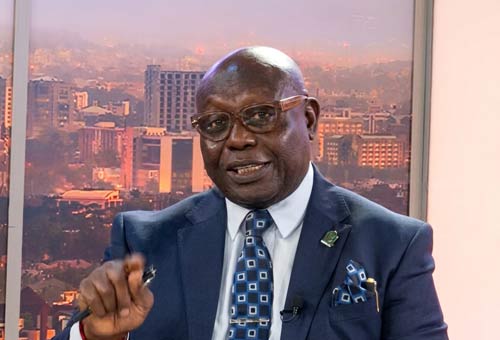
Festus Okoye: Nigeria Must Remove 2027 Election Roadblocks
Summary
- Festus Okoye asserts that Nigeria must eliminate "illegal roadblocks" to ensure genuine elections in 2027.
- He argues that authentic elections enable voters to freely express their will and ensure outcomes reflect their choices.
- Okoye emphasizes that popular sovereignty is compromised if citizens cannot confidently affirm the legitimacy of their government.
- His analysis highlights the critical need for free and fair polls to uphold democratic principles in Nigeria's upcoming 2027 general election.
The Imperative for Genuine Elections
The ultimate authority and power of the state cannot genuinely reside with the people if they lack confidence in the legitimacy of those who assume governmental roles.
Festus Okoye, a prominent analyst, has articulated a critical perspective on the integrity of Nigeria's forthcoming 2027 general election, emphasizing the nation's fundamental obligation to dismantle what he identifies as "illegal roadblocks" within its electoral framework. His analysis underscores that the authenticity of the Nigerian electoral process hinges on the ability of its citizens to cast their votes without undue hindrance, thereby ensuring that the eventual outcomes accurately reflect the collective will of the electorate. This viewpoint establishes a clear benchmark for the conduct of future polls, particularly as the country prepares for the 2027 electoral cycle.
Okoye's assertion is grounded in the foundational principle that for any election to be considered truly legitimate, it must facilitate the uninhibited expression of voter preferences. He contends that only through such a process can the results be deemed credible and genuinely representative of the populace's choices. This perspective highlights a significant challenge for the Nigerian electoral process 2027, suggesting that proactive measures are essential to safeguard the democratic exercise against any impediments that could compromise its fairness or transparency.
Addressing Electoral Roadblocks
The concept of "illegal roadblocks," as presented by Okoye, encompasses any barrier or impediment that obstructs the free and fair conduct of elections. These obstacles can manifest in various forms, ranging from administrative complexities and logistical failures to more deliberate practices designed to suppress voter participation or manipulate results. Overcoming these challenges is paramount for Nigeria to achieve its objective of genuine elections where the democratic aspirations of its citizens are fully realized. The 2027 general election challenges will undoubtedly include identifying and systematically removing these impediments.
Ensuring that the Nigerian electoral process 2027 is free from such roadblocks requires a concerted effort from all stakeholders involved. Okoye's analysis implicitly calls for a thorough review of existing electoral mechanisms and the implementation of robust safeguards. Without such interventions, the potential for discrediting the electoral outcome remains, thereby undermining public trust in the democratic system itself. This makes electoral reforms Nigeria a crucial topic in the lead-up to the next polls.
Sovereignty and Public Confidence
A core tenet of Okoye's argument is the intrinsic link between legitimate electoral processes and the concept of popular sovereignty. He posits that the ultimate authority and power of the state cannot genuinely reside with the people if they lack confidence in the legitimacy of those who assume governmental roles. This confidence, he argues, is directly tied to the perceived fairness and transparency of the electoral process that brings leaders to power. When citizens cannot affirm that their leaders were legitimately elected, the very foundation of their sovereignty is eroded.
Therefore, the removal of "illegal roadblocks" is not merely about procedural correctness; it is fundamentally about upholding the democratic principle that government derives its just powers from the consent of the governed. For the 2027 general election challenges, this means ensuring that the electoral process is so unimpeachable that the public can unequivocally accept the results, thereby reinforcing the notion that sovereignty indeed rests with the people. This emphasis on public affirmation of legitimacy is a critical safeguard for Nigeria's democratic future.
Why Electoral Integrity Matters
The implications of Okoye's analysis extend beyond the immediate conduct of the 2027 elections, touching upon the long-term stability and democratic health of Nigeria. By advocating for the dismantling of "illegal roadblocks," he highlights the ongoing need for vigilance and reform within the Nigerian electoral process. The integrity of the polls directly impacts national cohesion and the public's willingness to participate in democratic governance, fostering a sense of ownership and responsibility among citizens.
Ultimately, the call to action is clear: for Nigeria to foster a truly democratic environment where the will of the people is paramount, continuous efforts must be made to refine and protect the electoral system. This involves not only addressing current challenges but also proactively anticipating and mitigating future impediments to free and fair polls, ensuring that the 2027 general election, and subsequent ones, genuinely reflect the choices of the Nigerian populace. Electoral reforms Nigeria will be key to achieving this vision.
Practical Implications
Lawyers advising political parties, electoral bodies, or human rights organizations should monitor proposed electoral reforms and potential legal challenges related to the 2027 Nigerian elections, particularly concerning the removal of 'illegal roadblocks' to ensure free and fair polls. This analysis highlights areas where legal advocacy or litigation may be necessary to uphold electoral integrity.
Source
How does this affect you?
Get an AI analysis of this article grounded in your jurisdictions, practice areas, and any policy documents you've uploaded to Wansom.
Finish Reading the Full Story and the Expert Analysis.
Get the latest legal & regulatory intelligence in Nigeria
Wansom is AI and can make mistakes.