
Ministère Commerce Niger: Dialogue Secteur Privé Boosts Industrial Development
Summary
- Niger's Ministry of Commerce and Industry held its third Accountability and Exchange Days on September 15, 2026, to review past recommendations and discuss industrial development incentives.
- Minister Abdoulaye Seydou emphasized the government's commitment to ongoing dialogue with the private sector as a tool for economic development and job creation.
- An ad hoc committee was established on August 14, 2026, to explore creating a financing mechanism for industrial projects in Niger.
- Private sector representatives, including from the Chambre Commerce et d’Industrie du Niger, lauded the dialogue as a vital platform for addressing challenges and finding solutions.
- Despite facing difficulties, Nigerien entrepreneurs continue to invest, produce, create jobs, and seek new markets, demonstrating resilience.
Strengthening Public-Private Dialogue in Niger
The government anticipates that these efforts will encourage businesses to pursue more productive investments, prioritize local transformation, and enhance both innovation and competitiveness.
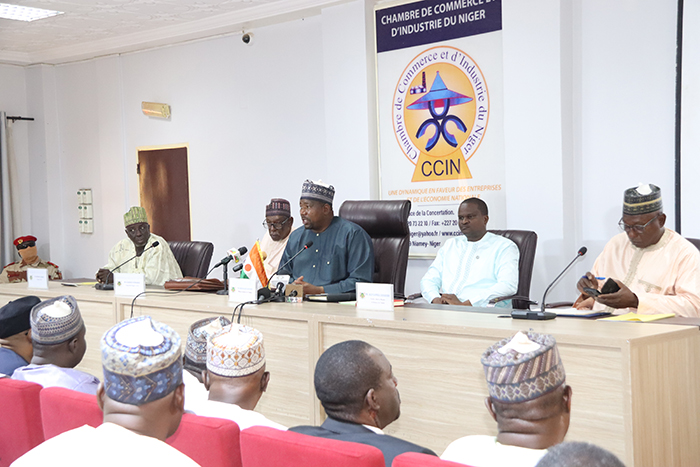
The Ministry of Commerce and Industry in Niger recently convened the third edition of its Accountability and Exchange Days, an initiative designed to foster ongoing dialogue with the Nigerien private sector. Held on Tuesday, September 15, 2026, at the Chambre de Commerce et d’Industrie du Niger (CCIN), this event marked the second such gathering within the year 2026. The primary focus of this session was a mid-term review of recommendations stemming from the previous meeting, which took place on February 4, 2026, alongside discussions on new incentive measures aimed at promoting industrial development in Niger.
Minister of Commerce and Industry, M. Abdoulaye Seydou, inaugurated the proceedings, emphasizing the government's unwavering commitment to this regular dialogue. He articulated that these consistent interactions serve as a crucial, permanent mechanism for evaluating and enhancing public policies, ultimately contributing to the economic development of Niger. The Minister underscored a core belief that effective economic transformation policies are unattainable without the robust involvement of the private sector, which he identified as an indispensable driver of job creation and economic growth.
Government's Commitment to Industrial Growth
The government's role, as outlined by M. Abdoulaye Seydou, is to cultivate a regulatory, institutional, and economic environment conducive to investment. In return, the private sector is expected to actively participate in this dynamic by engaging in productive investment, enhancing quality standards, fostering innovation, and developing essential skills. This collaborative approach is deemed vital for constructing a new industrial dynamic within Niger.
Demonstrating this commitment, the Ministère Commerce Industrie Niger has already taken concrete steps. Minister Seydou announced the establishment of an ad hoc committee, formed by arrêté n° 076 on August 14, 2026. This committee is tasked with exploring the modalities for creating a dedicated financing mechanism for industrial projects in Niger. The government anticipates that these efforts will encourage businesses to pursue more productive investments, prioritize local transformation, and enhance both innovation and competitiveness. The Minister reiterated the government's readiness to engage with the private sector's concerns, collaboratively seek solutions, and ensure their effective implementation.
Private Sector's Perspective and Resilience
Representatives from the private sector echoed the importance of these dialogue sessions. M. Tawaye Nabazaga, President of the Organisation des professionnels de l’industrie, highlighted the Accountability Days as a privileged forum for interaction between government administration and private enterprises. He noted that these gatherings provide an essential platform for businesses to voice their concerns and collectively deliberate on solutions that empower the private sector to fulfill its role in the nation's economic transformation.
M. Kabirou Oumarou, the 2nd Vice-President of the Chambre Commerce et d’Industrie du Niger, further affirmed that this third edition serves as a critical space for listening, dialogue, and problem-solving. He acknowledged the significant challenges currently faced by the Nigerien private sector. Despite these difficulties, M. Oumarou commended entrepreneurs for their continued dedication to investing, producing goods, creating employment opportunities, and actively seeking new markets, underscoring their resilience in the face of adversity.
Implications for Niger's Economic Future
The ongoing Niger dialogue Ministère Commerce secteur privé underscores a clear governmental intent to cultivate a more supportive and predictable economic landscape. The discussions around incentive measures for développement industriel Niger and the creation of a dedicated financing mechanism for projets industriels Niger signal a strategic push to invigorate the manufacturing and industrial base. This sustained engagement, championed by M. Abdoulaye Seydou and the Ministère Commerce Industrie Niger, aims to translate policy recommendations into tangible economic outcomes.
This proactive approach, including the formation of a committee to address financement projets industriels Niger, represents a significant development for businesses operating or considering investment in the country. The government's stated willingness to listen and implement solutions, coupled with the focus on measures incitatives secteur privé Niger, suggests a evolving regulatory and economic environment. Monitoring the outcomes of these dialogues, particularly regarding new frameworks for industrial financing and incentives, will be crucial for stakeholders assessing investment strategies and compliance obligations within Niger.
Practical Implications
This ongoing dialogue between the Nigerien Ministry of Commerce and the private sector signals a government commitment to fostering a favorable regulatory and economic environment for investment and industrial development. Lawyers and compliance officers advising businesses in Niger should monitor the outcomes of these discussions, especially regarding the proposed committee for industrial project financing and any new incentives or regulatory frameworks that may emerge to support the industrial sector, as these could impact client investment strategies and compliance obligations.
Source
Source: Original reporting via ONEP
How does this affect you?
Get an AI analysis of this article grounded in your jurisdictions, practice areas, and any policy documents you've uploaded to Wansom.
Finish Reading the Full Story and the Expert Analysis.
Get the latest legal & regulatory intelligence in Niger
Wansom is AI and can make mistakes.