
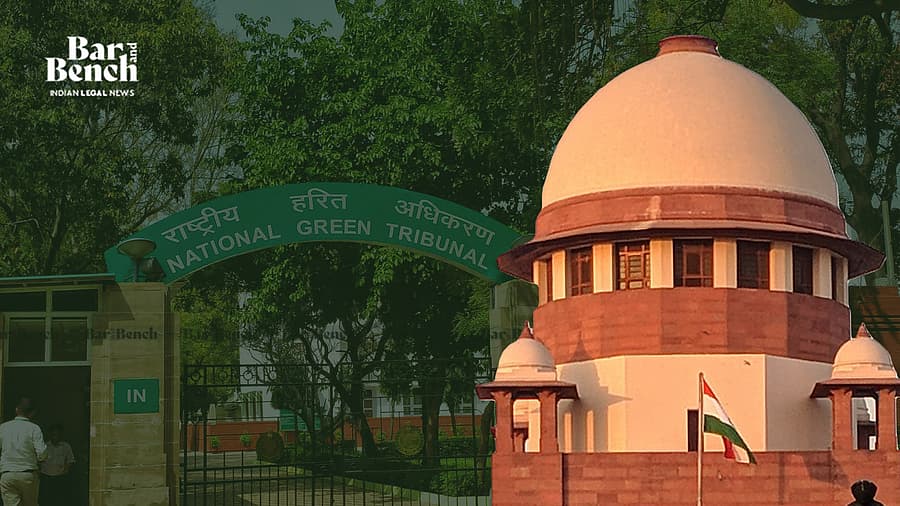
Supreme Court: NGT Bar Supreme Court Members Shortage Prompts Urgent Listing
Summary
- The NGT Bar Association informed the Supreme Court that three NGT zonal benches face potential closure due to a shortage of members.
- The extended tenures of several NGT members are set to expire on September 8, threatening to halt bench operations.
- A Supreme Court bench, including CJI Surya Kant, agreed to urgently list the matter before the September 8 deadline, moving it from its original September 15 date.
- This situation follows earlier Supreme Court orders in February and March that extended judicial members' tenures to prevent NGT dysfunction due to vacancies.
Urgent Concerns Over NGT Member Shortage
The extended tenures of several existing NGT members are set to expire on September 8. Should these tenures not be further addressed, the functioning of the affected NGT benches could cease entirely, significantly impacting environmental justice delivery across various regions.
The National Green Tribunal (NGT) Bar Association recently brought to the attention of the Supreme Court a pressing concern regarding the potential operational halt of three of the NGT's zonal benches. This looming issue stems directly from a critical shortage of members, which could render these crucial environmental adjudication bodies non-functional in the near future.
The Bar Association highlighted that the extended tenures of several existing NGT members are set to expire on September 8. Should these tenures not be further addressed, the functioning of the affected NGT benches could cease entirely, significantly impacting environmental justice delivery across various regions. This development underscores the ongoing challenges faced by the National Green Tribunal due to persistent National Green Tribunal vacancies.
Responding to the NGT Bar Association's plea for an urgent listing of the matter, a Supreme Court bench comprising Chief Justice of India Surya Kant and Justices Joymalya Bagchi and V Mohana indicated their willingness to expedite proceedings. The Court stated, "Then we may list the matter before September 8," acknowledging the critical deadline. This decision effectively moves up the hearing from its originally scheduled date of September 15, signaling the judiciary's recognition of the urgency surrounding the NGT Bar Supreme Court members shortage.
Supreme Court's Prior Interventions and Extensions
The current predicament is not an isolated incident but rather unfolds against a backdrop of previous Supreme Court interventions aimed at ensuring the National Green Tribunal's continued functionality amidst staffing challenges. Earlier orders from the apex court had sought to prevent the NGT from becoming dysfunctional due to recurring vacancies among its judicial members, a persistent issue impacting various tribunals across India.
In February, the Supreme Court had specifically noted that the impending retirement of several judicial members would severely impede the NGT's operations in multiple locations. As a temporary measure to mitigate this impact, the Court permitted three judicial members to continue in their roles, pending the appointment of new members or further judicial directives. This stopgap arrangement was crucial in maintaining some level of operational continuity.
Subsequently, on March 9, the Supreme Court issued a broader directive, extending the tenure of chairpersons and members across various tribunals, including the NGT. This extension applied to individuals whose terms were originally scheduled to expire between March 9 and September 8, 2026, granting them a uniform extension until September 8 of the current year. This Supreme Court NGT member extension was, however, subject to applicable maximum age limits for tribunal members. The primary objective of this comprehensive extension was to prevent a widespread breakdown in tribunal operations, addressing concerns that a wave of Tribunal member tenure expiry India could lead to significant judicial backlogs and administrative paralysis.
Potential Impact on Environmental Justice
The potential non-functionality of three NGT zonal benches, as highlighted by the NGT Bar, carries significant implications for environmental governance and the timely resolution of ecological disputes. The National Green Tribunal plays a pivotal role in adjudicating cases related to environmental protection and conservation, and any disruption to its operations could lead to substantial delays in justice for environmental matters.
If the extended tenures of members are not resolved before September 8, the NGT zonal benches non-functional status could create a backlog of cases, impacting individuals, corporations, and government bodies awaiting decisions on critical environmental issues. This situation underscores the broader challenge of maintaining adequate judicial and expert member strength in specialized tribunals, which are essential for upholding environmental laws and regulations. The Supreme Court's decision to list the matter urgently reflects the high stakes involved in ensuring the NGT remains fully operational to fulfill its mandate.
Practical Implications
Lawyers with ongoing or planned matters before NGT zonal benches should anticipate potential operational disruptions and delays due to member shortages, necessitating proactive case management and client communication. Compliance officers should monitor the NGT's operational status as potential disruptions could impact environmental regulatory enforcement and timelines for their organisations.
Source
How does this affect you?
Get an AI analysis of this article grounded in your jurisdictions, practice areas, and any policy documents you've uploaded to Wansom.
Finish Reading the Full Story and the Expert Analysis.
Wansom is AI and can make mistakes.