
Ghana OSP: Patricia Appiagyei Investigation Launched Over GH¢70K Claim
Summary
- A circulating memorandum alleged Asokwa MP Patricia Appiagyei received GH¢70,000 related to parliamentary vetting of nominees.
- Ms. Appiagyei has denied the allegations and publicly distanced herself from the document's contents.
- The Office of the Special Prosecutor (OSP) has launched a preliminary investigation into the alleged payment, the memorandum's authenticity, and its source.
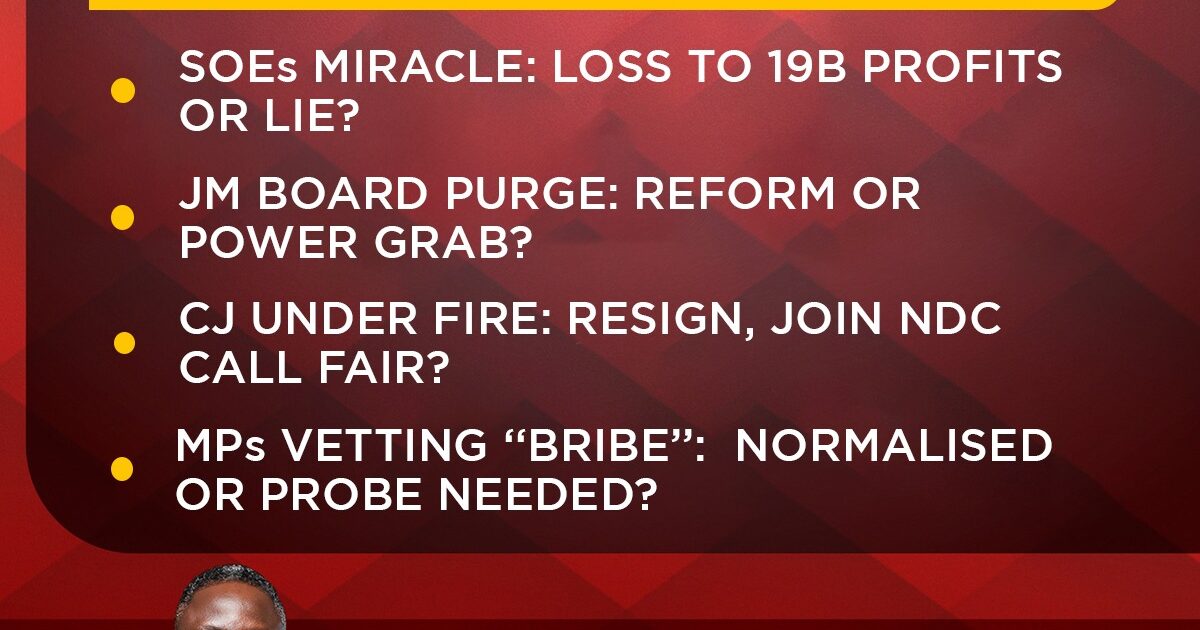
- Ghanaian State-Owned Enterprises (SOEs) reportedly swung from a GH¢2.2 billion loss in 2024 to a GH¢19.8 billion net profit in 2025, though questions remain about dividend distribution.
- President Mahama dissolved the boards of nine major state institutions, while Chief Justice Paul Baffoe-Bonnie's comments on institutional performance drew political criticism from the NPP.
What Happened: Parliamentary Vetting Under Scrutiny
The Office of the Special Prosecutor's preliminary investigation into the alleged GH¢70,000 payment to Patricia Appiagyei highlights the critical role of independent bodies in upholding public trust and ensuring accountability within Ghana's political landscape.
A recent controversy has cast a shadow over the integrity of Ghana's parliamentary vetting process, following the emergence of a memorandum alleging financial impropriety. This document, which has circulated widely in the media, claims that Patricia Appiagyei, the Asokwa Member of Parliament and Deputy Minority Leader, received a sum of GH¢70,000. The alleged payment was reportedly linked to the vetting of nominees for both ministerial positions and the Supreme Court.
In response to these serious allegations, Ms. Appiagyei has vehemently denied any involvement, publicly distancing herself from the contents of the memorandum. The gravity of the claims, however, has prompted intervention from a key anti-corruption body. The Office of the Special Prosecutor (OSP) has initiated a preliminary investigation into the matter, focusing on several critical aspects.
The OSP's inquiry aims to ascertain the authenticity of the circulating memorandum, identify its original source, and determine the precise circumstances surrounding the claims made within it. Crucially, the investigation will seek to establish whether any money was indeed paid, for what specific purpose, and why Ms. Appiagyei was named in the document. This probe underscores significant questions regarding the transparency and integrity of parliamentary procedures, particularly the vetting of high-profile public officials. The outcome of the Ghana OSP Patricia Appiagyei investigation is anticipated to shed light on these pressing concerns.
Broader Governance and Accountability Debates
Beyond the parliamentary controversy, Ghana's public sector is grappling with a wider debate surrounding governance, accountability, and political influence, particularly concerning State-Owned Enterprises (SOEs). Recent reports indicate a dramatic financial turnaround for these entities, collectively moving from a GH¢2.2 billion loss in 2024 to an impressive GH¢19.8 billion net profit in 2025. The government attributes this significant shift to factors such as increased revenues, reduced finance costs, and improved foreign-exchange performance.
Despite these celebratory figures, questions persist regarding the distribution of these profits, with observers noting that the government received only a fraction of the total in dividends. Concerns have also been raised about whether this headline figure is skewed by a few exceptionally strong performers, potentially masking continued losses in other SOEs. Amidst this financial discussion, President Mahama has taken decisive action, dissolving the governing boards of nine major state institutions, including prominent entities like BOST, VALCO, CBG, GNPC, Ghana Post, TDC, and the National Sports Authority. Further changes, potentially involving some SOE chief executives, are also anticipated.
This wave of board dissolutions has sparked debate about its underlying motivations: whether it represents a genuine governance reset aimed at enhancing performance and accountability, or merely another cycle of political appointments and leadership changes. Concurrently, the performance of public institutions has drawn the Chief Justice, Paul Baffoe-Bonnie, into a political storm. His public comments, praising improvements in some state entities such as MIIF and SSNIT while questioning Ghana's progress over the preceding eight years, have elicited sharp criticism from the NPP. The party contends that the Chief Justice has ventured into partisan politics and should resign, while others argue that acknowledging institutional performance does not inherently constitute political campaigning, raising questions about the appropriate boundaries for judicial commentary.
Legal and Ethical Scrutiny
The Office of the Special Prosecutor's preliminary investigation into the alleged GH¢70,000 payment to Patricia Appiagyei highlights the critical role of independent bodies in upholding public trust and ensuring accountability within Ghana's political landscape. The OSP's mandate extends to meticulously examining the veracity of the claims, the origins of the memorandum, and the circumstances surrounding the alleged transaction. This probe is crucial for determining whether any illicit payments occurred and for what purpose, ultimately aiming to clarify the integrity of the parliamentary vetting process.
The broader implications of these ongoing controversies underscore a pressing need for enhanced transparency and ethical conduct across all branches of government. The questions surrounding the SOE profits, the rationale behind the board dissolutions, and the Chief Justice's public statements all contribute to a national discourse on good governance. The OSP's active involvement in the Appiagyei case serves as a significant indicator of the state's commitment to addressing allegations of corruption and ensuring that public officials are held to the highest standards. The resolution of this investigation will be pivotal in reinforcing public confidence in Ghana's institutions and their ability to operate without undue influence or financial impropriety.
Source
How does this affect you?
Get an AI analysis of this article grounded in your jurisdictions, practice areas, and any policy documents you've uploaded to Wansom.
Finish Reading the Full Story and the Expert Analysis.
Wansom is AI and can make mistakes.