
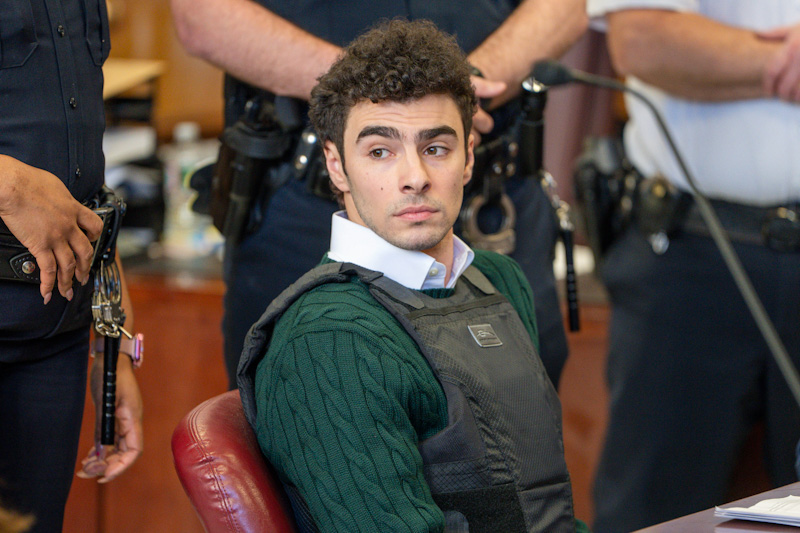
New York Supreme Court Justice Gregory Carro: No Media Influence on Mangione Trial Access
Summary
- Luigi Mangione's lawyers raised concerns about public access to his murder trial, alleging that the court and Manhattan district attorney could 'hand-pick' reporters.
- New York Supreme Court Justice Gregory Carro denied these allegations, stating that the district attorney's office played no role in determining media or public access.
- The Mangione trial has sparked a debate over the balance between public access and maintaining impartiality in the justice system.
- The case highlights the need for a nuanced approach to balancing public access with the integrity of the justice system.
What Happened
At no time did the district attorney's office participate in those discussions, nor did it play any role in determining media or public access. Any suggestion [otherwise] … is simply incorrect.
Luigi Mangione, accused of fatally shooting Brian Thompson, the CEO of UnitedHealthcare, in December 2023, has been at the center of a heated debate over public access to his murder trial. In July, Mangione's lawyers filed a letter expressing concerns that the court and Manhattan district attorney were able to 'hand-pick' reporters attending the proceedings. This led New York Supreme Court Justice Gregory Carro to address the issue from the bench on Tuesday, stating that the district attorney's office played no role in determining media or public access.
Legal Context
The Mangione trial has been a topic of interest for social media content creators due to its high-profile nature. However, it also raises questions about the potential impact on unbiased juries. In New York, there is a ban on audiovisual coverage in trial proceedings, which dates back to the 1930s. This has led to a discussion about the balance between public access and maintaining impartiality in the justice system.
Why It Matters
The Mangione trial serves as a microcosm for the ongoing debate over public access to court proceedings. As the case continues, lawyers should be aware of the potential implications on jury impartiality, particularly given the unusual level of media attention and public interest in this case. The trial's audiovisual coverage ban also highlights the need for a nuanced approach to balancing public access with the integrity of the justice system.
Practical Implications
Lawyers should be aware of the ongoing debate over public access to the Mangione trial and potential implications for jury impartiality, particularly given the unusual level of media attention and public interest in this case.
Source
How does this affect you?
Get an AI analysis of this article grounded in your jurisdictions, practice areas, and any policy documents you've uploaded to Wansom.
Wansom is AI and can make mistakes.