
NetDocuments: Redesigned Platform Unveils Legal Context Graph for AI
Summary
- NetDocuments has launched a redesigned user experience, new Microsoft 365 integration, and real-time co-authoring features.
- The NetDocuments Legal Context Graph, a proprietary knowledge infrastructure, continuously maps relationships across a firm's document repository.
- This graph enhances AI agent performance and can significantly reduce token consumption costs for AI in legal document management.
- New features include tabular review, document generation, redlining in the NetDocuments assistant, interactive HTML reports, and new AI connectors.
- The Legal Context Graph offers substantial benefits to smaller and mid-sized firms lacking dedicated knowledge management staff.
A Revitalized Platform for Legal Professionals
A notable benefit of the NetDocuments Legal Context Graph is its potential to substantially reduce the costs associated with token consumption, a critical factor in the deployment of large language models and AI tools.
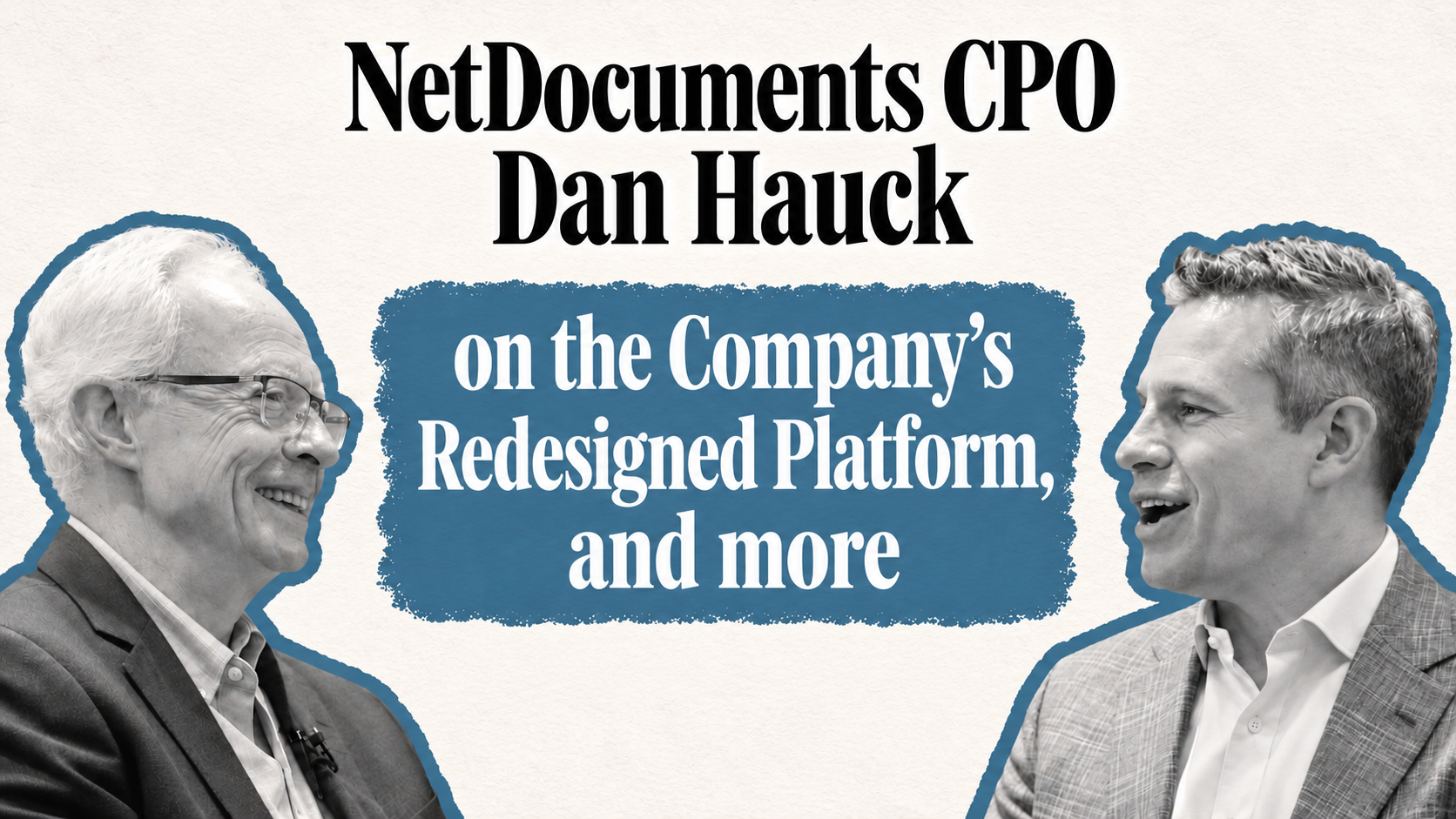
NetDocuments has unveiled a comprehensively redesigned user experience, marking a significant evolution in its document management system. This update introduces a new integration with Microsoft 365, alongside enhanced real-time co-authoring capabilities, aiming to streamline workflows for legal practitioners. The company’s Chief Product Officer, Dan Hauck, discussed these advancements during an interview with LawNext host Bob Ambrogi, conducted live at the NetDocuments Inspire conference in Orlando last October.
Hauck, who previously appeared on the program in 2022, elaborated on the strategic decision to re-envision the platform's interface for an "agent-ready world." A key aspect of this rollout is the flexibility offered to clients, allowing them to seamlessly transition between the legacy and new experiences without any mandatory migration. Furthermore, the updated Microsoft 365 add-in is designed to supersede older desktop integrations, ensuring lawyers can maintain productivity across various operating systems, including Windows, Mac, and mobile devices. This interview was one of three recorded at the conference, following a prior discussion with NetDocuments CEO Josh Baxter.
Unlocking Insights with the NetDocuments Legal Context Graph
Central to NetDocuments' latest innovations is the NetDocuments Legal Context Graph, a proprietary knowledge infrastructure introduced earlier this year. This sophisticated system is engineered to continuously map and understand the intricate relationships between every matter, document, communication, and individual across an entire firm's document repository. Hauck detailed how this graph functions as a foundational element, significantly enhancing the performance of AI agents by providing them with a deeper, interconnected understanding of legal data.
A notable benefit of the NetDocuments Legal Context Graph is its potential to substantially reduce the costs associated with token consumption, a critical factor in the deployment of large language models and AI tools. By intelligently structuring and connecting information, the graph optimizes how AI agents process and retrieve data, leading to more efficient resource utilization. This advancement is particularly relevant for firms seeking to leverage AI in legal document management without incurring prohibitive operational expenses.
Expanding AI Capabilities and Platform Features
Beyond the core platform redesign and the NetDocuments Legal Context Graph, NetDocuments announced several other key enhancements. These include the general availability of tabular review, offering new ways to analyze document sets. The NetDocuments assistant has also been upgraded with new functionalities for document generation and redlining, further automating routine tasks. Additionally, the platform now supports interactive HTML reports, providing more dynamic data visualization.
In a move to broaden its AI ecosystem, NetDocuments introduced a beta MCP connector with Legora, complementing its existing integrations with leading AI platforms such as Claude, ChatGPT, and Copilot. Hauck, a former litigator who founded ThreadKM before its acquisition by NetDocuments, drew parallels between the current AI transformation and the early days of technology-assisted review in e-discovery. He highlighted how both periods emphasize the synergy between human expertise and machine processing speed.
Strategic Vision for an Agentic DMS
Hauck underscored NetDocuments' ongoing commitment to developing its own interface, even as the MCP framework allows users to access their documents through other AI platforms. This strategic decision reflects a dedication to providing a comprehensive, integrated experience within the NetDocuments ecosystem. He also addressed the significant advantages the NetDocuments Legal Context Graph offers to smaller and mid-sized firms, particularly those operating without dedicated knowledge management staff. The graph's automated relationship mapping can democratize access to sophisticated knowledge organization, traditionally requiring specialized personnel.
The discussion also explored the future landscape of an "agentic DMS," envisioning how such a system could fundamentally reshape daily legal practice by proactively assisting users with contextually relevant information and automated actions. This forward-looking perspective positions NetDocuments at the forefront of AI in legal document management, aiming to deliver enhanced efficiency and deeper insights across the legal sector.
Practical Implications
Lawyers and compliance officers should evaluate NetDocuments' new Legal Context Graph and redesigned platform for enhanced knowledge management, improved efficiency through AI-driven insights, and seamless integration with Microsoft 365, particularly considering its potential to reduce token consumption costs and benefit smaller firms without dedicated KM staff.
Source
How does this affect you?
Get an AI analysis of this article grounded in your jurisdictions, practice areas, and any policy documents you've uploaded to Wansom.
Wansom is AI and can make mistakes.