
NE: Chronique d’un Entretien: Le Général Tiani a Parlé… (Épilog) on Mali Bribe
Summary
- General Abdourahamane Tiani revealed that mercenaries bribed security agents with 10,000 FCFA to facilitate a 2026 attack in Kati, Mali.
- Tiani urged Nigeriens to increase vigilance against corruption and external threats, emphasizing the need for a collective awakening of conscience.
- He recounted the 'infernal column' of Voulet and Chanoine, which massacred Nigeriens and enslaved 1,100 people, including 300 women.
- The General called upon citizens to pray, work diligently, and make sacrifices to preserve their freedom and national dignity.
- Tiani encouraged self-education and a strong sense of national history, dismissing external narratives and criticisms, particularly from France.
Key Revelations from a National Interview
General Tiani underscored that this historical account, marked by massacres and enslavement, represents 'not our history, but the history of the French,' signaling a decisive break from such narratives and asserting Niger's distinct historical identity and sovereignty.
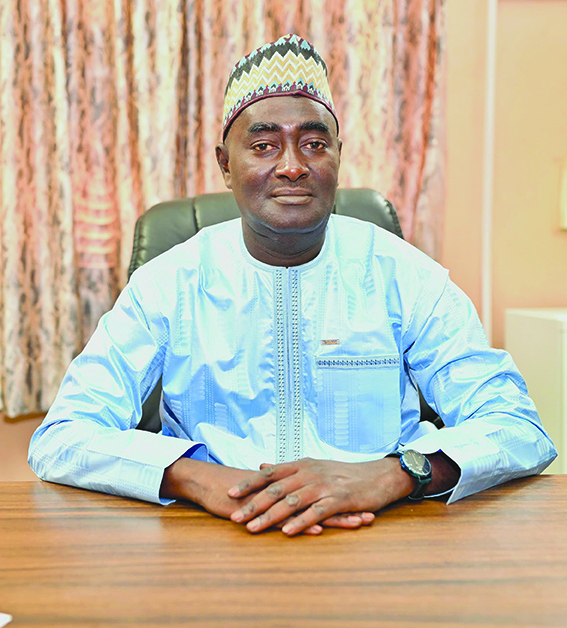
General Abdourahamane Tiani, serving as the President of the Republic and Head of State, recently made significant disclosures during a radiotelevised interview conducted in Hausa and Zarma-Sonrai. Among the most striking revelations was the detailed account of how mercenaries managed to execute an attack in Kati, Mali, on April 25, 2026. According to General Tiani, these assailants successfully gained access to their target area by bribing security personnel at a control barrier.
The General specified that the bribe amounted to a mere 10,000 FCFA. This small sum was enough to sway the security agents, who were described as distracted and negligent, leading them to forgo proper inspection or searching of the vehicle-kamikaze. Tiani highlighted that this oversight, combined with the assailants' willingness to corrupt, created the perfect conditions for the site's eventual explosion. He emphasized that this incident should serve as a stark reminder, urging a collective awakening of conscience and heightened vigilance against adversaries who readily employ corruption to achieve their nefarious objectives.
This particular disclosure underscores a critical vulnerability in security protocols and the pervasive threat of corruption, even at seemingly minor checkpoints. The ease with which a significant attack could be facilitated by such a small bribe points to systemic issues that General Tiani implicitly called upon the nation to address with greater seriousness and unwavering resolve.
Historical Context and National Identity
Beyond the immediate security concerns, General Tiani also used the interview as a platform to revisit pivotal historical events, particularly those illustrating what he termed France's 'legendary atrocity' when pursuing its own interests. He specifically invoked the infamous 'infernal column' led by Voulet and Chanoine, recounting its brutal campaign that resulted in the massacre of Nigeriens, beginning from Sansane Haousa.
This column of death, as described by Tiani, took 1,100 Nigeriens hostage, including 800 porters and 300 women who were subjected to sexual enslavement. The column's murderous rampage was eventually halted at Dan Kori, an event that the French have controversially labeled 'the drama of Dan Kori.' General Tiani underscored that this historical account, marked by massacres and enslavement, represents 'not our history, but the history of the French,' signaling a decisive break from such narratives and asserting Niger's distinct historical identity and sovereignty.
A Call for Resilience and Self-Reliance
In a broader appeal to the populace, General Tiani exhorted Nigeriens to engage in fervent prayers and invocations, coupled with unwavering dedication, effort, and personal sacrifices. He framed this as a non-negotiable path, stating that the nation has 'no other choice if we want to remain free men.' This message resonated with a call for collective national effort and spiritual fortitude in the face of challenges.
The President further encouraged citizens to uphold and continue the practices that have historically served them well, enabling the nation to endure for three years despite initial predictions of a mere two-week survival. He reiterated the importance of maintaining this resilience, urging everyone to pray and work diligently for the betterment of their country and their shared communal space. This emphasis on self-reliance and internal strength forms a cornerstone of his vision for Niger's future.
Challenging External Narratives
General Tiani also addressed external perceptions and criticisms, particularly those emanating from France. He asserted that Niger has successfully maintained its dignity, responsibility, and independence, despite what he characterized as the 'morbid animosity' of French President Emmanuel Macron. Tiani drew a historical parallel, noting that France itself 'knelt from the first hours of the Second World War in front of the Hitlerian steamroller,' implying a lack of moral standing for external judgment.
He delivered a powerful message to current and future generations, urging them to shed any sense of inferiority. 'People should not be complexed. Read! Educate yourselves! You will have no complex in front of anyone!' he declared. Tiani affirmed that this commitment to self-education and a deep understanding of their 'glorious past' is a deliberate choice. He concluded by emphasizing that historical truth cannot be masked, asserting that 'it's not just anyone, barefoot people who will change the situation, it's a historical truth! Everything was done to cover it up but the truth cannot be covered up!'
Source
How does this affect you?
Get an AI analysis of this article grounded in your jurisdictions, practice areas, and any policy documents you've uploaded to Wansom.
Wansom is AI and can make mistakes.