
Niger: ZIMAR Dosso Refinery Agreement Signed for 16-Year Project
Summary
- Niger and the ZIMAR Group signed a US$1.9 billion agreement on August 15, 2026, for the construction of the Niger ZIMAR Dosso refinery and a petrochemical complex.
- The agreement is structured as a 16-year Build, Operate, and Transfer (BOT) public-private partnership, including three years for construction and thirteen years for operation.
- The new facility is designed to process 100,000 barrels of crude oil per day, aiming to achieve Nigerien energy sovereignty and industrial transformation.
- ZIMAR Group and its American partner High Tech are responsible for the project's design, financing, construction, operation, and eventual transfer to the state.
- Key financial deadlines include four months for initial financing mobilization and detailed engineering, with financial close required within twelve months of the agreement's signing.
What Happened
This significant Niger ZIMAR Dosso refinery agreement, structured as a Build, Operate, and Transfer (BOT) public-private partnership, is valued at an estimated US$1.9 billion and is set to transform the nation's energy landscape.
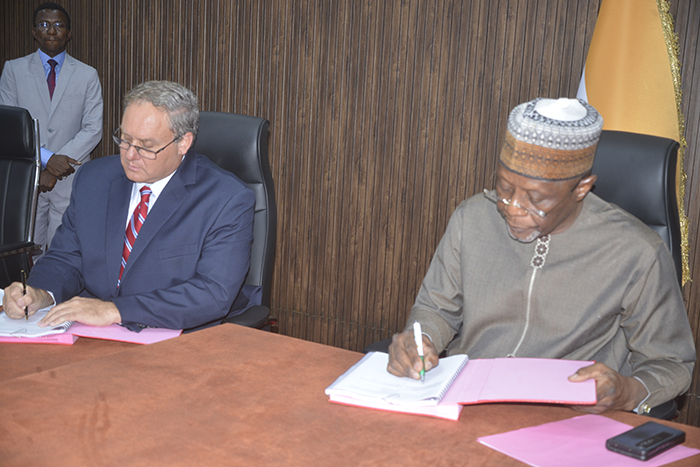
On Saturday, August 15, 2026, a pivotal agreement was formally signed between the Republic of Niger and the ZIMAR Group for the construction of a significant Niger ZIMAR Dosso refinery and petrochemical complex. The ceremony, held at the Prime Minister's office, saw Mr. Bakary Yaou Sangaré, who presides over the Committee for Negotiation with Petroleum Partners and serves as the Minister of Foreign Affairs, Cooperation, and Nigeriens Abroad, sign on behalf of Niger. Representing the ZIMAR Group and High Tech consortium was its President-Director General, Mr. Benjamin Day Marc.
This landmark convention, which immediately entered into force upon signing, outlines a comprehensive 16-year engagement. This period is allocated for three years of construction followed by thirteen years of operational management. The ambitious project carries an estimated cost of US$1.9 billion, marking a substantial investment in Niger's energy infrastructure.
Project Scope and Strategic Vision
The agreement specifically details the design, financing, construction, operation, and eventual transfer of a conventional refinery with an impressive capacity of 100,000 barrels per day, alongside a co-located petrochemical complex in Dosso. This initiative is a direct continuation of a Memorandum of Understanding (MOU) that was initially signed in October 2024, which paved the way for detailed discussions with the consortium comprising ZIMAR Group, a company established under Nigerien law, and High Tech, an American entity.
Niger's leadership views this project as integral to the strategic vision articulated by General Abdourahamane Tiani, the President of the Republic and Head of State. The overarching goal is to leverage national resources, particularly petroleum, as a crucial driver for achieving energy sovereignty, fostering industrial transformation, and stimulating broader economic development across the nation. The Niger ZIMAR High Tech refinery construction is thus positioned as a cornerstone of this national strategy.
Legal and Financial Framework
The chosen model for this undertaking is a Public-Private Partnership (PPP) structured as a Build, Operate, and Transfer (BOT) arrangement. Under this framework, the private partner, the ZIMAR Group and High Tech consortium, assumes full responsibility for the financing, construction, and operation of the facility for the agreed duration. Following the operational period, the entire complex will be transferred to the ownership of the Nigerien state, in accordance with the specific terms stipulated in the convention.
To safeguard state interests and ensure diligent execution, the agreement includes precise financial deadlines. The consortium is mandated to mobilize the necessary financing and produce detailed engineering plans within four months of the signing. Furthermore, the critical financial close for the entire Dosso petrochemical complex PPP must be achieved within twelve months. This convention is the culmination of a rigorous process of examination, discussion, and arbitration, meticulously conducted to adhere to the legal framework governing public-private partnerships in Niger and to consistently prioritize the superior interests of the state.
Economic Impact and Regional Significance
Mr. Benjamin Day Marc, representing the ZIMAR Group, emphasized that the refinery will be a modern, world-class facility, strategically vital for Niger's development. He highlighted its potential to eliminate Niger's reliance on external sources for refined petroleum products. Upon commissioning, all fuels required for the country's transportation (trucks), agriculture (tractors), and power generation (generators) will be Nigerien products, refined on Nigerien soil from Nigerien crude oil by Nigerien personnel.
This Niger petroleum sector investment is expected to significantly bolster the nation's self-sufficiency. Beyond meeting domestic demand, the ZIMAR Group's President-Director General also indicated that any surplus production from the refinery could be directed to supply neighboring countries within the sub-region, further enhancing Niger's role as a regional energy player and contributing to broader economic stability.
Practical Implications
The signing of this significant PPP/BOT agreement for the Dosso refinery and petrochemical complex establishes a major precedent and framework for large-scale infrastructure projects in Niger's energy sector. Lawyers advising clients on project finance, energy investments, or public-private partnerships in Niger should analyze the specific terms of this convention, including financing deadlines and operational responsibilities, to understand the regulatory landscape and potential opportunities or compliance obligations for future engagements in the country's oil and gas industry.
Source
How does this affect you?
Get an AI analysis of this article grounded in your jurisdictions, practice areas, and any policy documents you've uploaded to Wansom.
Wansom is AI and can make mistakes.