
Kenyan National Assembly: Approves 1/3 Voter Threshold for MP Recall
Summary
- The National Assembly approved a one-third voter threshold for recalling Members of Parliament and Senators.
- For MPs, one-third of registered voters in every ward of the affected constituency must concur for a recall.
- For Senators, one-third of registered voters in every constituency of the affected county is required for a recall.
- Recall by-elections will be decided by a simple majority of participating voters.
- The bill now proceeds to the Senate, and mediation will be required due to changes made by both Houses.
What Happened
Mohamed argued that a one-third requirement, applied to registered voters in every ward, would effectively strike a balance, offering citizens a meaningful mechanism to hold their representatives accountable while simultaneously safeguarding elected officials from unwarranted challenges.
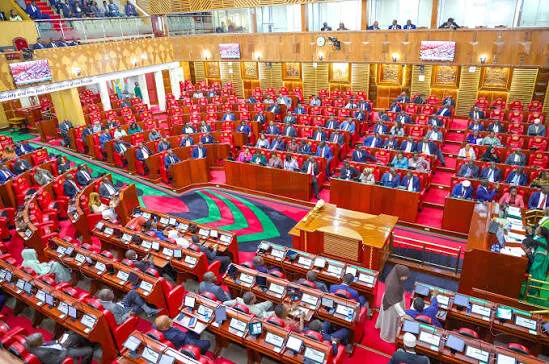
The Kenyan National Assembly recently concluded a significant debate, ultimately endorsing key provisions within the Elections Amendment (No. 2) Bill, Senate Bill No. 29 of 2024. This legislative action, taken on October 22 in Nairobi, establishes new requirements for the recall of elected representatives. Specifically, the approved amendments mandate that for a National Assembly member to face a recall election, support from at least one-third of the registered voters in every ward within their affected constituency is necessary.
Similarly, the bill sets a comparable threshold for senators, requiring the concurrence of at least one-third of registered voters in every constituency within the affected county. Beyond initiating the recall process, the legislation also clarifies the mechanism for determining the outcome of any subsequent by-election. It stipulates that the winner of a recall by-election will be decided by a simple majority of the votes cast by participating electors. These crucial amendments now pave the way for the bill to return to the Senate for further review and concurrence.
The Path to Agreement
The journey to this approval was marked by extensive deliberation, with Members of Parliament engaging in a prolonged debate over the appropriate threshold for recalling elected officials. Initially, Clause 26A of the bill was recommitted to the Committee of the Whole House to allow for a more thorough examination of this contentious issue. During these discussions, an amendment to Clause 26A was put forward by Kimani Kuria, who initially advocated for a more stringent requirement.
Kuria's original proposal suggested that a recall election should only proceed with the backing of at least half (50%) of the registered voters in each ward for an MP, or in each constituency for a senator. His proposition also included the provision for a simple majority to decide the by-election winner. However, this 50% threshold met considerable resistance from other MPs, who voiced concerns that such a high bar would render the recall process practically unachievable and potentially expose the law to subsequent legal challenges.
Legal and Political Context
The debate saw prominent figures weigh in on the proposed thresholds, highlighting the delicate balance between ensuring accountability and preventing politically motivated or frivolous recall attempts. Minority Leader Junet Mohamed strongly urged the House to adopt the one-third threshold, aligning with the recommendation from the Justice and Legal Affairs committee. Mohamed underscored the importance of learning from past experiences, referencing previous court rulings that had invalidated earlier provisions governing the recall of elected representatives. He cautioned that ignoring these judicial precedents would lead to "legislating in vain," as such a law would likely be challenged and rejected by the courts again.
Mohamed argued that a one-third requirement, applied to registered voters in every ward, would effectively strike a balance, offering citizens a meaningful mechanism to hold their representatives accountable while simultaneously safeguarding elected officials from unwarranted challenges. Majority Leader Kimani Ichung’wah echoed this sentiment, also opposing the 50% proposal. Ichung’wah pointed out the practical difficulty for many MPs to meet a recall threshold higher than the support they garnered during their initial election, stating that "many of us are not elected by 50 per cent of the registered voters in each ward, facts of life." He emphasized that legislation should protect voters' recall rights while guarding against petitions driven by political motives, adding that "To convince in every ward, including your home ward, a third of your voters that you should go home, then it would mean there’s something absolutely wrong that you have done to the people." He concluded by stating, "We legislate for posterity, we don’t legislate for ourselves." Following these discussions, West Mugirango MP Stephen Mogaka introduced a further amendment to Kuria’s proposal, successfully advocating for the reinstatement of the one-third threshold, which was subsequently adopted. Kuria himself later expressed support for this revised provision, acknowledging its comprehensive approach to the recall process.
Source
How does this affect you?
Get an AI analysis of this article grounded in your jurisdictions, practice areas, and any policy documents you've uploaded to Wansom.
Finish Reading the Full Story and the Expert Analysis.
Get the latest legal & regulatory intelligence in Kenya
Wansom is AI and can make mistakes.