
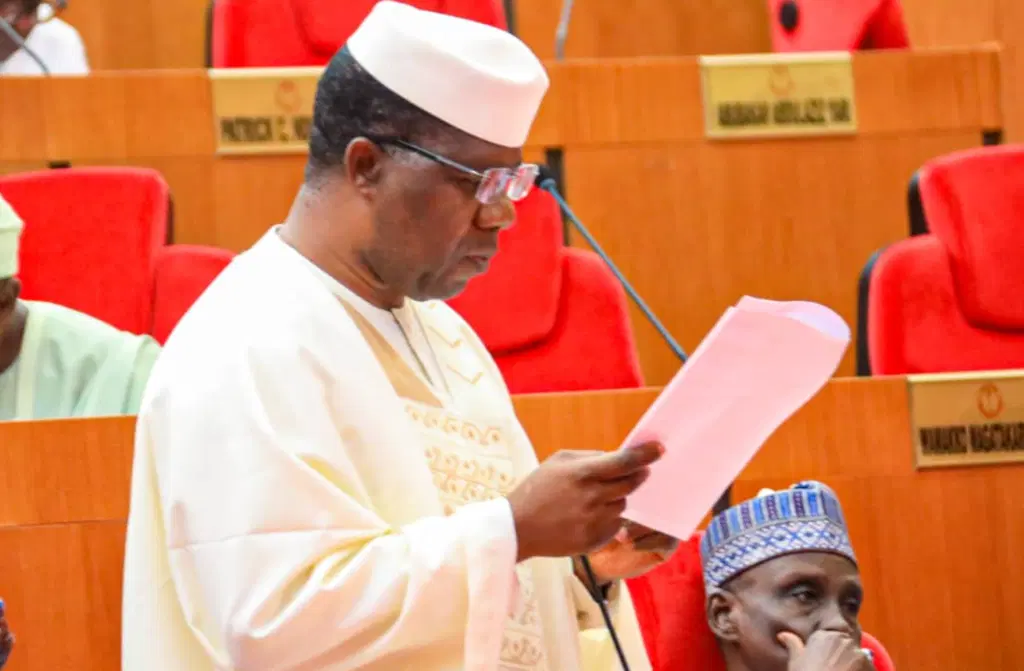
NASS to Transmit State Police Bill to Tinubu This Week
Summary
- Senator Bamidele announced that the National Assembly will transmit a state police bill to President Tinubu this week.
- The transmission will proceed regardless of whether all states have submitted their reports.
- This legislative action is driven by the need for national progress and to fulfill the aspirations of the people.
- The bill's transmission marks a critical step towards potentially decentralizing policing powers in Nigeria.
Forthcoming Legislative Transmission
Senator Bamidele has confirmed that the National Assembly (NASS) is poised to transmit a significant piece of legislation, specifically a bill concerning the establishment of state police, to President Tinubu within the current week.
Senator Bamidele has confirmed that the National Assembly (NASS) is poised to transmit a significant piece of legislation, specifically a bill concerning the establishment of state police, to President Tinubu within the current week. This announcement signals a critical advancement in the legislative process, indicating that the parliamentary body has concluded its work on the proposed law and is ready for executive consideration. The swiftness of this action underscores a clear intent to move forward with this key policy initiative without delay.
The transmission of a bill to the President represents a pivotal moment in its journey to becoming law. It signifies that the legislative arm of government has completed its deliberations, debates, and amendments, culminating in a finalized document for the President's assent or veto. This particular bill, addressing the contentious and widely discussed issue of state police, carries substantial implications for Nigeria's security architecture and federal structure, making its imminent transmission a notable development.
Commitment to National Progress
A crucial aspect of Senator Bamidele's statement is the National Assembly's resolve to proceed with the bill's transmission irrespective of outstanding reports from various states. This decision highlights a determined legislative posture, prioritizing national momentum and the advancement of critical reforms over a potentially prolonged waiting period for full regional input. The commitment to move forward, even in the absence of complete state-level submissions, underscores a legislative strategy focused on decisive action.
This approach reflects a broader sentiment that the nation cannot afford to delay progress on vital issues. Senator Bamidele explicitly stated that "the National must move forward," framing the transmission of the state police bill as an essential step in this ongoing national trajectory. Such a declaration emphasizes the imperative for continuous development and responsive governance, suggesting that the legislative body perceives an urgent need to address the underlying issues that the state police initiative aims to tackle.
Addressing Public Aspirations
Central to the National Assembly's impetus for this legislative action is the stated objective to "fulfil the aspiration of the people." This phrase indicates that the proposed state police bill is seen as a direct response to a widespread public demand or a collective desire for enhanced security and more localized law enforcement. The legislative body is thus positioning its actions as aligned with the collective will and addressing significant societal needs.
The concept of fulfilling public aspirations is a cornerstone of democratic governance, implying that the government is responsive to the concerns and desires of its citizens. By advancing the state police bill, the National Assembly is signaling its commitment to translating these popular sentiments into concrete policy. This legislative move suggests an acknowledgment of the populace's call for reforms that could potentially decentralize policing powers and bring law enforcement closer to communities.
Executive Review and Implementation Path
Upon its transmission, the state police bill will enter the executive phase, where President Tinubu will undertake a thorough review of the proposed legislation. This stage is paramount for the bill's ultimate enactment, as presidential assent is required for it to become law. The President's decision will therefore dictate the immediate future and potential implementation of the state police initiative across the nation.
The National Assembly's proactive and timely transmission of the bill, as articulated by Senator Bamidele, suggests an expectation for prompt consideration by the executive branch. This legislative urgency reflects a desire to see this significant reform transition from a parliamentary proposal to an actionable legal framework without undue delay. The entire process, from legislative drafting to executive review, is driven by the overarching goal of fulfilling the aspirations of the people and ensuring national progress.
Source
How does this affect you?
Get an AI analysis of this article grounded in your jurisdictions, practice areas, and any policy documents you've uploaded to Wansom.
Finish Reading the Full Story and the Expert Analysis.
Get the latest legal & regulatory intelligence in Nigeria
Wansom is AI and can make mistakes.