
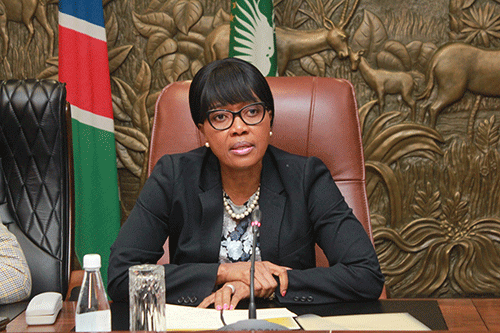
Namibia: Speaker Saara Kuugongelwa-Amadhila Security Costs Clarified
Summary
- The National Assembly recently clarified the security arrangements for Speaker Saara Kuugongelwa-Amadhila.
- This clarification stated that police officers protecting the Speaker are not employed by the parliament or the Speaker herself.
- The official statement was issued on a Thursday by a National Assembly spokesperson.
- The clarification followed claims made by Affirmative Repositioning leader Job Amupanda regarding the Speaker's security personnel.
What Prompted the Clarification
This ongoing dialogue shapes expectations for financial oversight and ethical governance within the Namibian public sector, setting precedents for future disclosures.
Public discourse in Namibia has recently focused on the security provisions for high-ranking officials, leading to a specific clarification regarding the **Namibia Speaker Saara Kuugongelwa-Amadhila security costs**. The National Assembly, through its spokesperson, issued an official statement on a recent Thursday to address inquiries surrounding the protection afforded to its Speaker. This communication directly responded to claims made by Job Amupanda, the prominent leader of the Affirmative Repositioning movement, who had publicly raised questions concerning the specific security personnel assigned to ensure the Speaker's safety. The clarification aimed to provide definitive information amidst growing public and political scrutiny over the allocation of state resources for official security details.
Understanding the Security Arrangements
Central to the **National Assembly Speaker security clarification** was the explicit statement that the police officers tasked with protecting Speaker Saara Kuugongelwa-Amadhila are not under the employment of the parliament itself, nor are they directly employed by the Speaker's office. This distinction is crucial for understanding the nature of **Namibia parliamentary security arrangements**. It indicates that the security detail originates from a different state institution, specifically the national police force, rather than being a direct budgetary responsibility or staffing decision of the legislative body. Consequently, their salaries, benefits, and operational costs are borne by their primary employer, which operates independently from the National Assembly's administrative budget and personnel structure.
Broader Context of Public Official Security Funding
The recent clarification regarding the Speaker's security forms part of a larger, ongoing discussion in Namibia concerning the funding and provision of security for public officials. The allocation of state resources for such purposes, including **public official security funding Namibia**, frequently draws considerable public attention and scrutiny. Citizens and watchdog groups often demand transparency regarding how taxpayer money is utilized to protect government leaders and parliamentary figures. The precise nature of these security arrangements, and which governmental entity bears the ultimate financial responsibility, is a recurring point of interest, particularly when public funds are perceived to be under pressure or when questions of accountability arise within the public sector.
Implications for Governance and Transparency
This recent development underscores the persistent public and political scrutiny directed at state expenditure on public officials in Namibia. For legal professionals advising on public finance, administrative law, or public sector governance, such clarifications are significant. They highlight the evolving standards of transparency and accountability expected from government institutions in a democratic society. The National Assembly's proactive step to clarify the Speaker's security arrangements, even in response to specific public claims, reflects an acknowledgement of the public's right to information regarding how state resources are managed. This ongoing dialogue shapes expectations for financial oversight and ethical governance within the Namibian public sector, setting precedents for future disclosures.
Practical Implications
This clarification highlights the ongoing public and political scrutiny of state expenditure on public officials in Namibia, which lawyers advising on public finance, administrative law, or public sector governance should monitor for potential implications regarding transparency and accountability standards.
Source
How does this affect you?
Get an AI analysis of this article grounded in your jurisdictions, practice areas, and any policy documents you've uploaded to Wansom.
Finish Reading the Full Story and the Expert Analysis.
Wansom is AI and can make mistakes.