
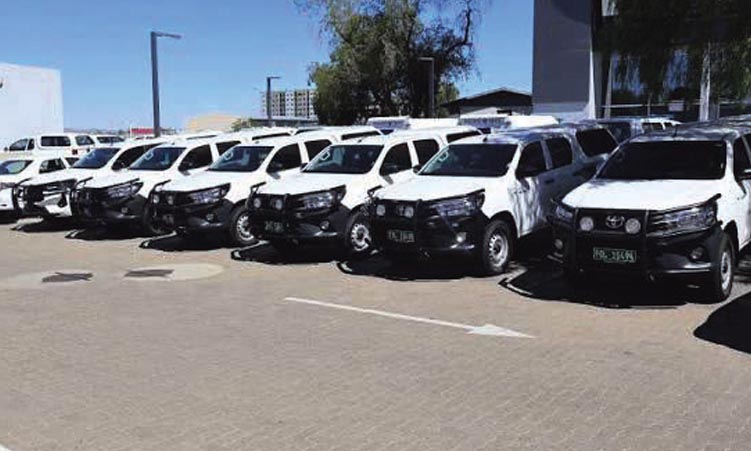
Namibia: N$35.5 Million Government Vehicles Audit Clarified
Summary
- An audit report initially indicated 53 government vehicles, valued at N$35.5 million, were unaccounted for in Namibia.
- The Minister of Works and Transport clarified that these vehicles were not lost but recorded in a different register.
- The vehicles were allocated to various government offices, ministries, and agencies.
- The Ministry's statement, issued on a Friday, aimed to address the audit findings and reassure the public.
- This incident highlights challenges in government asset registration and accountability in Namibia.
What Happened
Compliance officers and legal counsel advising public sector entities in Namibia should review internal asset management and registration protocols to ensure consistency and accuracy.
The Minister of Works and Transport in Namibia recently addressed public concerns following an audit report that highlighted significant discrepancies in the tracking of government vehicles. The audit findings indicated that 53 government vehicles, collectively valued at N$35.5 million, were unaccounted for within the official records. This revelation prompted a swift response from the Ministry, seeking to clarify the status of these assets.
In a press statement issued on a Friday, the Ministry of Works and Transport asserted that the vehicles in question were not, in fact, lost. Instead, the Minister clarified that these vehicles had been duly recorded in a different register. The statement aimed to reassure the public that the assets remained within government control, despite the initial audit's inability to locate them through standard checks. This situation underscores challenges in `government vehicle accountability Namibia` and the management of public assets.
Context of the Discrepancy
The core of the issue appears to stem from a record-keeping inconsistency rather than actual asset disappearance. According to the Minister of Works and Transport Namibia, the 53 vehicles, valued at N$35.5 million, were allocated to various government offices, ministries, and agencies across the country. The fact that they appeared as 'unaccounted for' in one audit report, yet were found in an alternative `government asset register Namibia`, points to potential fragmentation or lack of synchronization in the public asset management system.
This incident highlights the complexities involved in maintaining a comprehensive and unified `government asset register Namibia` for a large fleet of vehicles distributed across numerous entities. While the Minister's statement confirmed the physical presence of the vehicles, the initial `audit findings government assets` exposed a gap in how these assets are centrally tracked and reported, leading to the perception of missing property.
Why It Matters
Even when assets are not genuinely lost, discrepancies in audit findings, such as those related to the `Namibia N$35.5 million government vehicles audit`, can erode public trust and suggest weaknesses in `Namibia public asset management`. The initial report of 53 unaccounted government vehicles, valued at N$35.5 million, created an impression of mismanagement, which the Ministry then had to actively counter.
This situation underscores the critical importance of robust and consistent record-keeping protocols for all public sector entities. Compliance officers and legal counsel advising public sector entities in Namibia should review internal asset management and registration protocols to ensure consistency and accuracy. Effective `government vehicle accountability Namibia` relies on transparent and unified systems, preventing audit discrepancies and safeguarding the reputation of government institutions, even when assets are not truly missing.
Practical Implications
Compliance officers and legal counsel advising public sector entities in Namibia should review internal asset management and registration protocols to ensure consistency and accuracy. This incident highlights the importance of robust record-keeping to prevent audit discrepancies and potential reputational damage, even when assets are not genuinely lost.
Source
How does this affect you?
Get an AI analysis of this article grounded in your jurisdictions, practice areas, and any policy documents you've uploaded to Wansom.
Finish Reading the Full Story and the Expert Analysis.
Get the latest legal & regulatory intelligence in Namibia
Wansom is AI and can make mistakes.