
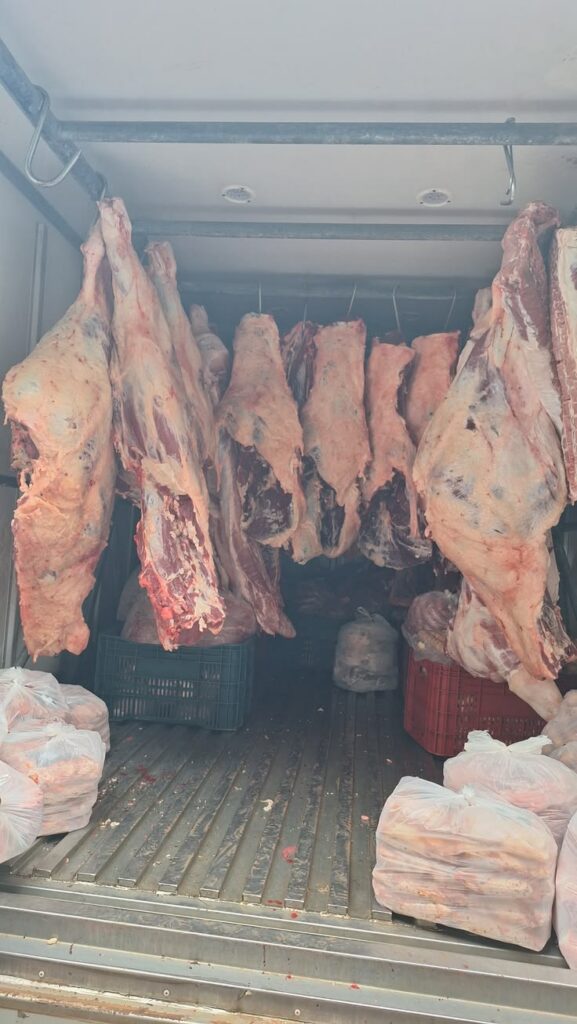
Namibia: ||Kharas Region Allows Meat Deliveries Amid FMD Outbreak
The Ministry of Agriculture, Fisheries, Water and Land Reform in Namibia has recently permitted shops and butcheries in the ||Kharas region to receive meat from approved external suppliers, despite an ongoing foot-and-mouth disease (FMD) outbreak detected last month.
This development signifies a crucial adjustment to the disease control measures previously in place in the ||Kharas region, which has been grappling with an FMD outbreak. The decision, confirmed by Ministry spokesperson Romeo Muyunda, indicates a strategic move to balance public health imperatives with the need to ensure food security and economic continuity. While the exact nature of the prior restrictions is not detailed, this allowance for deliveries from *approved* suppliers suggests a controlled and regulated approach to re-establish the meat supply chain into the affected region, rather than a complete lifting of all FMD-related movement controls. The focus on 'approved suppliers' implies a vetting process to mitigate the risk of further disease transmission.
This policy modification carries significant legal and economic implications for various stakeholders. For businesses operating in the meat supply chain, including abattoirs, transporters, butcheries, and retailers, it provides a pathway to resume or expand operations into the ||Kharas region, albeit under specific conditions. It underscores the government's role in adapting regulatory frameworks to address emergent crises while attempting to minimize economic disruption. The decision also impacts consumers in ||Kharas, ensuring continued access to essential food products. The legal significance lies in the dynamic application of animal health regulations and the need for businesses to remain agile in their compliance strategies.
In Namibia, the legal framework governing animal disease control, including FMD, is primarily enshrined in the Animal Health Act, 2011 (Act No. 1 of 2011), and its subsidiary regulations. This Act grants extensive powers to the Minister of Agriculture, Water and Land Reform to declare disease control areas, impose quarantines, restrict the movement of animals and animal products, and implement other measures deemed necessary to prevent and control outbreaks. The Ministry's decision to allow meat deliveries would have been made under these statutory powers, likely through a ministerial directive or a gazetted notice outlining the specific conditions for 'approved suppliers.' The courts would typically only intervene if there were a legal challenge to the procedural fairness or substantive legality of such a ministerial decision, which is not indicated in the excerpt.
The key parties involved in this development are the Ministry of Agriculture, Fisheries, Water and Land Reform, represented by its spokesperson Romeo Muyunda, as the primary regulatory authority. The directly affected entities include shops and butcheries within the ||Kharas region, as well as meat suppliers located outside the region who are seeking to deliver products. The broader community in ||Kharas is also a significant stakeholder, as the decision directly impacts their access to food and the local economy. Attorneys advising clients in the agricultural, food processing, and retail sectors in Namibia should closely monitor all official communications from the Ministry regarding the FMD outbreak and any associated movement controls. It is imperative for businesses to understand the precise criteria for becoming an 'approved supplier' and to ensure strict compliance with all updated regulations to avoid penalties and contribute to disease containment efforts. Legal professionals should also be prepared to advise on contractual implications, such as force majeure clauses, in light of ongoing or evolving disease control measures.
How does this affect you?
Get an AI analysis of this article grounded in your jurisdictions, practice areas, and any policy documents you've uploaded to Wansom.
Finish Reading the Full Story and the Expert Analysis.
Wansom is AI and can make mistakes.