
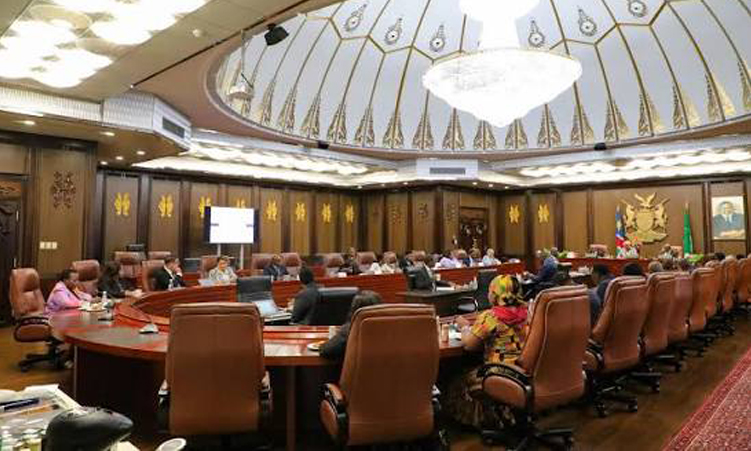
Namibia Cabinet: N$40m Tender Interference Overrides Minister's Award
Summary
- The Namibian Cabinet decided to interfere in a N$40 million tender.
- The tender was originally awarded by the Minister of Agriculture, Fisheries, Water, and Land Reform to American company 6th Grain.
- The contract was for using advanced technology in crop management.
- This Cabinet interference could lead to disruptive consequences for governance.
- The action might allow politicians to interfere in tenders whenever they wish.
Cabinet Intervention in N$40m Tender
The Cabinet's decision to interfere with the N$40 million tender carries with it potentially far-reaching and disruptive consequences for the country's governance and public administration.
The Namibian Cabinet has recently made a contentious decision to intervene in a N$40 million tender, a move that has sparked concerns regarding the integrity of public procurement processes. This particular contract had been previously awarded by the Minister of Agriculture, Fisheries, Water, and Land Reform to an American company identified as 6th Grain. The tender's primary objective was to facilitate the deployment of advanced technological solutions specifically tailored for crop management within the country's agricultural sector.
This intervention by the highest executive body represents a direct override of a departmental decision, raising questions about the established protocols for awarding significant government contracts. The N$40 million valuation of the tender underscores its economic importance and the potential impact of any disruption to its execution. The original award to 6th Grain was presumably based on their specialized expertise in utilizing cutting-edge technology to enhance agricultural productivity and oversight.
The N$40 Million Agricultural Contract
At the heart of the Cabinet's recent action lies a substantial N$40 million tender focused on modernizing crop management practices in Namibia. This significant contract was initially granted to 6th Grain, an American firm recognized for its capabilities in advanced technological applications. The Minister of Agriculture, Fisheries, Water, and Land Reform was the authority responsible for the initial awarding of this tender, indicating that the process had progressed through the relevant ministerial channels before the Cabinet's involvement.
The core purpose of this N$40 million agreement was to introduce sophisticated technological tools and methodologies designed to optimize agricultural output and efficiency. By engaging 6th Grain, the intention was to bring state-of-the-art solutions to Namibia's farming communities, aiming for improved crop yields and more sustainable practices. The specific focus on advanced technology for crop management highlights a strategic effort to bolster the nation's food security and agricultural development.
Potential Undermining of Governance
The Cabinet's decision to interfere with the N$40 million tender carries with it potentially far-reaching and disruptive consequences for the country's governance and public administration. Such an action risks setting a dangerous precedent, effectively creating an environment where political figures might feel empowered to unilaterally intervene in tender processes whenever they deem it appropriate. This could severely compromise the principles of transparency, fairness, and meritocracy that are fundamental to sound public procurement.
The implications extend beyond the immediate N$40 million contract, threatening to destabilize the established framework for awarding government business. If the executive branch can override departmental decisions on tenders at will, it could lead to a system where political influence rather than technical expertise or competitive bidding becomes the primary determinant. This scenario could erode public confidence in the impartiality of the tender system, introduce unpredictability for businesses, and potentially foster an environment susceptible to corruption, ultimately impacting the efficient allocation of public resources and the overall economic stability of the nation.
Source
How does this affect you?
Get an AI analysis of this article grounded in your jurisdictions, practice areas, and any policy documents you've uploaded to Wansom.
Wansom is AI and can make mistakes.