
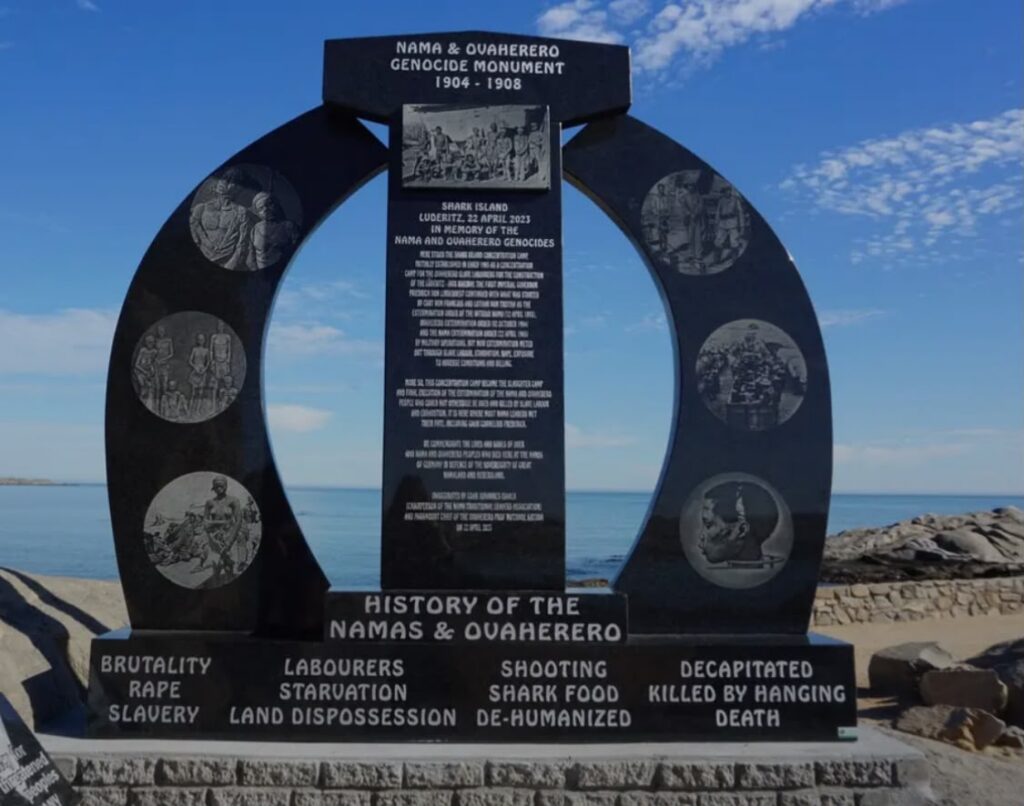
Nama Leaders Demand Nama-Ovaherero Genocide Reparations Germany
Summary
- The Nama Traditional Leaders Association has called on Germany to formally recognize the 1904-1908 Nama-Ovaherero genocide.
- Gaob David Frederick, representing the association, issued a press statement on Friday making these demands.
- The association insists Germany must move beyond acknowledging its colonial past to take concrete steps.
- These concrete steps are intended to address the harm suffered by affected communities and their descendants.
Renewed Calls for Justice and Recognition
This persistent advocacy for Nama-Ovaherero genocide reparations Germany is being asked to provide reflects a deep-seated belief that accountability must translate into substantive support for those who continue to bear the legacy of colonial violence.
The Nama Traditional Leaders Association has issued a forceful appeal to the German government, urging it to formally acknowledge the 1904 to 1908 Nama-Ovaherero genocide. In a press statement released on Friday, Gaob David Frederick, speaking on behalf of the association, underscored the imperative for Germany to transcend mere recognition of its colonial past. This latest intervention signals a heightened insistence on concrete actions to rectify the profound harm inflicted upon the affected communities and their descendants, emphasizing that symbolic gestures are no longer sufficient.
The association's clear articulation of its expectations highlights the enduring struggle for historical justice. They contend that genuine reconciliation necessitates more than an admission of wrongdoing; it requires tangible measures that directly address the intergenerational trauma and material losses. This persistent advocacy for Nama-Ovaherero genocide reparations Germany is being asked to provide reflects a deep-seated belief that accountability must translate into substantive support for those who continue to bear the legacy of colonial violence. The Nama Traditional Leaders Association demands are thus a call for a comprehensive approach to restorative justice.
The Historical Imperative for Accountability
The period between 1904 and 1908 marks a dark chapter in history, characterized by the systematic extermination of the Nama and Ovaherero peoples by German colonial forces, an event widely documented as the first genocide of the 20th century. For generations, the descendants of the victims have tirelessly campaigned for formal recognition of these atrocities and for Germany colonial genocide accountability. Gaob David Frederick's recent statement serves as a powerful reminder of the critical importance of Germany explicitly classifying these historical events as genocide, a foundational step deemed essential for any meaningful process of redress.
This demand for formal recognition is not merely symbolic; it is considered a crucial prerequisite for any substantive Namibia Germany reparations negotiations. The association maintains that without this explicit acknowledgment of genocide, any subsequent discussions regarding compensation or restorative programs would inherently lack the necessary moral and legal legitimacy. The 1904-1908 Nama-Ovaherero genocide claims extend beyond financial restitution, encompassing a broader quest for historical truth, the restoration of dignity, and the acknowledgment of the profound and lasting impact on cultural identity, societal structures, and economic development.
From Acknowledgment to Concrete Reparations
Gaob David Frederick's statement unequivocally calls for Germany to implement "concrete steps" to address the suffering endured by the Nama and Ovaherero communities. This signifies a clear expectation for specific, actionable programs or financial commitments that directly benefit the descendants of the victims and the communities that were devastated by the genocide. Such a move would position the issue squarely within the evolving discourse surrounding international law historical reparations, potentially influencing future precedents for similar claims globally.
The legal and ethical ramifications of these demands are substantial, as they could establish new benchmarks for how former colonial powers engage with and atone for historical injustices. The Nama Traditional Leaders Association demands are indicative of a broader international movement advocating for comprehensive accountability for colonial-era atrocities. The underlying expectation is that Germany will engage in a process that genuinely addresses the historical wrongs, transitioning from a position of merely acknowledging its past to actively participating in its rectification through tangible and meaningful actions for the affected communities and their descendants.
Practical Implications
Lawyers specializing in international law, human rights, or historical claims should monitor this development for potential precedents in state-to-state reparations negotiations and the evolving legal landscape concerning colonial-era atrocities.
Source
How does this affect you?
Get an AI analysis of this article grounded in your jurisdictions, practice areas, and any policy documents you've uploaded to Wansom.
Finish Reading the Full Story and the Expert Analysis.
Get the latest legal & regulatory intelligence in Namibia
Wansom is AI and can make mistakes.