
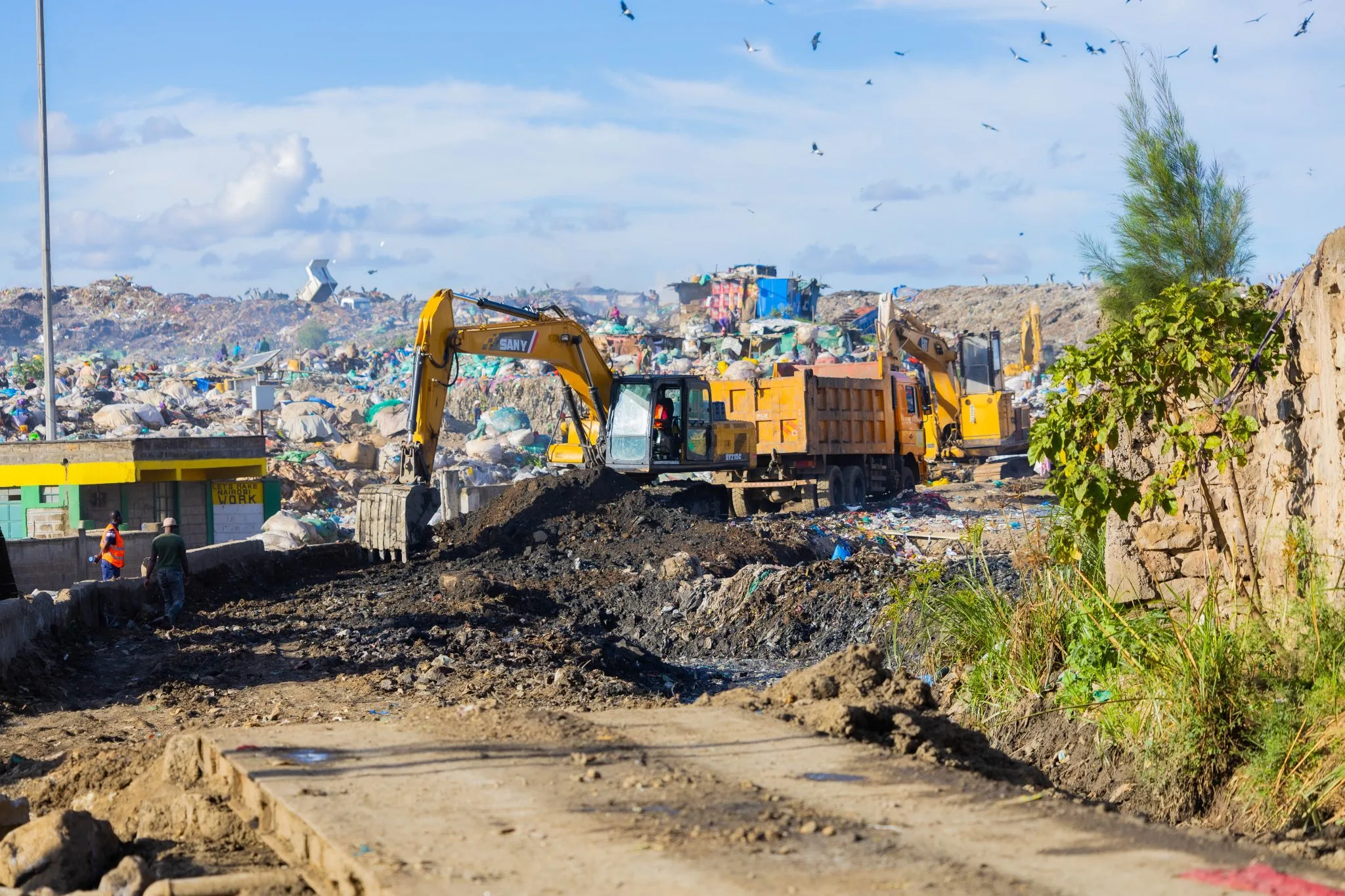
Nairobi Environment and Land Court: No Closure for Dandora Dumpsite Without Rehabilitation Plans for Waste Pic
Summary
- Dandora dumpsite receives an estimated 2,000 to 3,000 tonnes of waste every day, more than three times its original capacity.
- The informal economy surrounding the site supports thousands of families and individual waste pickers, with estimates suggesting between 3,000 to 8,000 workers daily.
- A recent survey by the Nairobi Recyclable Waste Association found that 71% of waste pickers reported work-related health problems, highlighting the need for better protection and working conditions.
- Nairobi's rehabilitation plans aim to overhaul its solid waste management system, including Dandora dumpsite, but may impact the informal economy built around it.
Dandora Dumpsite's Informal Economy
The physical site can be closed. The economy built around it cannot simply disappear.
For decades, an informal economy has thrived around Dandora dumpsite, with thousands of waste pickers relying on the site for their livelihoods. Estimates suggest that between 3,000 to 8,000 individual waste pickers work at Dandora every day, with many more families dependent on the income generated by this sector. The informal economy has created its own systems for sorting, collection, storage, transportation, and resale of waste, providing a vital source of income for those involved. However, this system operates largely outside the formal waste-management framework, leaving workers vulnerable to exploitation and health risks.
Health Risks and Environmental Damage
The informal economy surrounding Dandora dumpsite comes with significant health costs. A recent survey by the Nairobi Recyclable Waste Association found that 71% of waste pickers reported work-related health problems, including respiratory illnesses caused by smoke from burning waste. At Dandora One Health Centre, counsellor Mary Riungu notes that more than 100 cases of respiratory illness are treated every week, highlighting the need for better protection and working conditions for waste pickers. The environmental damage caused by the dumpsite has also been severe, with the Environment and Land Court ruling in February that over 1,000 waste pickers had been exposed to hazardous conditions and years of pollution.
Rehabilitation Plans and Inclusive Solutions
As Nairobi seeks to overhaul its solid waste management system, including the rehabilitation of Dandora dumpsite, there is growing concern about the impact on the informal economy. Sociologist Fabrizio Floris argues that shutting down or rehabilitating the dumpsite is only the beginning, and that the physical site can be closed, but the economy built around it cannot simply disappear. Youth leader Kennedy Kariuki is calling for waste pickers to be included in Nairobi's rehabilitation plans, emphasizing the need for inclusive solutions that address the social and economic structures surrounding Dandora. Without such inclusion, he warns, the city may end up reproducing Dandora's problems elsewhere under a different name.
Practical Implications
Lawyers should watch for the potential impact of Nairobi's rehabilitation plans on the informal economy built around Dandora, including the need to protect the rights and livelihoods of thousands of waste pickers.
Source
Source: Original reporting via Briefly
How does this affect you?
Get an AI analysis of this article grounded in your jurisdictions, practice areas, and any policy documents you've uploaded to Wansom.
Wansom is AI and can make mistakes.