
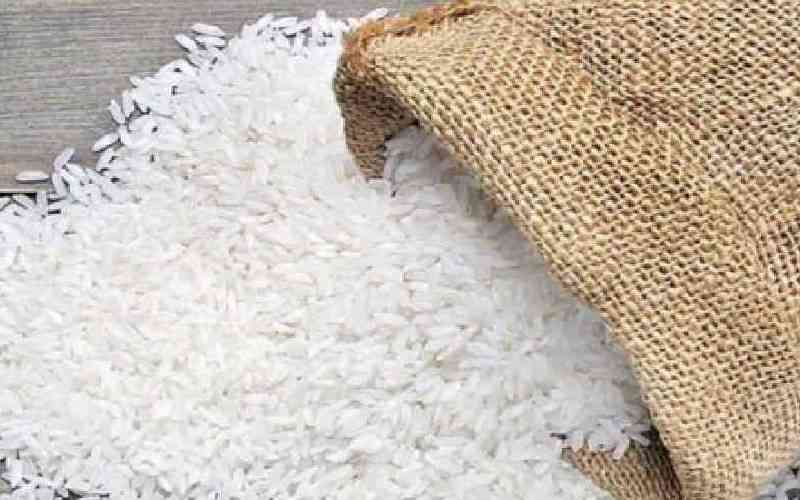
Kenya High Court Rejects Bid to Strike Out Duty-Free Rice Import Case
What Happened
The High Court has declined to strike out a case challenging the government’s decision to allow duty-free rice into the country. Justice Edward Muriithi, in his ruling, said that the case by Kirinyaga Senator Kamau Murango was weighty as it questions the legitimacy of the government’s interest to ensure food security in the country as measured against the legitimate expectation that they would sell their products without losses owing to flooding of exported commodities. “It would appear that this apparent intersection (or conflict) of rights caused by the Cabinet Secretary for Treasury in repeatedly publishing the Gazette Notices subject of the constitutional challenge herein and in other suits gives rise to questions in terms of Article 165(4) whether it was a valid exercise of authority within the meaning of the Constitution and whether the Gazette authority to import rice duty-free infringes upon the farmers’ right to property through resultant price drops affecting the marketability and profitability returns of the local farmers’ rice growing activity,” ruled Justice Muriithi. This comes as two separate cases were filed questioning the government’s fresh green light to importers to bring into the country 4,900 tons of rice. Rice farmers say the country has more than enough rice to feed Kenyans. They complained that the move was to flood the market. In the case before Justice Muriithi, the government claimed that the court had no powers to entertain the claims as this was an administrative issue. It also argued that several cases had been filed in different courts, hence, an abuse of court process. On July 28, 2025, the National Treasury Cabinet Secretary John Mbadi issued a gazette notice allowing the importation of 500,000 metric tons of duty-free milled white rice. The notice has created a circus, with the judiciary as the playing field. The cases that were filed in different courts tell of a food crop that has turned out to be hotter than a potato. Kenya produces 244,000 metric tons of rice, against a consumption demand of at least 1 billion. This creates a window for businesses to import rice worth Sh55 billion. Mbadi allowed duty-free rice because the government needed to close the market gap. However, those opposed to it claim that there is enough rice, and the importation window was made to create a glut in the country, which would harm rice farmers. So far, the rice import has attracted six cases. The drama, which is now full-blown, has seen Farmers Party opt to drop the case, only for Kirinyaga Senator Kamau Murango and MCA David Mathenge to fight in a bid to salvage it. The political party claimed the price of grade one rice has been retailing at approximately Sh 355 and Sh 385 per Kg for imported brands and between Sh 166 and Sh 277 for locally produced rice, depending on the variety (pishori, basmati, long grain, biryani) as well as the blend. It also claimed that the price is fully determined by market forces, as there have not been any duty-free waivers to any importers of Grade 1 rice since November of last year, with the rains being predictable. In response, Mbadi argued that there was a need to address the rise in the cost of living. He said that the Cabinet approved a framework to position the Kenya National Trading Corporation (KNTC) as the anchor of State initiatives to create a price stabilizer for essential household food items. Stay informed. Subscribe to our newsletter According to him, rice is the third most important cereal after maize and wheat. He was of the view that about 1 million metric tons of rice in the country is imported mainly from India, Pakistan and Tanzania. Stay Informed, Stay Empowered: Download the Standard ePaper App! He asserted that the current retail market price ranges between Sh 190 and Sh 220 per kilogram for Grade 1 milled white rice, representing a significant increase from last year's average of Sh 150 per kilogram during the du
Practical Implications
Lawyers advising clients on agricultural business or trade should be aware of the potential impact of the High Court's ruling on duty-free rice imports, which may lead to increased competition and price fluctuations in the market.
Source
How does this affect you?
Get an AI analysis of this article grounded in your jurisdictions, practice areas, and any policy documents you've uploaded to Wansom.
Wansom is AI and can make mistakes.