
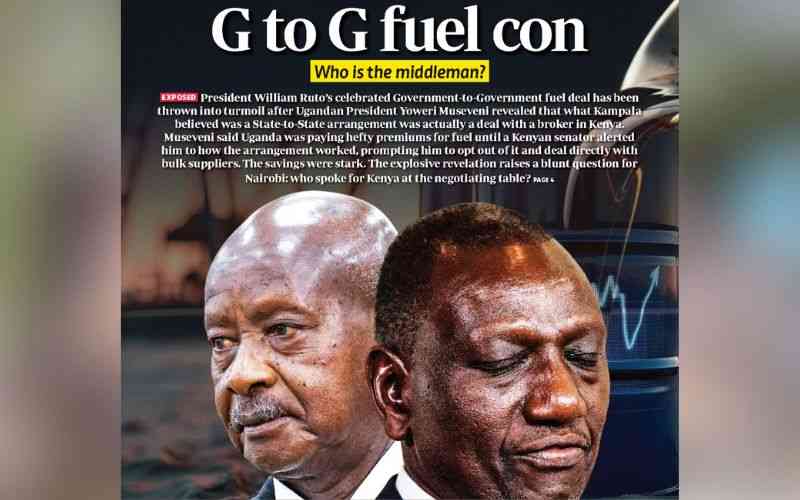
Museveni: Kenya G2G Oil Deal a 'Monumental Scam'
Summary
- Ugandan President Yoweri Museveni has labeled Kenya's government-to-government (G2G) fuel importation deal with Gulf countries a "monumental scam."
- Museveni claims the controversial G2G arrangement directly defrauded Ugandan taxpayers.
- This accusation challenges Kenyan President William Ruto's previous assertion that the deal was the "best" for his country.
- The dispute highlights growing concerns over transparency and potential fraud in East African cross-border energy agreements.
Uganda Accuses Kenya of 'Monumental Scam' in G2G Oil Deal
President Museveni's assertion that the G2G arrangement constituted a "monumental scam" and "ripped off Ugandan taxpayers" points to serious Uganda oil importation fraud allegations.
Ugandan President Yoweri Museveni has recently leveled severe criticism against a government-to-government (G2G) fuel importation agreement involving Kenya and Gulf countries. Museveni characterized the arrangement as a "monumental scam" that directly harmed Ugandan taxpayers, injecting significant controversy into East African energy trade. This strong denouncement from a prominent regional leader places the Kenyan administration's handling of the G2G oil deal under intense scrutiny.
The agreement, which facilitates the importation of fuel, had previously been championed by Kenyan President William Ruto. Last year, President Ruto publicly lauded the G2G fuel importation initiative, describing it as the most advantageous deal for Kenya. Museveni's recent remarks, however, directly contradict this positive assessment, suggesting a fundamental disagreement over the transparency and benefits of the regional energy supply chain.
Background of the G2G Fuel Importation Framework
The government-to-government framework for fuel importation was established between Kenya and various Gulf nations with the stated aim of stabilizing energy prices and ensuring a consistent supply. This particular G2G oil deal, intended to streamline the acquisition of petroleum products, has now become the focal point of a significant regional dispute. The initial presentation of the deal by President Ruto highlighted its perceived benefits for the Kenyan economy and its consumers, positioning it as a strategic move to secure vital resources.
However, the recent allegations from Uganda introduce a new dimension to the understanding of this trade mechanism. The controversy surrounding the Kenya Uganda G2G oil deal now extends beyond mere economic considerations, touching upon broader issues of regional cooperation and the integrity of international trade agreements. This development underscores the potential for complex political ramifications when such large-scale government-to-government oil arrangements are implemented in East Africa.
Legal and Regional Implications of Fraud Allegations
President Museveni's assertion that the G2G arrangement constituted a "monumental scam" and "ripped off Ugandan taxpayers" points to serious Uganda oil importation fraud allegations. These claims suggest that the deal, rather than benefiting the wider East African community, may have led to financial detriment for one of the key landlocked nations in the region. Such accusations raise critical questions about the transparency and accountability mechanisms embedded within these high-level trade agreements.
The unfolding situation signals heightened scrutiny on government-to-government trade agreements across East Africa, particularly concerning transparency and anti-corruption measures. The allegations of international trade corruption in East Africa, as implied by Museveni's statements, could prompt a re-evaluation of how such deals are structured and overseen. This development suggests that lawyers advising clients on cross-border energy deals or public procurement in the region should anticipate increased due diligence requirements and potential regulatory challenges, as the focus shifts towards ensuring equitable and transparent outcomes in such arrangements.
Practical Implications
This development signals heightened scrutiny on government-to-government trade agreements in East Africa, particularly regarding transparency and anti-corruption measures. Lawyers advising clients on cross-border energy deals or public procurement in the region should anticipate increased due diligence requirements and potential regulatory challenges.
Source
How does this affect you?
Get an AI analysis of this article grounded in your jurisdictions, practice areas, and any policy documents you've uploaded to Wansom.
Finish Reading the Full Story and the Expert Analysis.
Get the latest legal & regulatory intelligence in Kenya
Wansom is AI and can make mistakes.