
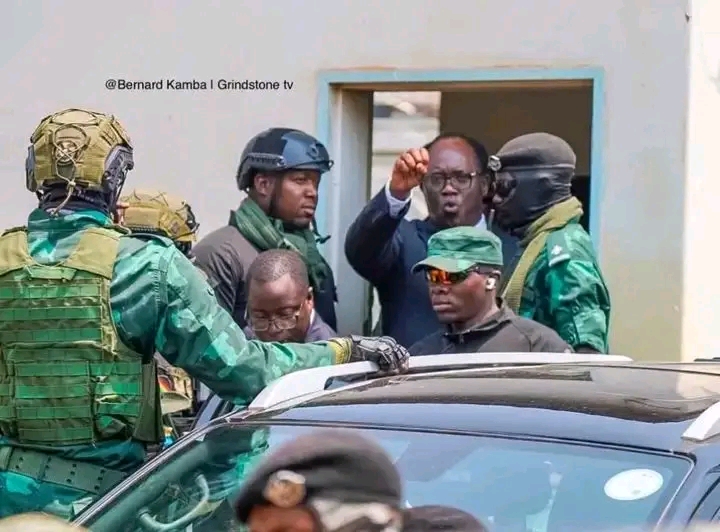
Lusaka High Court: Mundubile, Makebi Constitutional Bail Application in Lusaka
Summary
- Opposition figures Brian Mundubile, Makebi Zulu, and 17 others appeared at the Lusaka High Court today.
- They are seeking constitutional bail to challenge their continued detention.
- The Lusaka High Court experienced heavy security in and around the premises for the hearing.
- The application involves a total of 19 individuals challenging their ongoing confinement.
- The case is a high-profile constitutional bail application with significant implications for detention rights in Zambia.
High Court Proceedings Under Heavy Guard
The decision by the Lusaka High Court in this matter will be closely watched by legal professionals and civil society alike, as it could illuminate the judiciary's stance on the balance between state authority and individual liberties.
The Lusaka High Court was the scene of heightened security measures today as a constitutional bail application involving prominent opposition figures Brian Mundubile and Makebi Zulu, alongside seventeen other individuals, proceeded. The court premises, both inside and out, experienced a significant increase in security personnel, reflecting the high-profile nature of the case.
The nineteen applicants are collectively challenging their ongoing detention, seeking relief through the constitutional bail mechanism. This legal action brings into focus the rights of individuals to challenge their confinement, particularly when it involves political figures and a substantial number of co-applicants. The proceedings drew considerable attention, underscored by the visible security presence surrounding the judicial complex.
The Constitutional Bail Application
At the core of today's court session was a constitutional bail application, a legal avenue allowing individuals to seek release from custody by asserting that their detention violates fundamental constitutional rights. For Mundubile, Zulu, and their co-applicants, this means they are contending that their continued incarceration is inconsistent with the constitutional protections afforded to them under Zambian law.
Such applications are typically heard in higher courts, like the High Court, due to their constitutional implications. The outcome of this specific application could set important precedents regarding the interpretation and application of constitutional provisions related to personal liberty and detention in Zambia, especially for cases involving political opposition figures who are challenging their confinement.
Significance for Detention Rights
The challenge to continued detention by these nineteen individuals, including well-known opposition figures, carries significant weight for the broader discourse on detention rights within Zambia. The decision by the Lusaka High Court in this matter will be closely watched by legal professionals and civil society alike, as it could illuminate the judiciary's stance on the balance between state authority and individual liberties.
This case highlights the critical role of constitutional provisions in safeguarding citizens against arbitrary or prolonged detention. The fact that the applicants are opposition figures further amplifies the political dimension of the proceedings, making the court's interpretation of constitutional bail law particularly impactful for future cases involving political dissent or challenges to government actions.
Practical Implications
Lawyers should monitor the outcome of this high-profile constitutional bail application as it may provide insights into the Lusaka High Court's interpretation of detention rights and constitutional bail provisions in Zambia, potentially influencing strategies for similar cases involving political figures or prolonged detention.
Source
How does this affect you?
Get an AI analysis of this article grounded in your jurisdictions, practice areas, and any policy documents you've uploaded to Wansom.
Finish Reading the Full Story and the Expert Analysis.
Get the latest legal & regulatory intelligence in Zambia
Wansom is AI and can make mistakes.