
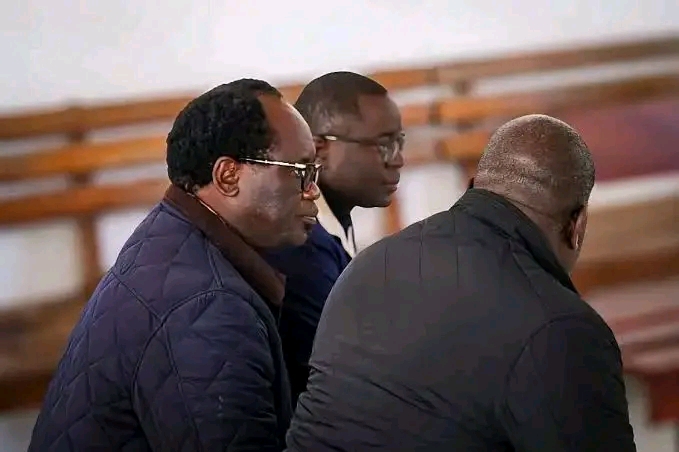
Lusaka High Court: State Files Mundubile Bail Hearing Objection
Summary
- The State has filed a new preliminary objection in the Lusaka High Court during Mundubile's bail hearing.
- The objection seeks to exclude video evidence allegedly showing a raid at opposition lawyer Makebi Zulu's residence.
- Defence lawyer Sakwiba Sikota stated that DPP Gilbert Phiri wants to remove portions of an affidavit referring to this video.
- This procedural challenge could significantly impact the evidence considered by the court for Mundubile's bail application.
- The case highlights the State's efforts to exclude evidence in high-profile bail hearings, potentially setting a precedent for admissibility.
State Challenges Defence Evidence
Lawyers should observe the State's ongoing efforts to exclude evidence, particularly concerning video evidence, as it signals a proactive prosecutorial strategy to challenge defence submissions at an early stage.
The State has initiated a new preliminary objection before the Lusaka High Court, aiming to prevent the inclusion of specific video evidence in the ongoing bail hearing for Mundubile. This latest move by the prosecution targets video footage that reportedly depicts a raid conducted at the residence of opposition lawyer Makebi Zulu. The State's challenge underscores a concerted effort to shape the evidentiary landscape of the bail application.
According to statements from defence lawyer Sakwiba Sikota, the Director of Public Prosecutions (DPP), Gilbert Phiri, is seeking to have certain sections of an affidavit expunged. These particular portions of the affidavit are understood to contain references to the aforementioned video evidence. The State's objection, therefore, directly confronts the defence's attempt to introduce this material into the court's consideration for Mundubile's bail.
Legal Context of the Objection
In Zambian legal proceedings, preliminary objections serve as a critical procedural mechanism allowing parties to challenge the admissibility of evidence or the procedural regularity of an opponent's submissions before the substantive arguments commence. The current Lusaka High Court bail objection specifically targets video evidence, a form of digital media that often requires careful scrutiny regarding its authenticity and relevance.
The State's move to exclude the Makebi Zulu video evidence exclusion from the affidavit highlights the contentious nature of evidence presentation in high-stakes bail applications. Defence teams frequently rely on affidavits to present factual assertions and supporting materials to the court, and any attempt by the prosecution, such as the Gilbert Phiri DPP objection, to remove parts of these documents can significantly impact the defence's narrative and the court's overall assessment of the bail request.
Implications for the Mundubile Bail Hearing
The outcome of this Mundubile bail hearing state objection holds considerable weight for the immediate future of the proceedings. If the court upholds the State's objection, the defence will be precluded from relying on the video evidence and any related statements within the affidavit. This could compel the Sakwiba Sikota Mundubile defence team to re-evaluate its strategy for demonstrating its client's eligibility for bail, potentially weakening certain arguments that were predicated on the excluded material.
Conversely, should the court dismiss the State's objection, the video evidence and the corresponding affidavit portions would remain part of the record, allowing the defence to present a more comprehensive case. Such procedural battles over evidence admissibility are common in complex legal matters and can significantly influence the trajectory and eventual outcome of a bail application, determining what facts the court is permitted to consider.
Broader Significance for Legal Practice
This particular instance of the State seeking to exclude evidence in a high-profile bail application underscores a notable trend in Zambian jurisprudence. Lawyers should observe the State's ongoing efforts to exclude evidence, particularly concerning video evidence, as it signals a proactive prosecutorial strategy to challenge defence submissions at an early stage. The procedural intricacies involved in such objections demand that legal practitioners are thoroughly prepared to defend the admissibility of their evidence.
This case may set a precedent for the admissibility of evidence in Zambian bail hearings, especially regarding digital media and the scope of affidavits. The State's approach highlights potential prosecutorial strategies to challenge defence submissions, requiring practitioners to be prepared for robust procedural objections. Understanding these evolving tactics is crucial for effective advocacy in similar high-stakes legal contexts.
Practical Implications
Lawyers should note the State's ongoing efforts to exclude evidence in high-profile bail applications, particularly concerning video evidence. This case may set a precedent for the admissibility of evidence in Zambian bail hearings and highlights potential prosecutorial strategies to challenge defence submissions, requiring practitioners to be prepared for procedural objections.
Source
How does this affect you?
Get an AI analysis of this article grounded in your jurisdictions, practice areas, and any policy documents you've uploaded to Wansom.
Finish Reading the Full Story and the Expert Analysis.
Get the latest legal & regulatory intelligence in Zambia
Wansom is AI and can make mistakes.