
Mudra Steel MP High Court Air Act Consent: Closure Order Quashed
Summary
- The Madhya Pradesh High Court upheld the closure of Mudra Steel Industries Private Limited by the MP Pollution Control Board.
- Mudra Steel's Consent to Operate expired on March 31, 2026, and its renewal application was rejected due to multiple defects.
- The company failed to install a required fumes extraction system by the October 21, 2025 deadline and its installed systems were found non-operational.
- The High Court ruled that an industry operating without valid consent cannot claim a right to a show-cause notice or a hearing.
- The court emphasized that no legal right was violated since Mudra Steel's right to operate ceased upon consent expiry.
What Happened
No industry can run without a valid consent.
Mudra Steel Industries Private Limited, a manufacturer of TMT steel bars located in Pithampur, Dhar district, faced a closure order from the Madhya Pradesh Pollution Control Board (MPPCB). The company, which utilizes an open induction furnace to melt scrap and sponge iron, was initially granted a Consent to Operate by the MPPCB on April 21, 2025. This consent was valid until March 31, 2026. A crucial condition, number 13, mandated the installation of a "Dog House Type" fumes extraction system on both furnaces within six months, a deadline that expired on October 21, 2025. The company later acknowledged its failure to install this system by the stipulated date.
As its consent neared expiration, Mudra Steel sought a renewal on March 28, 2026. However, following an inspection, the MPPCB rejected this application on April 29, citing multiple deficiencies. Consequently, on May 8, the Board issued a closure order under Section 31-A of the Air Act and proceeded to disconnect the factory's electricity supply. In an attempt to avert the closure, Mudra Steel requested a 90-day grace period and provided a bank guarantee amounting to Rs 17,62,500. This led the Board to temporarily suspend the closure order on June 16, allowing the company until July 31 to complete necessary upgrades.
Despite these efforts, a committee established by the Collector of Dhar conducted an inspection on August 12, discovering that the newly implemented arrangements were non-functional, with suction pipe joints openly exposed. Although a Board officer inspected the site on August 19 and recommended consent, the MPPCB proceeded to encash the bank guarantee on August 25. A new closure order was issued on August 27, and the company's fresh application for consent, submitted on August 13, was ultimately rejected on September 11. A related petition from Pensol Industries Private Limited, raising similar issues, was also considered alongside Mudra Steel's case.
Legal Context and Arguments
Mudra Steel subsequently challenged the MPPCB's actions before the Madhya Pradesh High Court at Indore, arguing that the closure order was procedurally flawed. Senior Advocate Amit Agrawal, assisted by Advocate Akhil Godha, contended on behalf of Mudra Steel that only the full Board, not its Chairman, possessed the authority to issue such an order. A central pillar of their argument was the alleged breach of natural justice, asserting that the company was denied a show-cause notice, a hearing, and access to relevant inspection reports. They further claimed that the Board disregarded its own engineer's favorable report, that the Collector's committee lacked the technical expertise to assess the situation, and that the closure adversely affected 300 families, thereby infringing upon Articles 14 and 19(1)(g) of the Constitution.
The Court's Ruling
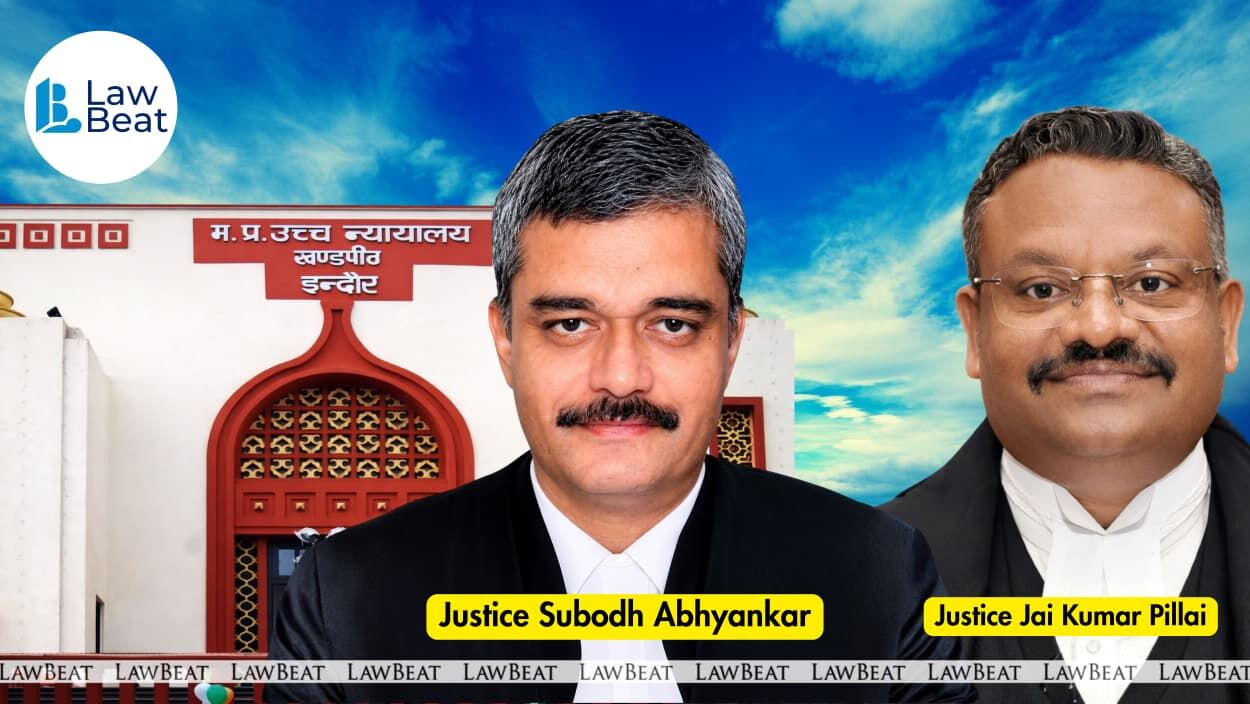
The Division Bench, comprising Justice Subodh Abhyankar and Justice Jai Kumar Pillai, dismissed Mudra Steel's writ petition on September 28, 2026. While acknowledging that the rule requiring exhaustion of alternative remedies does not apply when natural justice is denied, the Court emphasized that "natural justice is not a rigid mathematical formula." It clarified that for a party to claim a right to a hearing, they must demonstrate that a legal right has been infringed. In Mudra Steel's case, the Court found that its legal right to operate had ceased on March 31, 2026, when its Consent to Operate expired. The bench unequivocally stated, "No industry can run without a valid consent."
Given that the factory was operating without valid consent at the time the closure order was issued, the High Court concluded that no legal right of Mudra Steel had been violated. The Court further reasoned that "Giving a long notice period to an illegally running factory would defeat the purpose of the environmental laws." It rejected the argument concerning the Chairman's authority, noting that immediate action might be necessary in emergency situations. In comparing the various inspection reports, the Court observed that while the pollution control machines had been installed, they were not operational during the manufacturing process. The bench remarked that "Having a machine is useless, if it is not turned on during the manufacturing process," and affirmed its inability to "act as an expert engineer," thus upholding the Collector's report despite claims of technical deficiency.
Why It Matters
This ruling by the Madhya Pradesh High Court underscores the critical importance of maintaining valid environmental clearances, particularly the 'Consent to Operate,' for industrial units in India. The Court's firm stance that an industry cannot legally function without such consent sets a clear precedent for environmental compliance. It reinforces the authority of bodies like the Madhya Pradesh Pollution Control Board to take decisive action, including closure, against non-compliant facilities, especially when their operational permits have lapsed.
The judgment also provides significant clarity on the application of natural justice principles in environmental enforcement. By asserting that a right to a show-cause notice does not extend to units operating without valid consent, the Court limits the scope for industries to delay or challenge closure orders on procedural grounds when their fundamental legal authorization to operate has expired. This decision highlights that continuous adherence to environmental conditions, including the proper functioning of pollution control systems, is not merely a formality but a prerequisite for legal operation, strengthening the regulatory framework for environmental protection in the region.
Practical Implications
Lawyers and compliance officers advising industrial clients in India must ensure strict and timely renewal of 'Consent to Operate' and continuous adherence to all stipulated environmental conditions, including the operational status of pollution control systems. This ruling confirms that operating without valid consent significantly weakens any natural justice defense against closure orders by environmental authorities.
Source
How does this affect you?
Get an AI analysis of this article grounded in your jurisdictions, practice areas, and any policy documents you've uploaded to Wansom.
Finish Reading the Full Story and the Expert Analysis.
Get the latest legal & regulatory intelligence in India
Wansom is AI and can make mistakes.