
HUDO Centre: Mridan Mine Toxic Water Kills 62 Livestock in South Kordofan
Summary
- 62 sheep and goats died after drinking toxic water from a gold-processing pond at the Mridan mine in Talodi, South Kordofan.
- The Sudanese Mineral Resources Company (SMRC) had previously fined and suspended the pond operator but left the site unsecured and contaminated.
- The HUDO Centre criticized authorities for inaction and highlighted a history of similar livestock deaths and unregulated chemical use in the region.
- Activists fear contamination of Talodi's primary water reservoirs due to the use of cyanide, mercury, and thiourea in gold extraction.
- The HUDO Centre has called for immediate site rehabilitation, investigations, compensation, and strict enforcement of environmental regulations by various authorities.
What Happened
The HUDO Centre has underscored that the indiscriminate use of toxic chemicals in gold mining operations has been a persistent issue in South Kordofan, also known as the Nuba Mountains.
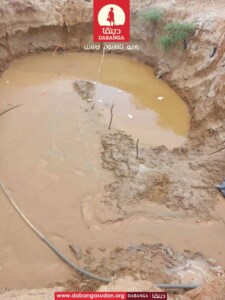
On November 7, a significant incident occurred at the Mridan gold mine in Talodi, South Kordofan, resulting in the deaths of 62 sheep and goats. The animals, owned by Ismail Hussein Hamed, perished after consuming water from a pond utilized in the gold extraction process. This event immediately prompted Mr. Hamed to file formal complaints with both the Talodi police and the Sudanese Mineral Resources Company (SMRC).
The Human Rights and Development Organisation (HUDO Centre) has since voiced strong criticism regarding the authorities' perceived inaction, noting that despite being informed, no decisive measures were taken following the reported deaths. The organization highlighted that the pond water, from which the livestock drank, contained chemicals used in gold extraction, applied without adherence to established environmental regulations or safety protocols.
Regulatory Oversight and Historical Negligence
The Mridan mine, also known as the Bashair mine, is situated approximately 30 kilometers southeast of Talodi town in the Talodi locality. The Sudanese Mineral Resources Company had previously suspended the operator of the specific pond in September 2026 due to non-compliance with mining operation regulations, imposing a fine of SDG 150 million, equivalent to USD 15,000. Following this, the operator transferred control of the site to the SMRC. However, the company subsequently left the pond exposed without treating its contaminated water or implementing necessary environmental safety measures.
The HUDO Centre has underscored that the indiscriminate use of toxic chemicals in gold mining operations has been a persistent issue in South Kordofan, also known as the Nuba Mountains. The organization recalled similar incidents in Talodi in 2025, where cattle and goats died from contaminated water near gold mines, including a January 2025 event where five cattle and 15 goats succumbed to polluted water. In those prior cases, while pond operators reached financial settlements with affected livestock owners, authorities, including the SMRC, security agencies, and local administration, reportedly failed to intervene.
Environmental and Public Health Concerns
The ongoing use of hazardous substances like cyanide, mercury, and thiourea in mixing facilities and open ponds at the Mridan mine raises serious environmental and public health concerns, particularly given that restrictions exist on their use unless specific safety and environmental requirements are met. Activists in the Talodi area, cited by the HUDO Centre, have expressed profound fears that nearby reservoirs, which serve as a primary water source for the town of Talodi, could become contaminated by toxic substances originating from these gold mines.
The HUDO Centre has articulated grave concerns for the safety of both residents and livestock, as well as the broader environmental protection in South Kordofan's gold-mining regions. The organization has urgently called upon the Sudanese Mineral Resources Company to undertake immediate action to rehabilitate the Mridan mine site and remove the contaminated ponds, holding the SMRC fully accountable for ensuring environmental safety after assuming possession of the site. Furthermore, the HUDO Centre has urged Talodi local authorities to investigate the deaths of the 62 animals, publicize their findings, and ensure compensation for the affected livestock owners. They also appealed to Governor Mohamed Abdel-Rahim Kafi of South Kordofan to enforce relevant laws and regulate the use of cyanide, mercury, and thiourea across all mining sites in accordance with legal and environmental mandates, and for Talodi health authorities to conduct urgent tests on all local water sources and make the results public.
Practical Implications
Lawyers advising mining companies in Sudan, particularly in South Kordofan, must review their clients' environmental compliance protocols, especially concerning toxic waste management and water contamination. This incident highlights increased scrutiny from NGOs and potential for regulatory enforcement, fines, and litigation for environmental damage and public health threats, necessitating proactive risk mitigation and adherence to environmental safety measures.
Source
How does this affect you?
Get an AI analysis of this article grounded in your jurisdictions, practice areas, and any policy documents you've uploaded to Wansom.
Finish Reading the Full Story and the Expert Analysis.
Get the latest legal & regulatory intelligence in Sudan
Wansom is AI and can make mistakes.