
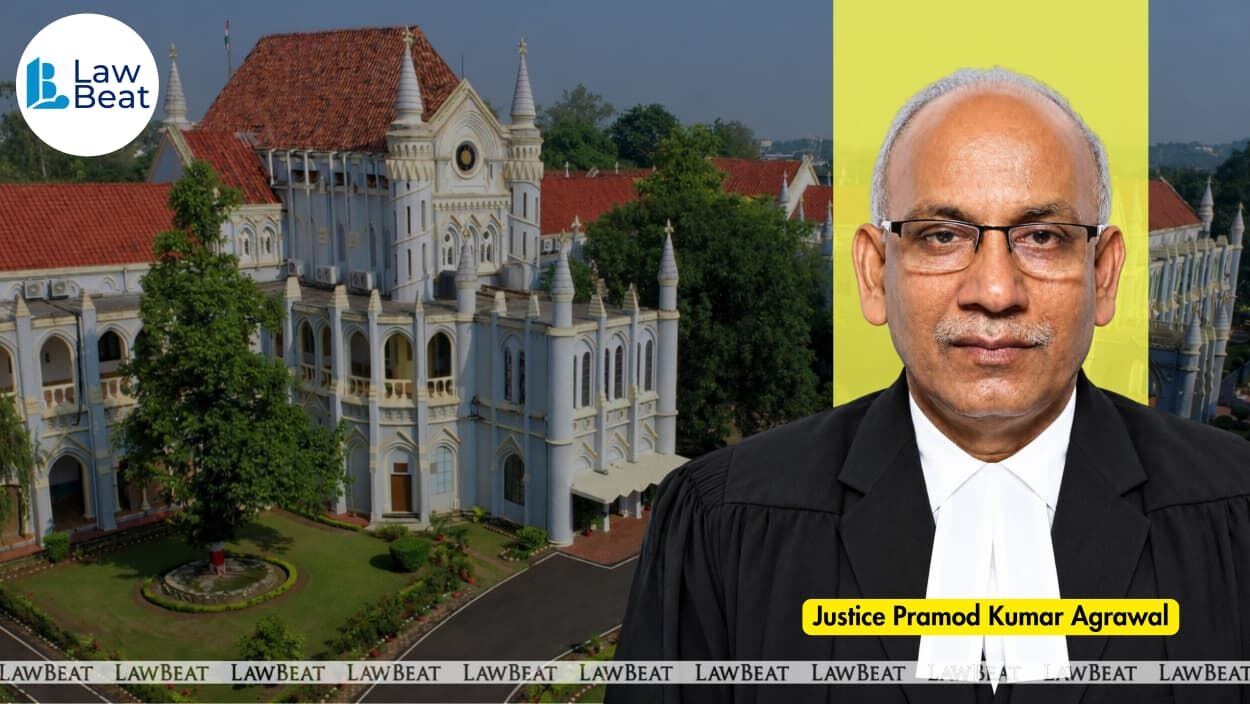
MP High Court: No Section 482 Quashing FIR Mini-Trial in Forgery Case
Summary
- The Madhya Pradesh High Court dismissed a petition to quash a Bhopal scholarship forgery case under Section 482 CrPC.
- The court ruled it cannot conduct a 'mini-trial' or decide disputed facts, especially when the trial is at an advanced stage with over 24 witnesses examined.
- Retired Justice Pramod Kumar Agrawal stated that an FIR is not an encyclopedia and does not need to contain all detailed particulars of a crime.
- The petitioner, Dr. Pushyamitra Mishra, faced charges including forgery and misappropriation, originating from a complaint by Richa Singh.
- The decision reinforces that quashing petitions must show no prima facie offence, not challenge factual claims reserved for the trial court.
High Court Declines to Quash Forgery Case
The court firmly stated that it is impermissible to conduct a 'mini-trial' to ascertain such findings.
The Madhya Pradesh High Court has rejected a petition seeking to quash a criminal case related to alleged forgery and misappropriation of student scholarship funds in Bhopal. Retired Justice Pramod Kumar Agrawal, presiding over the matter, affirmed that courts exercising inherent powers under Section 482 of the Code of Criminal Procedure cannot conduct a 'mini-trial' to resolve disputed questions of fact, especially when the trial proceedings are already at an advanced stage.
The case, stemming from FIR No. 98/2014 registered at Ratibad police station, Bhopal, involves Dr. Pushyamitra Mishra as the petitioner. The First Information Report (FIR) invokes several sections of the Indian Penal Code, including 420 (cheating), 409 (criminal breach of trust by public servant, or by banker, merchant or agent), 467 (forgery of valuable security), 468 (forgery for purpose of cheating), 471 (using as genuine a forged document), and 506 (criminal intimidation), read with Section 34 (acts done by several persons in furtherance of common intention).
The proceedings originated from a complaint filed by Richa Singh on December 4, 2013. Following a lack of action by the police, Ms. Singh approached the Judicial Magistrate First Class in Bhopal under Section 156(3) of the CrPC, leading to the registration of the FIR based on the magistrate's directive. The High Court's decision underscores a critical principle regarding the scope of its powers in quashing criminal proceedings.
Arguments and Counter-Arguments
Senior Advocate Anil Khare, representing Dr. Mishra alongside advocate Jaywardhan Lunawat, contended that the allegations against his client primarily focused on acting with common intention, without specifying an individual role. He highlighted that charges under Sections 406 and 409 had not been framed, no student had reported misappropriation, and the relevant bank account was operated by co-accused Anshuman Tiwari and Ashish Rai, not Dr. Mishra. Further, Mr. Khare argued that inquiry reports had found no wrongdoing by Dr. Mishra, that he had resigned from the education society prior to the incident, and that handwriting analysis indicated the disputed documents were not in his hand.
Conversely, Advocate Vivek Ranjan Pandey, appearing for the complainant, countered these assertions. He pointed out that Section 120-B, pertaining to criminal conspiracy, had also been invoked in the case. Mr. Pandey presented evidence that Dr. Mishra had filed a caveat identifying himself as the society's Chairman and that an order from the Registrar of Firms and Societies, dated March 11, 2026, listed him as a founder since 2006. He further alleged that accounts were opened using forged signatures of the complainant and informed the court that Dr. Mishra had been convicted in a separate case by a special CBI court in Raipur. Government Advocate Yogesh Dhande, representing the State, opposed the quashing plea, emphasizing that Dr. Mishra was named in the initial complaint, was present at the college on the date of the incident, and had signed as a witness when a committee was formed in 2013.
Legal Principles and Court's Rationale
Retired Justice Agrawal reiterated that the inherent powers of the Madhya Pradesh High Court under Section 482 CrPC to quash an FIR or criminal proceedings must be exercised sparingly. The court referenced established Supreme Court precedents, including the ruling in Supriya Jain v. State of Haryana, which guides the application of these powers. While acknowledging that an FIR can be quashed if the allegations, on their face, do not disclose the commission of any cognizable offence, the court firmly stated that it is impermissible to conduct a 'mini-trial' to ascertain such findings.
Addressing the petitioner's argument that the FIR lacked specific details of his role, the court observed that an "FIR is not an encyclopedia" and is not expected to contain every minute detail of the crime. It clarified that the responsibility for collecting comprehensive material rests with the investigating agency. Regarding the claim of Dr. Mishra's resignation before the incident, the court noted that his membership at the pertinent time constituted a disputed question of fact. Such factual disputes, the court emphasized, cannot be resolved in a proceeding under Section 482 CrPC; instead, they must be determined by the trial court after the recording and appreciation of evidence during the full trial. The court also highlighted that the trial in this Bhopal scholarship forgery case was already at an advanced stage, with more than 24 prosecution witnesses having been examined, whose truthfulness and credibility would be assessed by the trial court.
Why It Matters
This ruling from the Madhya Pradesh High Court reinforces a crucial aspect of criminal jurisprudence: the distinct roles of the High Court in its inherent jurisdiction and the trial court. It clarifies that while the High Court can intervene to prevent abuse of process or secure the ends of justice, its power to quash a criminal case under Section 482 CrPC does not extend to adjudicating complex factual disputes that require a full evidentiary hearing. The court's stance on the 'MP High Court Section 482 quashing FIR mini-trial' issue serves as a significant reminder that petitions seeking to quash an FIR must primarily focus on demonstrating that the allegations, even if taken at face value, do not constitute an offence, rather than attempting to introduce evidence to challenge the factual veracity of the claims.
The decision underscores that once a criminal trial has progressed significantly, with numerous witnesses examined, the High Court will be even more reluctant to interfere with the proceedings by delving into contested facts. This approach ensures that the trial court remains the primary forum for assessing evidence and determining guilt or innocence, preventing the High Court from being drawn into a premature evaluation of the merits of the prosecution's case. The 'FIR not an encyclopedia' ruling further clarifies that minor omissions in the initial complaint are not grounds for quashing if the overall allegations point to a cognizable offence.
Practical Implications
Lawyers advising clients seeking to quash an FIR under Section 482 CrPC must understand that the High Court will not conduct a 'mini-trial' or delve into disputed questions of fact, particularly when the trial is at an advanced stage. The focus for quashing must be on demonstrating that the allegations *prima facie* disclose no offence, rather than attempting to present evidence to challenge factual claims, which are reserved for the trial court.
Source
Source: Original reporting via Live Law
How does this affect you?
Get an AI analysis of this article grounded in your jurisdictions, practice areas, and any policy documents you've uploaded to Wansom.
Finish Reading the Full Story and the Expert Analysis.
Get the latest legal & regulatory intelligence in India
Wansom is AI and can make mistakes.