
MP High Court: Res Judicata Inconclusive Adjudication Revives Labour Dispute
Summary
- The Madhya Pradesh High Court revived a 26-year-old labour dispute involving Vinod Kumar Badgaiyan, a former Katni Municipal Corporation employee.
- Badgaiyan's services were terminated in 1999 without following procedures under the Industrial Disputes Act, 1947, despite over 240 days of work.
- A single judge had dismissed Badgaiyan's claim for back wages, citing res judicata, after a Labour Court had ordered his reinstatement but not back wages.
- The Division Bench ruled that res judicata was wrongly invoked because a prior administrative relegation of the case had resulted in an inconclusive adjudication, not a "substantially decided" issue.
- The court set aside the single judge's order, restoring the case to the writ court for a full hearing on the merits of the employee termination and back wages.
The Enduring Labour Dispute
The Madhya Pradesh High Court, therefore, clarified that the doctrine of res judicata could only be invoked when an issue had been "substantially decided."
A long-standing labour dispute involving a former daily wage employee of the Katni Municipal Corporation, Vinod Kumar Badgaiyan, has been revived by the Madhya Pradesh High Court. The case, which spans over 26 years, centers on Badgaiyan's termination from service and his subsequent quest for back wages and reinstatement. Badgaiyan, who worked in the Revenue Department, was initially appointed on June 26, 1995, and continued his service until August 2, 1999, when his employment was abruptly ended.
His termination, alongside 273 other daily wage workers, occurred without adherence to the mandatory procedures outlined in the Industrial Disputes Act, 1947. This was despite Badgaiyan having completed more than 240 days of continuous service, a threshold that typically mandates specific protocols for termination. At the time of his dismissal, his monthly salary stood at Rs 1,855. Badgaiyan further highlighted a perceived injustice, noting that two employees junior to him in seniority, Sudhir Kumar Khare and Pramod Kumar Khare, were subsequently reinstated by the Corporation without any court directive, which he argued constituted arbitrary and selective treatment in violation of Section 25F of the Industrial Disputes Act.
A Protracted Legal Journey
Badgaiyan's pursuit of justice has involved a complex and circuitous legal path. His initial writ petition was filed in 1999, followed by a Letters Patent Appeal. In 2010, he filed another writ petition after discovering the previous case had been lodged in an incorrect forum. The matter was then referred to the Commissioner, Municipal Corporation, Katni, for consideration; however, the Commissioner never addressed the issue, leaving the adjudication incomplete.
Compelled by these circumstances, Badgaiyan eventually approached the Labour Court, where he achieved a partial victory. The Labour Court ordered his reinstatement but notably did not grant him the full back wages he sought. This omission prompted him to move the writ court, seeking complete arrears of salary and parity with the two junior employees who had been reinstated. However, a single judge dismissed Badgaiyan's writ petition (Misc. Petition No. 5852/2022) and simultaneously allowed the Corporation's connected petition (Misc. Petition No. 6047/2023), ruling that the issue was barred by the principle of res judicata.
MP High Court's Critical Intervention
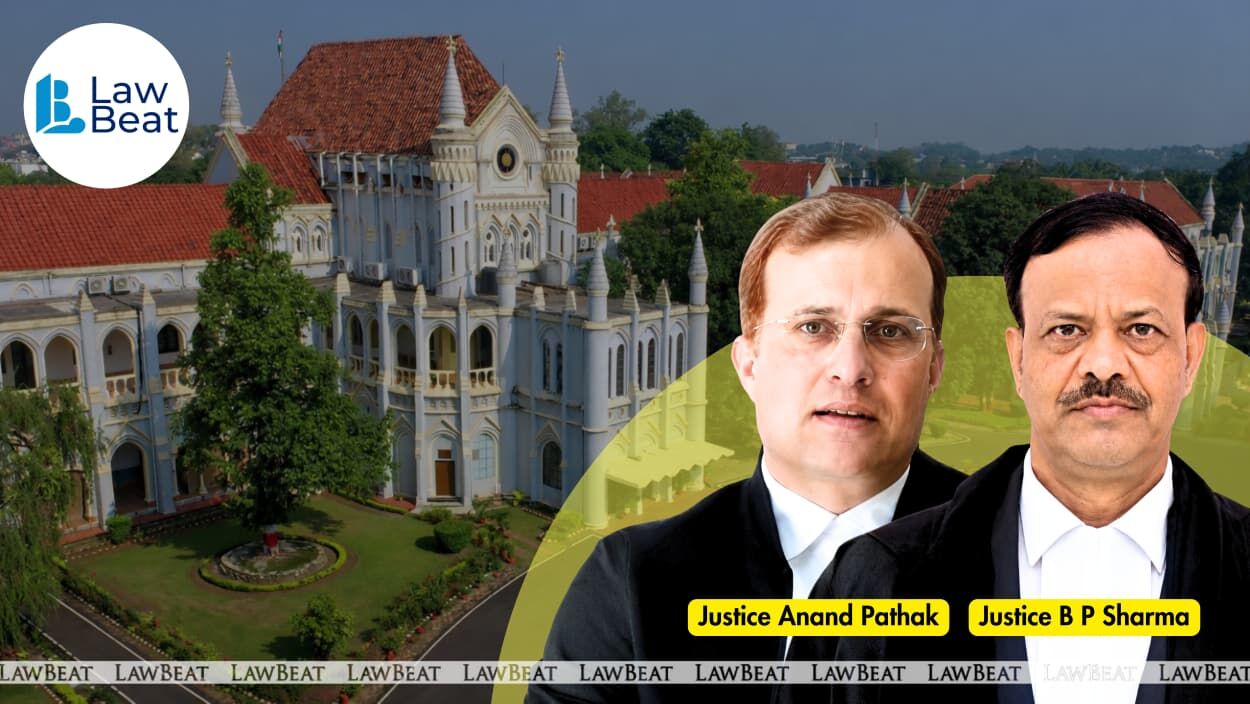
Aggrieved by the single judge's decision, Badgaiyan appealed to a Division Bench of the Madhya Pradesh High Court, comprising Justice Anand Pathak and Justice B.P. Sharma, through two writ appeals. His legal team, led by Senior Advocate Sanjay Ram Tamrakar and assisted by Advocate Rambachan Sahu, contended that the writ court had overstepped its bounds by acting like an appellate court and had gravely erred in setting aside the Labour Court's order, especially given the reinstatement of similarly situated employees.
The Division Bench observed that Badgaiyan had been "running from pillar to post" for over two decades to get his case adjudicated. Critically, the court noted that when the matter was previously relegated to the Commissioner, no actual consideration was ever given to it, rendering that phase of adjudication inconclusive. The Madhya Pradesh High Court, therefore, clarified that the doctrine of res judicata could only be invoked when an issue had been "substantially decided." Finding that the prior proceedings did not meet this criterion, the court concluded that res judicata was wrongly invoked in India in this instance.
Consequently, the Division Bench set aside the single judge's order, effectively reviving the 26-year-old back wages dispute and restoring the case to the writ court for a fresh determination on its merits. This ruling underscores a significant point regarding the application of res judicata in labour disputes, particularly when previous adjudications were incomplete or inconclusive.
Implications for Res Judicata in India
This decision by the MP High Court provides a crucial precedent for challenging the application of res judicata in labour disputes, particularly when previous adjudications were incomplete or inconclusive. The court's emphasis that res judicata applies only when an issue has been "substantially decided" offers a vital clarification for legal practitioners and litigants alike. It reminds lawyers to scrutinize whether an issue was truly settled before accepting a res judicata defense, especially in cases where administrative or judicial processes failed to reach a definitive conclusion.
The ruling highlights the judiciary's role in ensuring that procedural doctrines do not inadvertently obstruct justice, particularly for individuals like Badgaiyan who have faced prolonged legal battles. By setting aside the single judge's order and restoring the case, the Madhya Pradesh High Court has reinforced the principle that an inconclusive adjudication cannot attract the bar of res judicata, thereby allowing for a full and fair hearing on the merits of the employee termination and reinstatement claims.
Practical Implications
This ruling provides a crucial precedent for challenging the application of res judicata in labour disputes, particularly when previous adjudications were incomplete or inconclusive, reminding lawyers to scrutinize whether an issue was 'substantially decided' before accepting a res judicata defense.
Source
Source: Original reporting via Live Law
How does this affect you?
Get an AI analysis of this article grounded in your jurisdictions, practice areas, and any policy documents you've uploaded to Wansom.
Wansom is AI and can make mistakes.