
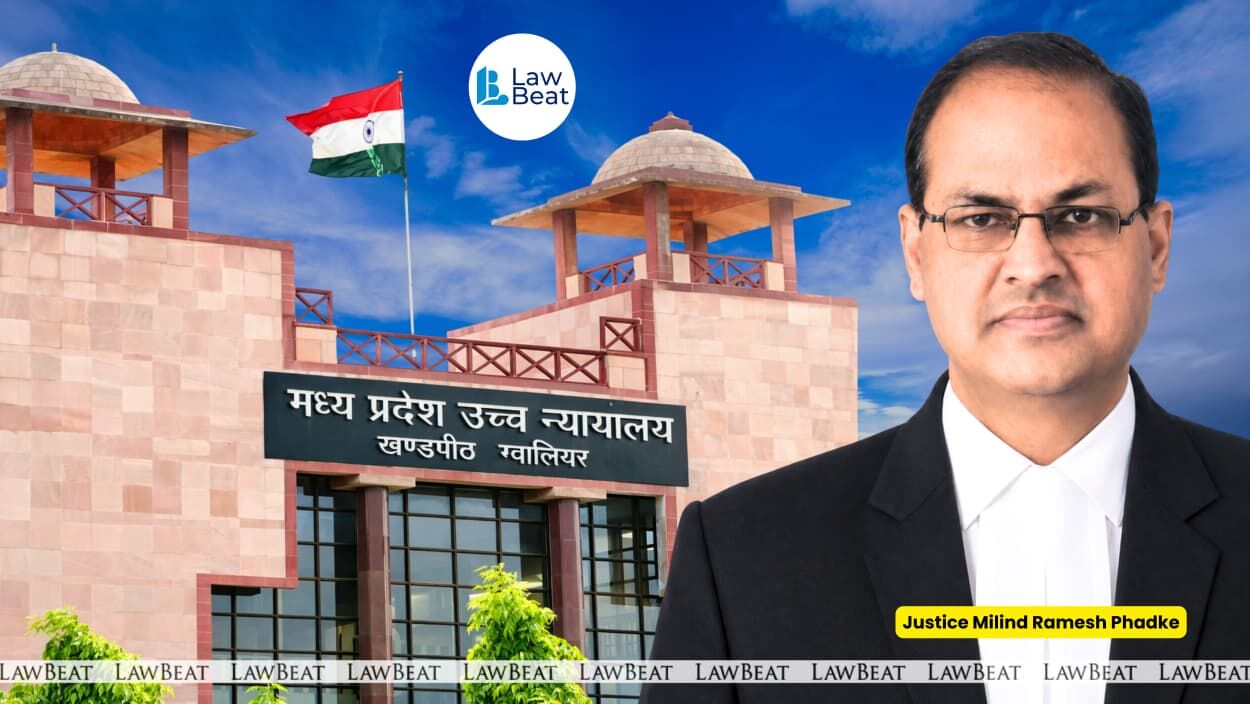
MP High Court: Quashes Medical Exam Divorce Order at Final Arguments
Summary
- The Madhya Pradesh High Court quashed a 2012 trial court order allowing a husband to medically examine his wife at the final arguments stage of their divorce case.
- Justice Milind Ramesh Phadke ruled that such an intrusive direction requires a strong prima facie case and sufficient material, which was absent here.
- The application was filed by Santosh Kumar Ojha against Sadhna @ Priya after both parties had closed their evidence, based on allegations of the wife undergoing three operations.
- The High Court found the application would allow the husband to fill evidentiary gaps and cautioned against using judicial power for 'fishing inquiries'.
- The ruling reinforces that medical examinations in divorce cases cannot be ordered mechanically or without proper foundational evidence presented earlier in proceedings.
What Happened
This significant ruling, delivered by Justice Milind Ramesh Phadke, centered on the timing and justification for such an intrusive request, which was made at the final arguments stage of the divorce proceedings.
The Madhya Pradesh High Court, specifically its Gwalior Bench, recently intervened in a long-standing divorce dispute, overturning a decade-old trial court order that had permitted a husband to subject his estranged wife to a medical examination. This significant ruling, delivered by Justice Milind Ramesh Phadke, centered on the timing and justification for such an intrusive request, which was made at the final arguments stage of the divorce proceedings.
The case involved Sadhna @ Priya and Santosh Kumar Ojha, who married in April 2004 in Ashoknagar and lived together until July 2011. Following their separation, Mr. Ojha initiated divorce proceedings under Section 13 of the Hindu Marriage Act, citing cruelty on the part of his wife. Ms. Priya, however, denied these allegations and expressed her desire to continue the marriage. After both parties had presented their evidence and the matter was set for final arguments, Mr. Ojha, in June 2012, filed an application under Section 151 of the Civil Procedure Code (CPC) seeking his wife's medical examination, primarily based on an allegation that she had undergone three operations.
The District Judge, Ashoknagar, had initially granted this application on July 2, 2012. This decision was subsequently challenged by Ms. Priya before the High Court. The High Court's review focused on whether such a directive, allowing a medical examination divorce evidence stage, was appropriate given the advanced stage of the proceedings and the lack of foundational material presented earlier in the case.
Legal Arguments and Context
During the High Court proceedings, counsel for the wife, Madhur Bhargava, argued strenuously against the medical examination. Bhargava contended that the application was filed only after the evidence had been closed by both sides, and crucially, no foundation for such an examination existed either in the original divorce petition or in the husband's presented evidence. Furthermore, it was highlighted that no witness had testified to the alleged operations occurring prior to the marriage, suggesting that allowing the examination at this juncture would effectively permit the husband to introduce fresh evidence after the trial had concluded.
Bhargava cited the Supreme Court's landmark ruling in *Sharda vs. Dharampal*, emphasizing that while matrimonial courts possess the inherent power to direct medical examinations, this power cannot be exercised mechanically. Instead, it must be predicated on a strong prima facie case. Conversely, the husband's legal team maintained that his cruelty plea had specifically referenced the wife's alleged operations and her subsequent refusal to maintain marital relations, asserting that medical evidence was indispensable for a just resolution. They argued that the power to direct a medical examination flows from the court's inherent jurisdiction, requiring no express statutory provision, and referenced *Samar Ghosh vs. Jaya Ghosh* concerning mental cruelty and *Ramesh Chandra Agrawal vs. Regency Hospital Limited* on the relevance of expert medical evidence.
The High Court's Rationale
Justice Phadke, after a thorough examination of the case record, found the basis for such an intrusive order to be "conspicuously absent." The court noted a critical lack of material demonstrating that the husband had ever requested his wife to accompany him to a doctor or undergo any medical treatment or examination, or that she had subsequently refused. The High Court determined that the mere allegation of three operations, by itself, did not furnish sufficient grounds to compel a medical examination, especially since the wife had disputed the nature of these operations and maintained that the relevant treatment occurred after the marriage, with the husband already being aware of it.
The court further observed that the application, moved only after both parties had concluded their evidence, would effectively allow the husband to "fill up the lacuna in his evidence." Critically, the High Court found that the trial court's original order failed to demonstrate any proper application of mind to the established parameters governing such discretionary powers. It had not recorded any specific finding as to what particular medical issue required determination. The High Court cautioned that the judicial power to seek medical evidence cannot be transformed into a tool for conducting a "roving or fishing inquiry," particularly when sought at such a late stage in the proceedings.
Why It Matters
This Madhya Pradesh High Court Gwalior Bench ruling, quashing the medical exam divorce final arguments, reinforces a crucial principle in matrimonial law: courts will not permit medical examinations to be used as a means to fill evidentiary gaps or embark on speculative investigations, especially at the advanced stage of final arguments. The decision in *Sadhna @ Priya v Santosh Kumar Ojha* underscores that any request for an intrusive medical examination must be supported by a strong prima facie case established earlier in the proceedings, with sufficient material on record.
The ruling clarifies that while courts possess the power to order medical examinations, this discretion is not to be exercised mechanically. It serves as a vital reminder that parties seeking such examinations must lay a proper foundation for their request during the evidence stage, rather than attempting to introduce new evidence or bolster a weak case after the trial has effectively concluded. This judgment provides important guidance for legal practitioners, emphasizing the need to establish grounds for a Section 151 CPC medical examination divorce early, preventing late applications from being used for 'fishing inquiries' without prior evidentiary support.
Practical Implications
This ruling clarifies that courts will not permit medical examinations in divorce cases at the final arguments stage if there's no strong prima facie case established earlier, preventing their use to fill evidentiary gaps or for 'fishing inquiries.' Lawyers should advise clients to establish grounds for medical examination early in proceedings, as late applications without prior foundation are likely to be rejected.
Source
Source: Original reporting via Live Law
How does this affect you?
Get an AI analysis of this article grounded in your jurisdictions, practice areas, and any policy documents you've uploaded to Wansom.
Finish Reading the Full Story and the Expert Analysis.
Get the latest legal & regulatory intelligence in India
Wansom is AI and can make mistakes.