
MP High Court: PIL Seeks Rules to Curb Civil Litigation Pendency
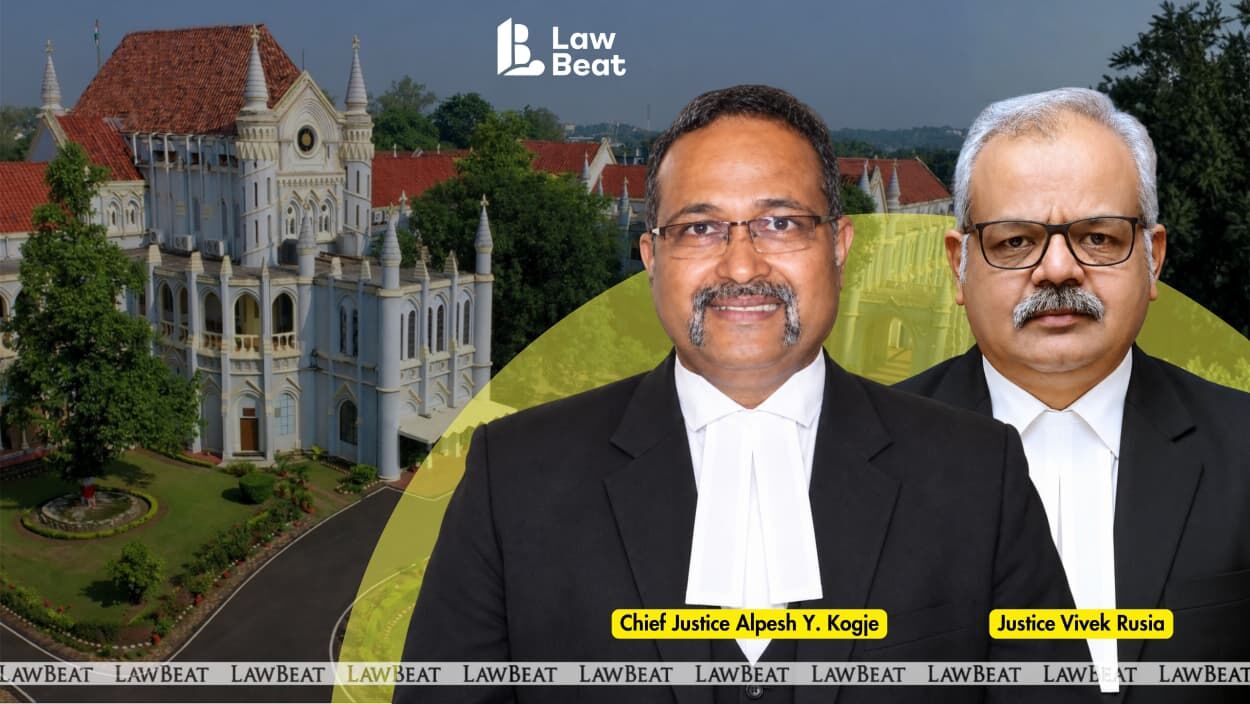
Home / News updates PIL Before MP High Court Seeks Time-Bound Rules To Curb Adjournments, False Pleadings, Civil Litigation Pendency X PIL Before MP High Court Seeks Realistic Costs, Mesne Profits to Check Pendency A PIL before the MP High Court filed by two practicing advocates, seeks rules to curb civil litigation pendency by enforcing a 2011 Supreme Court ruling on realistic costs, mesne profits and early scrutiny of pleadings. The Madhya Pradesh High Court's Principal Seat at Jabalpur is examining a public interest litigation that seeks directions for framing rules to curb pendency in civil litigation, with the petitioners urging the court to directly enforce a decade-old Supreme Court ruling in Ram Rameshwar Devi & others v. Nirmala Devi and others that has, in their submission, remained largely unimplemented across the state. The matter was heard by a Division Bench of Chief Justice Alpesh Y. Kogje and Justice Vivek Rusia , with Sr Advocate Ashok Lalwani appearing for the petitioners. The PIL has been filed under Article 226 of the Constitution by advocates Anand Chawla and Vidya Sankar Mishra, who practice before the district courts and the High Court. The petition draws heavily on the Supreme Court's ruling which holds that no relief should go to litigants approaching courts with unclean hands, which provides for prosecution of false claims. According to the petition, paragraph 52 of the ruling holds that "pleadings are the foundation of claims of the party" and obliges trial courts to scrutinise pleadings closely and resort early to discovery, production of documents and interrogatories. The petitioners state that courts routinely grant three adjournments in interlocutory applications as a matter of right, without assigning any reason, contrary to the amended Order XVII Rule 1 of the Civil Procedure Code. They add that such applications typically take nine to ten months to decide, and where a suit involves three or four such applications, a civil judge's usual three-year tenure at a station often ends before the suit itself is decided. The petition also refers to the amended Order VI CPC, which requires an affidavit in support of pleadings, noting that litigants frequently deny claims bluntly or resort to false pleadings despite this safeguard. As an illustration, the petitioners cite a case in which a trial court sentenced a person to three years' imprisonment for filing a false affidavit, only for the sentence to be converted, in appeal, to a fine of Rs 30,000 by the sessions judge, a copy of which is annexed to the petition. They contend that despite repeated representations made to the Registrar General and the Registrar (Vigilance) of the High Court, including one dated June 1, 2013, no action has followed, and that they are unaware of any litigant being prosecuted for false pleadings or any lawyer facing a misconduct complaint over repeated adjournments. On mesne profits, the petition states that in landlord-tenant and other property disputes, such profits are payable from the date of termination of the lease but are often awarded only from the date of the trial court's judgment, leaving no mechanism to compensate the party who ultimately wins. Before the bench, Sr Adv Lalwani submitted that in his twenty years of practice, "barring one or two cases, this High Court has not granted mesne profit in any case" despite the 2011 ruling, and argued that realistic costs and mesne profits, calculated from the correct date, would discourage litigants from prolonging suits. Chief Justice Kogje asked whether any other High Court, or any other country, followed the practice of directing the losing party to bear litigation costs. Sr Adv Lalwani replied that he was not aware of any Indian High Court doing so, though the principle exists under the Arbitration Act, and cited an English landlord-tenant dispute, decided within three days, where the losing party was ordered to pay travel and hotel expenses. The Chief Justice obser
How does this affect you?
Get an AI analysis of this article grounded in your jurisdictions, practice areas, and any policy documents you've uploaded to Wansom.
Finish Reading the Full Story and the Expert Analysis.
Get the latest legal & regulatory intelligence in India
Wansom is AI and can make mistakes.