
MP High Court: Orders Strict Noise Pollution Enforcement
Summary
- The Madhya Pradesh High Court at Indore has ordered strict enforcement of noise pollution laws, citing personal judicial experiences with excessive noise and a child's death linked to loud speakers.
- The court mandated compliance with the Noise Pollution (Regulation and Control) (Amendment) Rules, 2000, and the M.P. Kolahal Niyantran Adhiniyam, 1985.
- Authorities must publish lists of silence zones and publicize complaint numbers for citizens to report violations.
- The directive requires strict measures against violators and a fresh compliance report within one week, indicating close judicial monitoring.
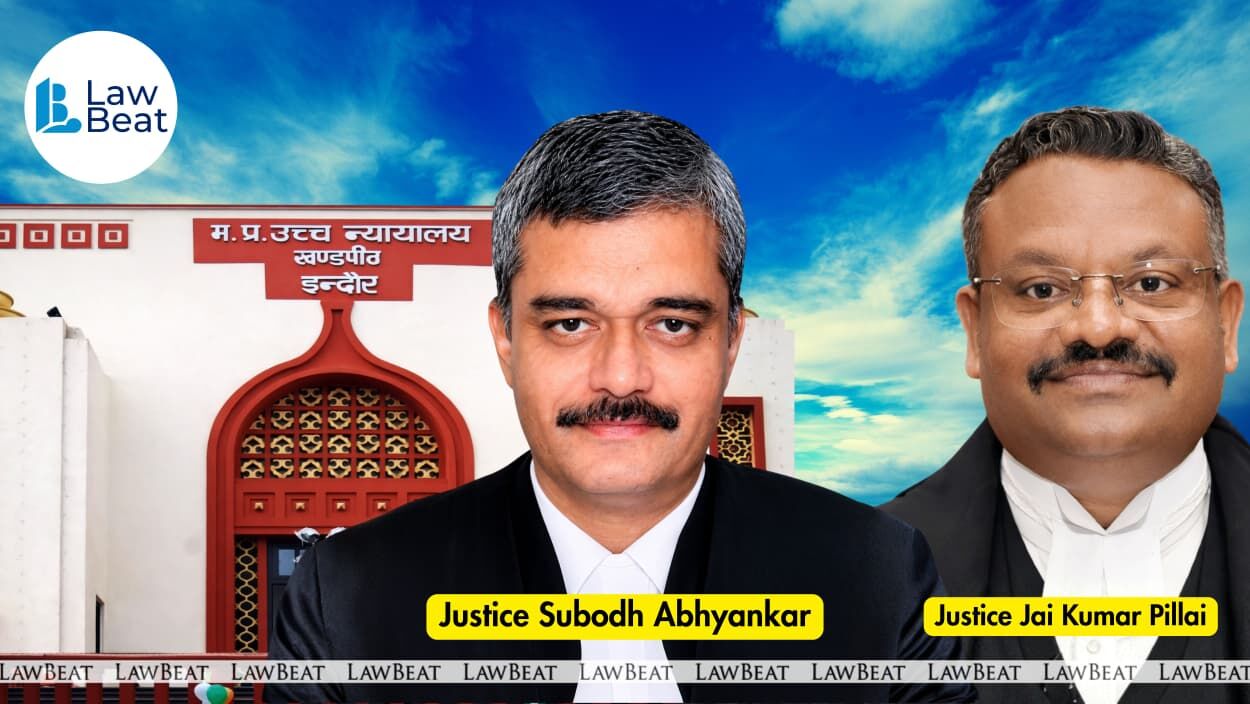
- The case, `Amitabh Upadhyay and Others v. The State of Madhya Pradesh and Others`, was heard by Justice Subodh Abhyankar and Justice Jai Kumar Pillai.
MP High Court Mandates Strict Noise Pollution Enforcement
The court's decision was significantly influenced by recent events that underscored the severity of unchecked noise.
The Madhya Pradesh High Court, sitting at Indore, has issued a directive to state and police authorities, demanding rigorous enforcement of existing noise pollution regulations. This order, delivered on September 24 by a Division Bench comprising Justice Subodh Abhyankar and Justice Jai Kumar Pillai, stems from a petition titled `Amitabh Upadhyay and Others v. The State of Madhya Pradesh and Others`.
The court's decision was significantly influenced by recent events that underscored the severity of unchecked noise. Judges on the bench personally experienced excessive noise levels from loudspeakers during their commute home from court, observing that "in many places the loudspeakers were blasting away all the limits of sound barriers." This personal encounter was compounded by a newspaper report from the previous morning detailing the tragic death of a seven-year-old child in school, attributed to the high-volume speakers of a passing procession. While the court did not make a definitive finding on the incident, it acknowledged it as a stark illustration of the dangers posed by uncontrolled noise.
Despite a detailed reply from the respondents asserting that measures were being taken to curb noise pollution, the court found the administration's assurances unsatisfactory. The bench noted that the pervasive loud noises "could not be heard by the concerned officers of the administration, who are responsible for curbing the same," concluding that "the ground reality appears rather grim." This led the court to reiterate its firm stance, emphasizing the need for immediate and effective action.
Specific Directives and Legal Framework
In its order, the High Court issued several specific directives aimed at enhancing the enforcement of Madhya Pradesh noise pollution laws. Authorities are now mandated to ensure strict compliance with both the Noise Pollution (Regulation and Control) (Amendment) Rules, 2000, and the M.P. Kolahal Niyantran Adhiniyam, 1985. Furthermore, the court called for "appropriate strict measures" to be taken against individuals found in blatant violation of these laws.
Beyond general enforcement, the court emphasized public engagement and transparency. It directed the respondents to publish, in widely circulated daily newspapers, the list of silence zones that had been submitted with their reply. Additionally, the authorities must invite public requests for the declaration of other prominent locations as silence zones, particularly those not included in the initial list. To empower citizens, the court also ordered the publication of complaint and phone numbers, allowing residents to easily report instances of noise pollution. This move is seen as crucial for providing a practical tool to individuals often unsure how to address disturbances from loudspeakers in residential areas, schools, and hospitals.
Heightened Accountability and Future Monitoring
The High Court's directive signals a clear intent for heightened accountability and continuous monitoring of noise pollution enforcement. The bench, which had reserved the matter on September 22 before passing the order on September 24, has demanded that a fresh report detailing compliance efforts be submitted within one week. This short deadline underscores the court's determination to closely oversee progress rather than accepting general claims of adherence to regulations.
This judicial intervention creates a significant precedent for the enforcement of India silence zones loudspeakers regulations across Madhya Pradesh. The court's proactive stance, driven by both personal observation and public reports, indicates a low tolerance for non-compliance and a strong push for a quieter environment. Advocate Abhinav Dhanodkar represented the petitioners, while Government Advocate Pradhymna Kibe, alongside Assistant Commissioner of Police Ashish Patel, appeared for the State. Advocate Rishabh Singh Chouhan represented the MP Pollution Control Board.
Practical Implications
Lawyers and compliance officers in Madhya Pradesh should advise clients to review and ensure strict compliance with noise pollution regulations, as the High Court's directive signals increased enforcement, public awareness through published silence zones and complaint numbers, and potential for stricter penalties for violations.
Source
Source: Original reporting via Live Law
How does this affect you?
Get an AI analysis of this article grounded in your jurisdictions, practice areas, and any policy documents you've uploaded to Wansom.
Finish Reading the Full Story and the Expert Analysis.
Get the latest legal & regulatory intelligence in India
Wansom is AI and can make mistakes.