
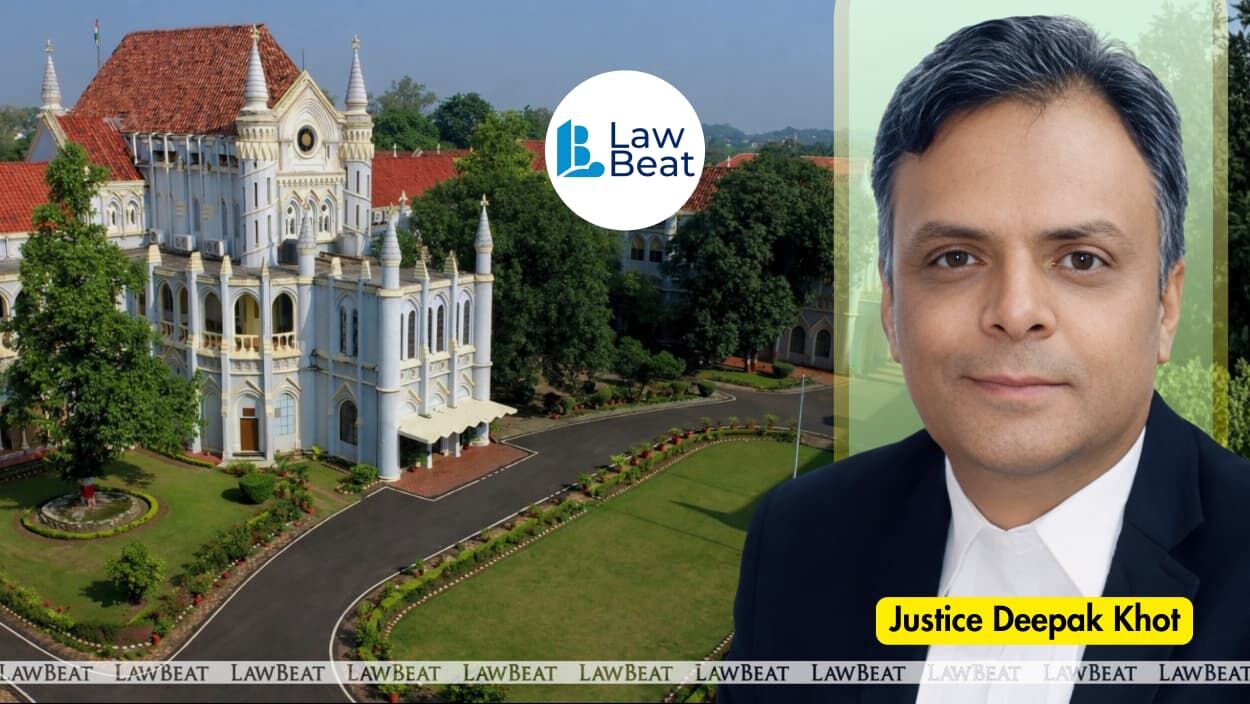
MP High Court: Married Daughter Compassionate Appointment Denial Unconstitutional
Summary
- The Madhya Pradesh High Court quashed the rejection of Shashi Prabha's compassionate appointment application, ruling that denying it solely due to her marital status at her father's death was unconstitutional.
- Shashi Prabha's father died in November 2007; she applied in October 2012 as a divorced daughter after obtaining a court decree in November 2013, but her application was rejected in May 2014.
- The State had cited Clause 2.2 of its August 2008 compassionate appointment policy, which required divorced or widowed daughters to be "wholly dependent" at the time of death.
- Justice Deepak Khot relied on the Full Bench's March 2020 ruling in *Meenakshi Dubey*, which found a similar policy clause unconstitutional, citing Articles 14, 15, 16, and 39(a) of the Constitution.
- The Full Bench had noted that the policy imposed no marital-status restrictions on sons, deeming the "unmarried" requirement for daughters arbitrary and discriminatory.
Court Quashes Denial for Married Daughter
This landmark ruling establishes a clear precedent that denying compassionate appointments to married daughters based solely on their marital status is unconstitutional.
The Madhya Pradesh High Court, sitting at Jabalpur, has recently overturned the rejection of a woman's application for a compassionate appointment, ruling that denying such a position solely because she was married at the time of her father's death is unconstitutional. Justice Deepak Khot delivered the judgment, quashing two separate orders that had previously dismissed the petitioner's claim. This decision reinforces the principle that marital status cannot be a barrier to employment opportunities, particularly in cases of compassionate appointments.
The court's pronouncement underscores a significant step towards gender equality within public employment policies. The petitioner, Shashi Prabha, had sought a compassionate appointment following her father's demise, but her application was initially rejected based on a policy clause that restricted eligibility for married daughters. This ruling sets a crucial precedent for similar cases across the state, ensuring that the Madhya Pradesh compassionate appointment policy aligns with constitutional mandates.
Petitioner's Long Battle for Justice
Shashi Prabha's father, a Head Master at a Government Middle School in Biharipura, passed away on November 5, 2007. At that time, Ms. Prabha was married. She later experienced desertion by her husband, leading to a notarized divorce deed. In October 2012, she applied for a compassionate appointment, presenting herself as a divorced daughter of the deceased employee. Authorities, however, deemed the notarized deed insufficient and demanded a formal divorce decree from a competent court.
Ms. Prabha successfully obtained the required decree through a Lok Adalat in November 2013, during a first appeal before the High Court, and promptly submitted it. Despite this, her application was rejected in May 2014. A subsequent representation in August 2016, in which she highlighted her dependence on her father for six to seven years after her desertion, was also turned down. The State's counsel, Panel Lawyer Shraddha Tiwari, defended these rejections by citing Clause 2.2 of the State's compassionate appointment policy from August 18, 2008, which stipulated that only divorced or widowed daughters who were "wholly dependent" on the deceased at the time of death could be considered. Since Ms. Prabha was married when her father died, the State argued she did not fulfill this condition and therefore had no inherent right to the appointment.
Constitutional Basis and Precedent
Advocate Pravesh Naveriya, representing Shashi Prabha, argued that the State's position was no longer tenable due to a prior Full Bench ruling by the High Court. Justice Khot concurred, noting that the Full Bench, in the case of Meenakshi Dubey vs. M.P. Poorva Kshetra Vidyut Vitran Co. Ltd. and others in March 2020, had already declared an identical policy clause unconstitutional. This landmark decision drew upon the Supreme Court's reasoning in Secretary, Ministry of Defence v. Babita Puniya, which recognized the right of women officers to equality of opportunity, grounded in the non-discrimination principle of Article 15(1) and equality in public employment under Article 16(1) of the Constitution.
Applying these principles, the Full Bench in *Meenakshi Dubey* had explicitly stated that Clause 2.2 of a similar policy dated September 29, 2014, violated Articles 14, 15, 16, and 39(a) of the Constitution of India, specifically because it deprived married daughters of the right to be considered for compassionate appointment. The Full Bench further observed that the policy imposed no similar marital-status condition on sons, labeling the requirement of being "unmarried" for a daughter as "arbitrary and discriminatory in nature." This ruling resolved a difference of opinion among coordinate benches and upheld the Indore Bench's decision to strike down such marriage-based restrictions, thereby solidifying married daughter employment rights in India.
Why It Matters
Relying on this established precedent, Justice Khot concluded that the rejection of Shashi Prabha's claim, based solely on her marital status at the time of her father's passing, was untenable. This landmark ruling establishes a clear precedent that denying compassionate appointments to married daughters based solely on their marital status is unconstitutional. It sends a strong message to government bodies to review and amend their compassionate appointment policies to ensure full compliance with gender equality principles.
This decision has significant implications for gender equality, particularly concerning compassionate appointment policies across India. It affirms that a married daughter cannot be denied a compassionate job on that ground alone, reinforcing the constitutional guarantees of equality and non-discrimination. Lawyers should advise clients facing similar rejections to challenge such discriminatory practices, as the legal framework now firmly supports the rights of married daughters in these circumstances.
Practical Implications
This ruling establishes a clear precedent that denying compassionate appointments to married daughters based solely on their marital status is unconstitutional. Lawyers should advise clients to challenge such rejections and government bodies must review and amend their compassionate appointment policies to ensure compliance with gender equality principles.
Source
Source: Original reporting via Live Law
How does this affect you?
Get an AI analysis of this article grounded in your jurisdictions, practice areas, and any policy documents you've uploaded to Wansom.
Finish Reading the Full Story and the Expert Analysis.
Wansom is AI and can make mistakes.