
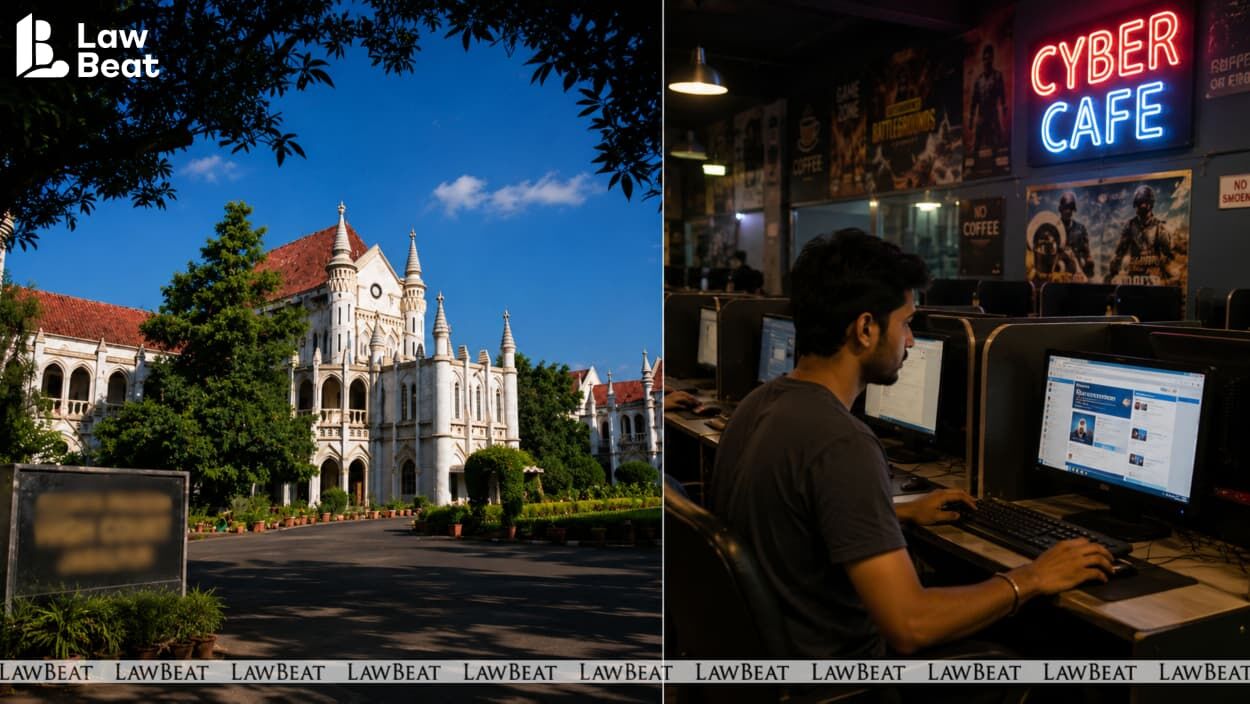
MP High Court: IRCTC Agent Personal ID Not Offence Under Railways Act
Summary
- The Madhya Pradesh High Court quashed a criminal case against an authorised IRCTC agent, Avinash Kumar Soni, who was booked for issuing tickets using his personal ID.
- The court ruled that using a personal ID instead of an agent ID by an authorised agent does not constitute an offence under Section 143 of the Railways Act, 1989.
- Section 143 applies to unauthorised ticketing businesses by non-agents or railway servants, not to contractual breaches by authorised agents.
- The decision relied on Supreme Court precedents clarifying that violations of agency contract terms are civil in nature and do not attract criminal prosecution under this section.
- Justice Himanshu Joshi held that even if the prosecution's allegations were fully accepted, no criminal offence was disclosed as Soni's authorised agent status was undisputed.
Background to the Case
This ruling clarifies that an authorised IRCTC agent using a personal ID instead of an agent ID, while a breach of contract, does not constitute a criminal offence under Section 143 of the Railways Act.
The Madhya Pradesh High Court, specifically its Jabalpur bench, recently intervened in a criminal case against an authorised IRCTC e-ticketing agent, Avinash Kumar Soni. Soni, who operates "Soni Cyber Café" in Singrauli and has held an official IRCTC Agent ID since 2015, faced charges after a raid by the Railway Protection Force (RPF). The RPF alleged that Soni had issued two train tickets—one for the Tata-Jat Express and another for the Durg-Ambikapur Express—using his personal IRCTC login credentials rather than his designated agent ID.
This action led to a criminal case being filed against Soni under Section 143 of the Railways Act, 1989, before the Railway Court in Jabalpur. The core of the accusation revolved around the method of ticket issuance, questioning whether the use of a personal ID by an authorised agent constituted an offence under the specified legal provision.
Legal Arguments Presented
During the proceedings before Justice Himanshu Joshi, Advocate Vishal Daniel, representing Avinash Kumar Soni, contended that the continuation of the criminal case amounted to an abuse of the legal process, asserting that no offence under Section 143 had actually been committed. Daniel highlighted Soni's status as a duly authorised agent, arguing that there was no evidence to suggest he was operating an unauthorised ticketing business. The defense also pointed to inconsistencies in witness statements regarding the date of the RPF raid and claimed Soni was in Varanasi for his studies at the time, with his father allegedly being wrongly detained during the incident.
Conversely, Advocate Sanjay Kumar Patel, appearing for the RPF, opposed the petition. He maintained that the investigation had revealed Soni was issuing Tatkal tickets from his personal ID and was engaged in the business of procuring and supplying tickets for financial consideration. Patel argued that the arrest memo, case diary, and witness statements sufficiently disclosed the commission of an offence. He further submitted that any factual disputes, such as the exact date of the raid, were matters to be resolved during a full trial and not at the preliminary stage of quashing proceedings.
High Court's Interpretation of Section 143
The Madhya Pradesh High Court, in its ruling, meticulously examined the scope of Section 143 of the Railways Act, 1989. The court clarified that this section primarily targets the unauthorised carrying on of the business of procuring and supplying railway tickets, applying specifically to individuals who are either railway employees or those who lack proper authorisation. A critical observation by the court was that the charge-sheet against Soni did not dispute his official status as an IRCTC agent, nor did it allege that his authorisation had been revoked or that he was acting as a tout.
The court emphasized that the central allegation was merely that two tickets were booked through Soni's personal ID instead of his authorised agent ID. It concluded that this specific action did not equate to conducting business without proper authorisation. Drawing upon precedents set by the Supreme Court in cases such as Inspector, RPF vs Mathew K. Cherian and J. Ramesh vs Union of India, the High Court affirmed that Section 143 does not dictate the operational procedures for authorised agents in procuring or supplying tickets to customers. Crucially, it held that a violation of the terms of an agency contract, while potentially a civil matter, does not automatically trigger criminal prosecution under this particular section.
Clarifying Criminal Liability for Agents
Justice Himanshu Joshi ultimately determined that even if the prosecution's entire case were accepted, it failed to establish a criminal offence, given that Avinash Kumar Soni's status as an authorised agent was never in question. The court underscored that Section 143 is not designed to create a distinct criminal offence for every unauthorised action or contractual breach committed by an authorised agent. This ruling clarifies that an authorised IRCTC agent using a personal ID instead of an agent ID, while a breach of contract, does not constitute a criminal offence under Section 143 of the Railways Act.
This decision reinforces the principle that courts must not expand the ambit of a penal statute beyond the precise wording used by the legislature. Consequently, the Madhya Pradesh High Court quashed the criminal case against Avinash Kumar Soni, distinguishing between contractual obligations and criminal liability under the Railways Act. This outcome provides significant clarity regarding the `Section 143 Railways Act 1989 scope` and the conditions under which an `IRCTC authorised agent criminal prosecution` can be pursued, particularly concerning `breach of agency conditions criminal liability`.
Practical Implications
This ruling clarifies that an authorised IRCTC agent using a personal ID instead of an agent ID, while a breach of contract, does not constitute a criminal offence under Section 143 of the Railways Act. Lawyers should advise clients who are authorised agents that such actions are unlikely to lead to criminal prosecution under this specific section, distinguishing between civil contractual breaches and criminal liability.
Source
Source: Original reporting via LiveLaw
How does this affect you?
Get an AI analysis of this article grounded in your jurisdictions, practice areas, and any policy documents you've uploaded to Wansom.
Wansom is AI and can make mistakes.