
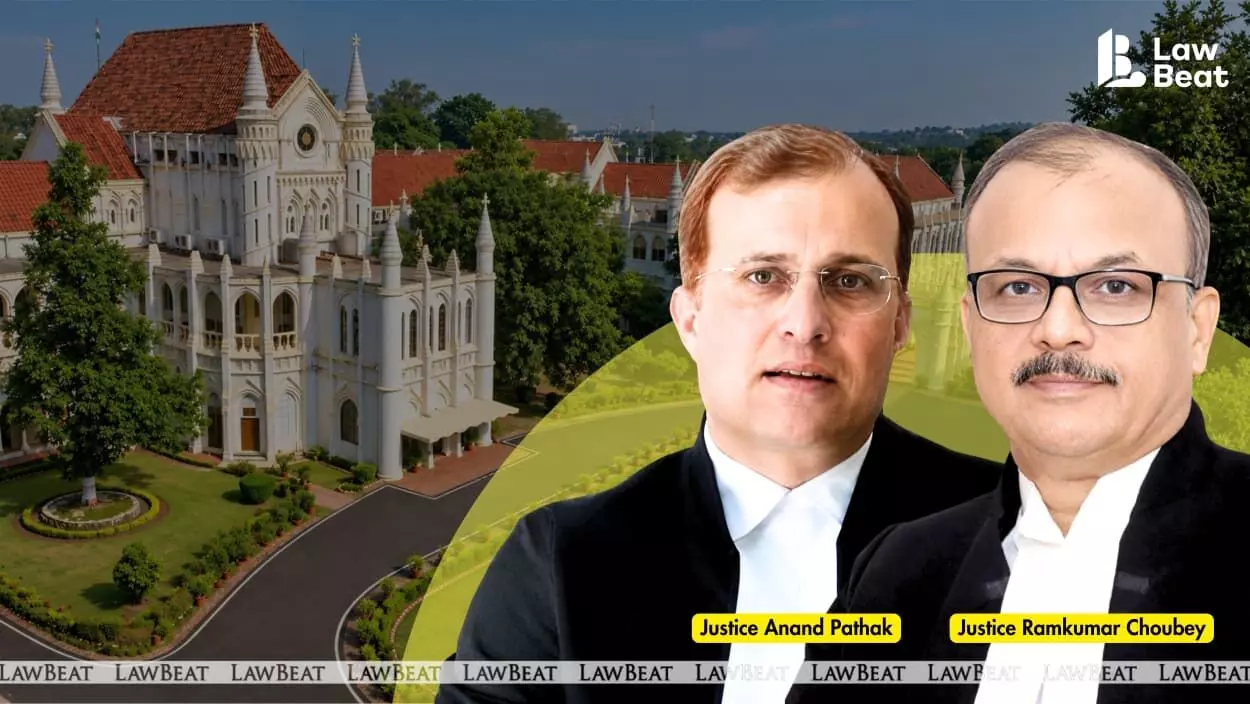
MP High Court: No Immediate Divorce After Restitution Decree for Desertion
Summary
- The MP High Court ruled that a husband cannot seek divorce on desertion within one year of obtaining a restitution of conjugal rights decree.
- The court dismissed an appeal by Lomesh Kumar Bahetwar, who had filed for divorce on grounds including desertion after securing an an ex parte restitution decree.
- Crucially, the restitution decree and its non-compliance were not pleaded as grounds for divorce in the initial petition.
- The court rejected the introduction of new evidence at the appellate stage, emphasizing that "No evidence can be looked into without relevant pleadings."
- Even in uncontested cases, courts must be satisfied that grounds for divorce exist, and a spouse's silence does not automatically prove the petitioner's claims.
What Happened
This ruling strongly reinforces the critical importance of meticulous pleading and evidentiary support for all divorce grounds, as courts will not infer facts or grounds, even in uncontested cases, and will reject attempts to introduce new evidence or grounds at the appellate stage without proper amendment.
The Madhya Pradesh High Court recently affirmed that a spouse who has secured a decree for restitution of conjugal rights cannot immediately pursue a divorce based on desertion without allowing a full year to pass from the date of that decree. This significant ruling came in the case of Lomesh Kumar Bahetwar v Sarita Bahetwar, where a Division Bench comprising Justice Anand Pathak and Justice Ramkumar Choubey dismissed an appeal by the husband, Lomesh Kumar Bahetwar, on October 29, 2026. The appeal challenged a Family Court order from July 26, 2024, which had previously denied his petition for divorce.
The couple, married on December 7, 2009, in Kohka, Gondia, had two children. A tragic event occurred in May 2021 when their son passed away after an illness. According to the husband, his wife subsequently left for her parental home with their daughter in June 2021 and did not return. He initiated divorce proceedings on September 12, 2023, citing cruelty, desertion, and adultery under Section 13(1) of the Hindu Marriage Act, 1955. Notably, an ex parte decree for restitution of conjugal rights had already been issued in his favor on July 1, 2023, preceding his divorce petition. However, neither this existing restitution of conjugal rights decree nor any alleged non-compliance with it was presented as a ground for divorce in his initial application.
Legal Principles and Court's Rationale
The High Court critically observed that the husband appeared to be pursuing contradictory legal paths simultaneously, first seeking to compel his wife's return through a restitution decree, then almost immediately petitioning for divorce on grounds of desertion. The bench emphasized that obtaining a restitution decree signifies an intent to resume marital cohabitation. Consequently, filing for divorce on desertion within a year of such a decree inherently contradicts that expressed intention, as highlighted by the precedent set in Tulsa Bai v. Rajendra Singh. While the court clarified that the decree-holder is not obligated to seek execution, as compliance rests with the other spouse, the statutory one-year period must still elapse before a divorce petition on desertion can be validly filed.
Furthermore, the court firmly rejected the husband's attempt to introduce the restitution decree as evidence at the appellate stage under Order XLI Rule 27 of the Code of Civil Procedure. The judges noted that this document was within his knowledge from the outset, and no amendment to the original petition had ever been sought to include it. The bench reiterated a fundamental legal principle: "No evidence can be looked into without relevant pleadings." The court also clarified that the passage of the one-year period during the pendency of the appeal could not retroactively rectify the absence of proper pleadings in the initial divorce petition.
The Imperative of Meticulous Pleading and Proof
Beyond the procedural issues related to the restitution decree, the High Court meticulously examined the other grounds for divorce presented by the husband. Regarding the allegation of adultery, the court found a complete absence of any pleading or "even an iota of evidence" to substantiate the claim. On the ground of cruelty, the husband's testimony was deemed insufficient, lacking specific factual details and largely describing what the court characterized as the "ordinary wear and tear of married life." For desertion, the bench underscored that mere separate living is not enough; the petitioner must conclusively prove that the spouse left without reasonable cause and with a clear, permanent intent to end cohabitation, defining desertion as "a withdrawal not from a place, but from a state of things." The court also considered the context of the wife's departure, noting she left in "considerable mental anguish" following the loss of their son, after years of living together.
Crucially, the court highlighted that the husband failed to produce several pieces of evidence—including a letter, a counselling-centre application, and a police complaint—before the Family Court. The fact that the wife did not contest the case in either court also did not benefit the husband. The bench cited Section 23(1) of the Hindu Marriage Act, which mandates that courts must be satisfied that a ground for divorce exists, "whether defended or not." Therefore, the wife's silence was explicitly stated not to be, by itself, proof of the appellant’s case. This ruling strongly reinforces the critical importance of meticulous pleading and evidentiary support for all divorce grounds, as courts will not infer facts or grounds, even in uncontested cases, and will reject attempts to introduce new evidence or grounds at the appellate stage without proper amendment.
Practical Implications
Lawyers advising clients on matrimonial disputes in India must be aware that obtaining a decree for restitution of conjugal rights precludes an immediate divorce petition on grounds of desertion; a full year must elapse from the decree. Furthermore, this ruling reinforces the critical importance of meticulous pleading and evidentiary support for all divorce grounds, as courts will not infer facts or grounds, even in uncontested cases, and will reject attempts to introduce new evidence or grounds at the appellate stage without proper amendment.
Source
How does this affect you?
Get an AI analysis of this article grounded in your jurisdictions, practice areas, and any policy documents you've uploaded to Wansom.
Finish Reading the Full Story and the Expert Analysis.
Get the latest legal & regulatory intelligence in India
Wansom is AI and can make mistakes.