
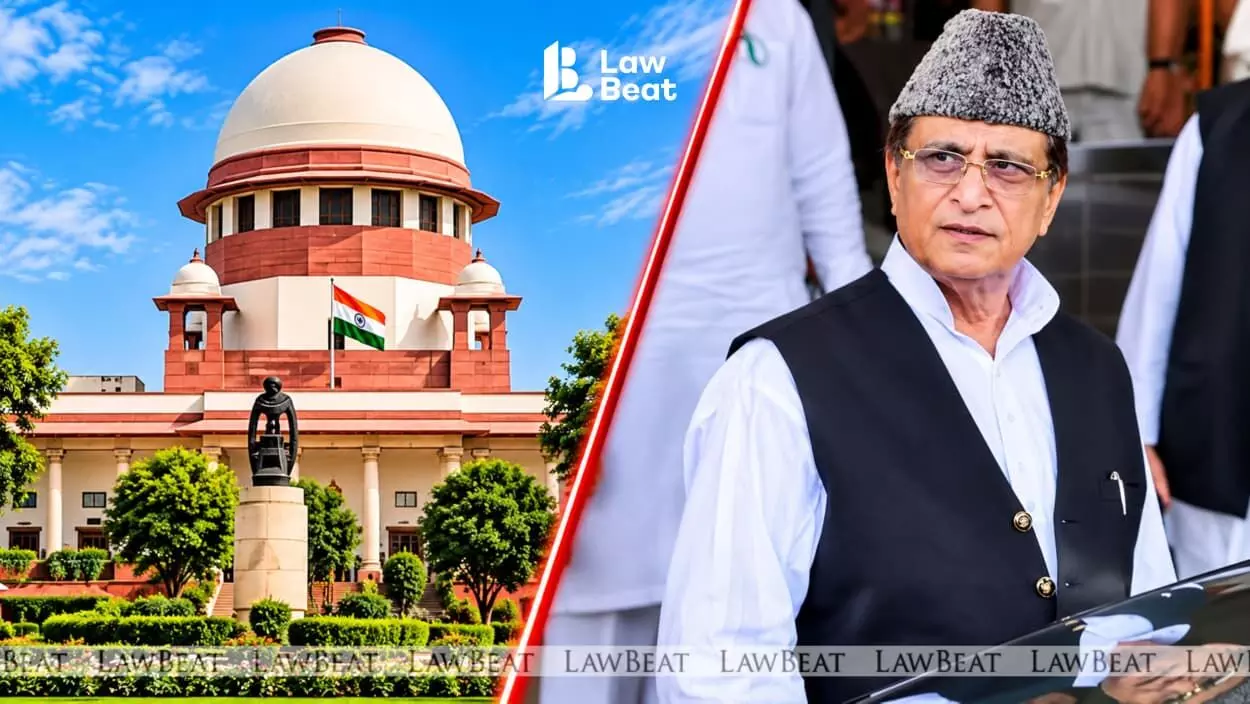
ED Supreme Court: Challenges Azam Khan's Interim Bail in PMLA Case
Summary
- The Enforcement Directorate has challenged the interim bail granted to Samajwadi Party leader Mohd Azam Khan by the Allahabad High Court in a money laundering case.
- The High Court granted bail, observing that the ED prima facie failed to follow mandatory arrest procedures under Article 22(1) of the Constitution and Section 19 of the PMLA.
- The Supreme Court has agreed to hear the ED's plea, which argues that Khan refused to accept the grounds of his arrest.
- The case against Khan involves allegations related to the sale of a Haj Committee plot and the diversion of public funds to Jauhar University.
- This Supreme Court review will clarify procedural requirements for PMLA arrests and the interpretation of constitutional rights during investigations.
What Happened
The Supreme Court's impending decision in this case holds significant implications for the interpretation and enforcement of the Prevention of Money Laundering Act, particularly concerning arrest procedures.
The Enforcement Directorate (ED) has escalated its legal challenge to the Supreme Court, contesting the interim bail granted to Samajwadi Party leader Mohd Azam Khan in a money laundering case. This move follows a decision by the Allahabad High Court, which found that the ED had, on a preliminary assessment, failed to adhere to the mandatory procedural requirements outlined in Article 22(1) of the Constitution and Section 19 of the Prevention of Money Laundering Act (PMLA) during Khan's arrest. The High Court's ruling prompted the ED to seek intervention from the apex court, arguing that the interim bail was granted as if it were a final order.
Additional Solicitor General SV Raju presented the ED's case before a Supreme Court bench led by Chief Justice of India Surya Kant, asserting that Khan had refused to accept the grounds of his arrest. The ED also highlighted the High Court's observation that the arrest, occurring as Khan was being released from jail, appeared to be in bad faith. However, Justice Joymalya Bagchi, also on the bench, remarked that "Heavens will not fall. Let him remain on interim bail," before the Court ultimately agreed to schedule a hearing for the following day to consider the matter further.
Legal Context and High Court's Findings
The Allahabad High Court's decision to grant interim bail hinged on the investigative agency's alleged non-compliance with fundamental legal safeguards. Article 22(1) of the Constitution mandates that any individual taken into custody must be promptly informed of the reasons for their arrest and afforded the right to legal counsel and defense. Concurrently, Section 19 of the PMLA empowers an authorized ED officer to effect an arrest if there is a reasonable belief, based on available material, that the person has committed an offense under the Act. Crucially, this section requires that the reasons for such belief be documented in writing and the grounds of arrest communicated to the individual.
Justices Rajiv Gupta and Devendra Singh, comprising the High Court bench, specifically noted that the ED's remand application, filed on November 1, 2026, contained no mention of video-recording Khan's arrest on October 31, 2026. This omission was a key factor in the court's determination of prima facie procedural lapses. Khan's initial writ petition sought a declaration that his October 31, 2026, arrest was unlawful and requested the annulment of the November 1, 2025, remand order issued by the Special Judge, Anti-Corruption, CBI, Ghaziabad, along with his immediate release. Senior Advocate Kapil Sibal represented Khan in the High Court, following a directive from the Supreme Court on November 5 to transfer the matter to the Allahabad High Court, with the apex court explicitly refraining from commenting on the case's merits at that stage.
Background of the Allegations
The money laundering case against Mohd Azam Khan stems from a series of allegations and investigations. On September 8, 2026, the Uttar Pradesh Vigilance Establishment registered a First Information Report (FIR) against Khan. This action followed an inquiry initiated in May 2024 concerning the alleged irregular sale of a plot of land belonging to the UP State Haj Committee in Aishbagh, Lucknow, during Khan's tenure as its chairman.
Subsequently, on October 10, the Enforcement Directorate formally requested the UP Director General of Police, under Section 66(2) of the PMLA, to register an FIR regarding the alleged diversion of public funds to Jauhar University between 2013-14 and 2016-17. This led to the registration of an FIR on October 14 at the Azeem Nagar police station in Rampur, citing various sections of the BNS, 2023, and the Prevention of Corruption Act, 1988. On the same day, the ED recorded Khan's statement under Section 50 of the PMLA while he was held at Rampur District Jail. Further expanding its investigation, on October 19, the ED issued an addendum to its existing ECIR/07/LKZO/2019, incorporating 29 additional FIRs, including the one registered on October 14. It is noteworthy that Khan had previously secured relief from various courts in some of these related cases. The ED's actions culminated in a provisional attachment order issued on October 28.
Why It Matters
The Supreme Court's impending decision in this case holds significant implications for the interpretation and enforcement of the Prevention of Money Laundering Act, particularly concerning arrest procedures. Lawyers and compliance officers should closely monitor the outcome, as it will provide crucial clarification on the mandatory procedural requirements for arrests under the PMLA and the judicial interpretation of constitutional safeguards like Article 22(1). This ruling is expected to offer critical guidance on how to challenge instances of procedural non-compliance by investigative agencies such as the Enforcement Directorate.
The resolution of this matter will not only impact defense strategies for clients facing similar charges but will also establish important precedents for due process in financial crime investigations across India. A definitive ruling from the Supreme Court will shape the operational conduct of law enforcement bodies and reinforce the rights of individuals during the arrest process, ensuring a balance between effective investigation and constitutional protections.
Practical Implications
Lawyers and compliance officers should closely monitor the Supreme Court's decision in this case, as it will clarify the mandatory procedural requirements for arrests under the Prevention of Money Laundering Act (PMLA) and the interpretation of Article 22(1) of the Constitution. This ruling will provide critical guidance on challenging procedural non-compliance by investigative agencies like the ED, impacting defense strategies for clients facing similar charges and setting precedents for due process in financial crime investigations.
Source
How does this affect you?
Get an AI analysis of this article grounded in your jurisdictions, practice areas, and any policy documents you've uploaded to Wansom.
Finish Reading the Full Story and the Expert Analysis.
Get the latest legal & regulatory intelligence in India
Wansom is AI and can make mistakes.