
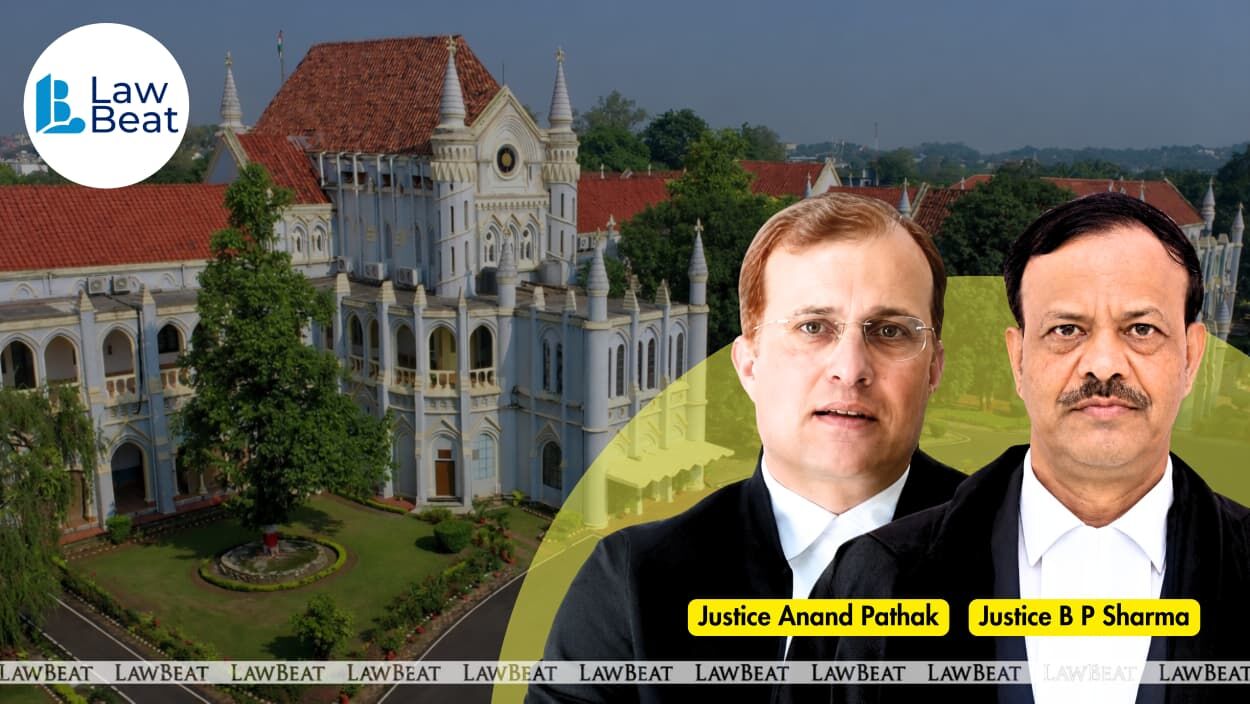
MP High Court: Dismisses PIL on Governor Term Continuance
Summary
- The Madhya Pradesh High Court dismissed a PIL seeking a new Governor, affirming that an incumbent can continue beyond their five-year term.
- The court's decision relied on Article 156(3) proviso, which mandates a Governor remains in office until a successor takes charge.
- This interpretation prevents a constitutional vacuum, aligning with the Supreme Court's ruling in *Krishna Ballabh Sahay*.
- The PIL was also noted for a procedural lapse, as the petitioner failed to disclose his bona fides as a public-spirited citizen.
- The ruling clarifies that a Governor's five-year term does not automatically necessitate their removal from office.
What Happened
This ruling provides critical clarity on the constitutional interpretation of a Governor's term under Article 156(3), confirming that an incumbent can lawfully continue beyond the five-year period until a successor is appointed.
The Madhya Pradesh High Court recently dismissed a Public Interest Litigation (PIL) that sought the appointment of a new Governor for the state. The petition, filed by Dr. M.A. Khan, a retired Professor from Jawahar Lal Nehru Krishi Vishwa Vidyalaya, Jabalpur, argued that the incumbent Governor had served beyond the constitutionally prescribed five-year term, with his tenure reportedly expiring on July 7, 2026.
Advocates Ajay Shankar Raizada and Abhimanyu Singh, representing the petitioner, contended that the Governor, as a crucial constitutional functionary and Kuladhipati of the university, should be replaced due to the alleged lapse of his term. They suggested that the Chief Justice of the Madhya Pradesh High Court could assume the gubernatorial role. The PIL specifically sought a directive to the Secretary to the President of India and other respondents to facilitate this change.
Legal Context and Constitutional Interpretation
A Division Bench comprising Justice Anand Pathak and Justice B.P. Sharma heard the writ petition. The Union of India, represented by Additional Solicitor General Suneel Jain, Deputy Solicitor General S.M. Guru, and advocate Kurian J. Verghese, along with Deputy Advocate General Abhijeet Awasthi for the state, opposed the petition. They asserted that under the Constitution, a Governor remains in office until a successor is appointed, rendering the PIL both premature and unsustainable.
The High Court's decision hinged on a meticulous interpretation of Article 156 of the Constitution. While sub-clause (3) indeed stipulates a five-year term for a Governor, the crucial proviso to this article mandates that "a Governor shall, notwithstanding the expiration of his term, continue to hold office until his successor enters upon his office." The court emphasized that this specific language definitively resolves any questions regarding the legality of a Governor continuing beyond the fixed term.
To bolster its interpretation, the bench referenced the Supreme Court's precedent in *Krishna Ballabh Sahay and Others vs. Commission of Inquiry and Others*. In that case, a similar challenge to a Governor's continued tenure beyond the five-year period was rejected. The Supreme Court's reasoning, adopted by the Madhya Pradesh High Court, underscored that this proviso is essential to prevent a constitutional vacuum, ensuring that no state is ever left without a Governor, as stipulated by Article 153. This mechanism avoids any interregnum by allowing the outgoing Governor to remain until a new appointee is sworn in.
Procedural Considerations and Court's Rationale
Beyond the substantive constitutional arguments, the High Court also identified a procedural deficiency in the PIL. The bench noted that Dr. M.A. Khan had not adequately disclosed his bona fides as a public-spirited citizen, a requirement under Chapter 10 Rule 27 and Chapter 13A Rule 13 of the High Court of Madhya Pradesh Rules, 2008, for regular public interest litigation. This lack of disclosure was flagged as a lapse.
Despite this procedural observation, the court proceeded to examine the merits of the plea, ultimately deeming it "misconceived." The bench concluded that the constitutional framework itself provides a clear answer to the petitioner's concerns, explicitly outlining the continuity of the Governor's office. The court reiterated that a vacuum in the gubernatorial post is not contemplated under the Constitution, reinforcing that the proviso to Article 156(3) ensures seamless transitions.
Why It Matters
This ruling provides critical clarity on the constitutional interpretation of a Governor's term under Article 156(3), confirming that an incumbent can lawfully continue beyond the five-year period until a successor is appointed. It unequivocally establishes that the five-year term for a Governor in India does not trigger an automatic exit from office. This decision reinforces the principle of preventing a constitutional vacuum, ensuring uninterrupted governance at the state level.
The Madhya Pradesh High Court's judgment underscores the importance of the Article 156(3) proviso Governor, which serves as a safeguard against any interregnum in a vital constitutional role. It also subtly highlights the procedural requirements for filing PILs, reminding petitioners of the need to adhere to established rules regarding disclosure of bona fides. This precedent offers valuable guidance for understanding the legal continuity of gubernatorial office and avoiding challenges based solely on term expiry.
Practical Implications
This ruling provides critical clarity on the constitutional interpretation of a Governor's term under Article 156(3), confirming that an incumbent can lawfully continue beyond the five-year period until a successor is appointed. Lawyers advising on constitutional law, public appointments, or governmental transitions should be aware of this precedent to understand the legal continuity of gubernatorial office and avoid misconceived challenges based solely on term expiry. It also subtly reinforces the procedural requirements for filing PILs.
Source
Source: Original reporting via LiveLaw
How does this affect you?
Get an AI analysis of this article grounded in your jurisdictions, practice areas, and any policy documents you've uploaded to Wansom.
Finish Reading the Full Story and the Expert Analysis.
Get the latest legal & regulatory intelligence in India
Wansom is AI and can make mistakes.