
MP High Court: FIR Not Substantive Evidence, Reinstates Insurer Liability
Summary
- The Madhya Pradesh High Court ruled that an unproven First Information Report (FIR) is not substantive evidence.
- An FIR cannot override corroborated eyewitness testimony, especially in motor accident claims.
- The court set aside a Tribunal's finding that had exonerated an insurance company in a fatal tractor accident.
- The ruling emphasized that an FIR's contents must be formally proven in court to hold weight against direct evidence, as per Section 148 of the Bharatiya Sakshya Adhiniyam, 2023.
- This decision restores insurer liability based on eyewitness accounts, clarifying the limited evidentiary value of an FIR in India.
What Happened
The Madhya Pradesh High Court has unequivocally stated that an unproven First Information Report cannot, by itself, be treated as substantive proof of how an accident occurred, particularly when it stands contradicted by sworn eyewitness testimony.
The Madhya Pradesh High Court recently intervened in a fatal motor accident case, overturning a Motor Accident Claims Tribunal's decision that had previously exonerated an insurance company. The incident, which occurred on October 11, 2016, involved the death of Ramcharan Verma during a Durga idol immersion procession at Saraswati Ghat. According to the claimants, Verma was dancing on the road when he was tragically run over by a tractor, driven by Pramod Yadav, due to the driver's rash and negligent actions.
However, a First Information Report (FIR) lodged by the deceased's uncle, Bedilal, presented a conflicting account, stating that Ramcharan was sitting on the tractor and died after falling from it and coming under its wheel. The VI Additional Motor Accident Claims Tribunal in Jabalpur relied heavily on this FIR version. Consequently, the Tribunal concluded that the deceased was a gratuitous passenger on a vehicle insured solely for agricultural purposes, thereby absolving the insurance company of liability and placing the responsibility squarely on the tractor's owner and driver.
This finding prompted the tractor's owner, Anil Kumar Patel, to challenge the Tribunal's award before the High Court under Section 173(1) of the Motor Vehicles Act, 1988, seeking to reinstate the insurer's liability. The appeal brought into sharp focus the evidentiary value of an FIR when contradicted by direct testimony in motor accident claims.
The High Court's Analysis
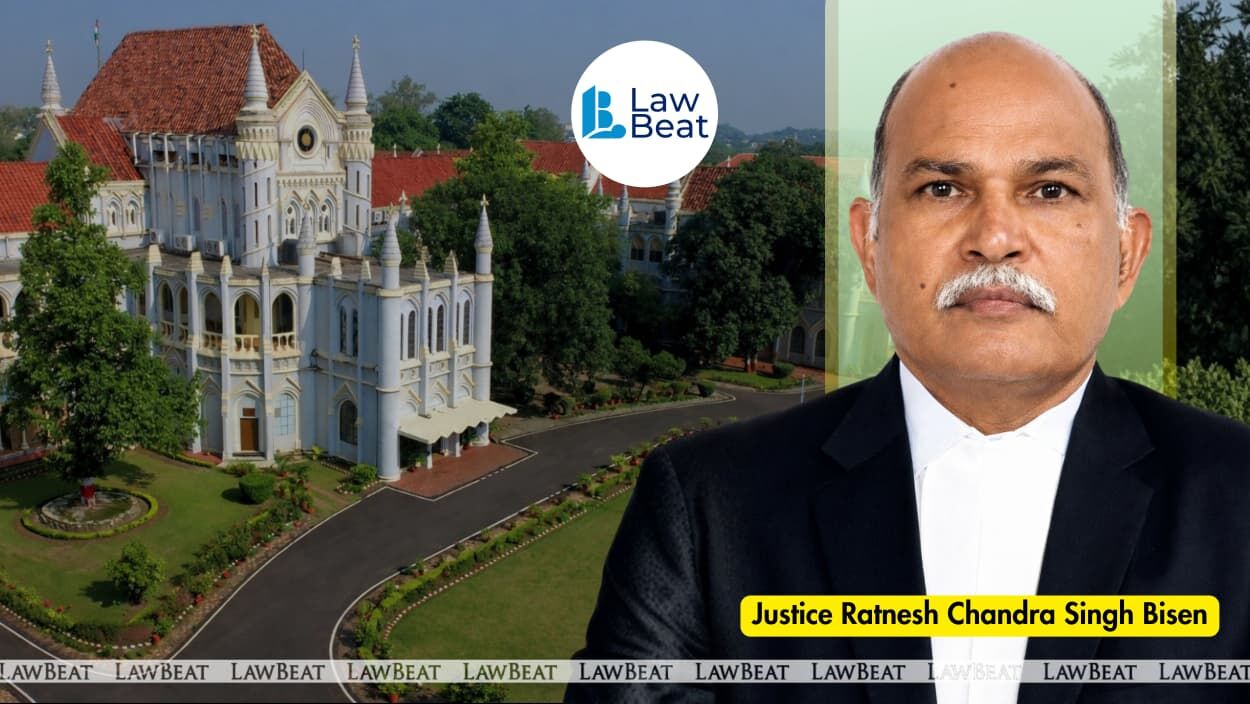
Justice Ratnesh Chandra Singh Bisen, presiding over the appeal, meticulously reviewed the evidence presented. A pivotal aspect of the High Court's consideration was the eyewitness testimony of Ram Verma alias Ashu, who had been dancing alongside the deceased and sustained injuries himself during the incident. The court noted that Ashu's account remained robust and unshaken throughout cross-examination, with his presence at the scene further corroborated by his own injuries.
Crucially, the High Court observed that the insurer had failed to present any eyewitness or to examine the author of the FIR to substantiate the claim that the deceased was seated on the tractor. The court emphasized that merely because a statement is contained within an FIR, it does not automatically render that statement proven. This highlights a critical aspect of **FIR evidentiary value India**, particularly in the context of **Motor Accident Claims Tribunal evidence**, where direct, proven testimony holds significant weight over unverified initial reports. The court underscored that an FIR is not a substantive piece of evidence on its own.
Legal Precedent and Evidentiary Value
The Madhya Pradesh High Court has unequivocally stated that an unproven First Information Report cannot, by itself, be treated as substantive proof of how an accident occurred, particularly when it stands contradicted by sworn eyewitness testimony. The court reiterated that an FIR's primary role is for corroborative purposes or for contradiction under Section 148 of the Bharatiya Sakshya Adhiniyam, 2023, not as independent proof of facts. This ruling firmly establishes that **MP High Court FIR not substantive evidence** is a key principle.
Advocate Arvind Chawla, representing the appellant, successfully argued that evidence presented before the Tribunal should take precedence over the FIR, citing the Supreme Court's three-judge bench ruling in *Halappa v. Malik Sab*. While Advocate Aditya Narayan Sharma, for the insurer, referenced *Oriental Insurance Company Limited v. Premlata Shukla* to support reliance on an exhibited FIR, the High Court distinguished this case. It held that since *Premlata Shukla* was decided by a two-judge bench, the principle established by the larger three-judge bench in *Halappa* would prevail. Furthermore, the court noted that the final police report, which recorded the deceased and the injured witness dancing on the road when struck by the tractor, aligned with the eyewitness account, and a charge-sheet under Section 106 of the Bharatiya Nyaya Sanhita, 2023 had been filed against the driver.
Why It Matters
This significant ruling by the Madhya Pradesh High Court clarifies a crucial point regarding the **FIR evidentiary value India** in accident claims. By setting aside the Tribunal's award that had exonerated the insurer, the court reaffirmed that an unproven FIR cannot override credible and corroborated eyewitness testimony. The Tribunal's error lay in accepting the unproven FIR version over direct evidence, leading to an incorrect assessment of **insurer liability motor accident claims India**.
The decision underscores the imperative for parties in motor accident claims to present robust direct evidence and to thoroughly cross-examine opposing testimony. It serves as a vital reminder that while an FIR initiates the legal process, its contents require formal proof in court to be considered substantive evidence, especially when challenged by direct accounts. This judgment provides important guidance for legal practitioners and insurance companies handling such cases, emphasizing the need to focus on the strength of direct evidence rather than solely relying on initial police reports.
Practical Implications
This ruling clarifies that an unproven FIR is not substantive evidence and cannot override corroborated eyewitness testimony in motor accident claims. Lawyers and compliance officers handling such cases in India must prioritize robust presentation and cross-examination of direct evidence, rather than solely relying on an FIR, to establish or contest liability and insurer exoneration.
Source
How does this affect you?
Get an AI analysis of this article grounded in your jurisdictions, practice areas, and any policy documents you've uploaded to Wansom.
Finish Reading the Full Story and the Expert Analysis.
Wansom is AI and can make mistakes.