
MP High Court: Addresses DRT Presiding Officer Absence, Borrower Relief
Summary
- The Madhya Pradesh High Court ordered a bank to unlock a borrower's home after the Debt Recovery Tribunal (DRT) was non-functional due to a vacant presiding officer.
- Borrower Vinod Dwivedi's interim relief application before the DRT could not be heard, leading him to seek extraordinary relief from the High Court.
- The court emphasized that a litigant cannot suffer due to a tribunal's vacancy and noted the borrower's severe personal and financial difficulties.
- The relief is conditional on Dwivedi providing a written undertaking that the protection will cease if the DRT eventually denies interim relief.
- The High Court explicitly stated this was an "exceptional case" and not to be considered a precedent, yet it provides a critical avenue for relief.
Background of the Dispute
A litigant should not be made to suffer simply because a legally established forum is temporarily vacant.
The Madhya Pradesh High Court at Indore recently intervened in a case where a borrower, Vinod Dwivedi, faced the seizure of his family home under the Securitisation and Reconstruction of Financial Assets and Enforcement of Security Interest (SARFAESI) Act, despite the Debt Recovery Tribunal (DRT) being non-functional due to a vacant presiding officer position. Dwivedi, a transport business owner, secured a housing loan of Rs 13,61,902 from IIFL Housing Finance Limited in April 2017. His payments were consistent until 2020, when the COVID-19 pandemic severely impacted his business, leading to missed installments.
Further compounding his difficulties, Dwivedi's wife, Ranjana Dwivedi, passed away on February 22, 2024, after battling cancer. He himself suffered a heart attack in October 2024 and remains under medical treatment. The bank initiated SARFAESI proceedings, culminating in an ex-parte order from the Chief Judicial Magistrate, Indore, on December 16, 2025, for possession of the property. Dwivedi contended he never received the demand notice, and a notice to vacate was affixed to his house on February 27, 2026. On April 28, 2026, while he was away for his daughter's wedding, the bank locked his residence.
Stalled Remedies and High Court Intervention
Following the seizure, Dwivedi initially approached the High Court in W.P. No. 18463/2026. On May 15, 2026, the court directed him to deposit ten percent of the outstanding dues and instructed the DRT, Jabalpur, to hear his interim relief application without any coercive action in the interim. Dwivedi complied, depositing Rs 1,16,000. However, his application (S.A. 599/2026) before the DRT was never heard because the post of Presiding Officer remained vacant, rendering the tribunal inoperative.
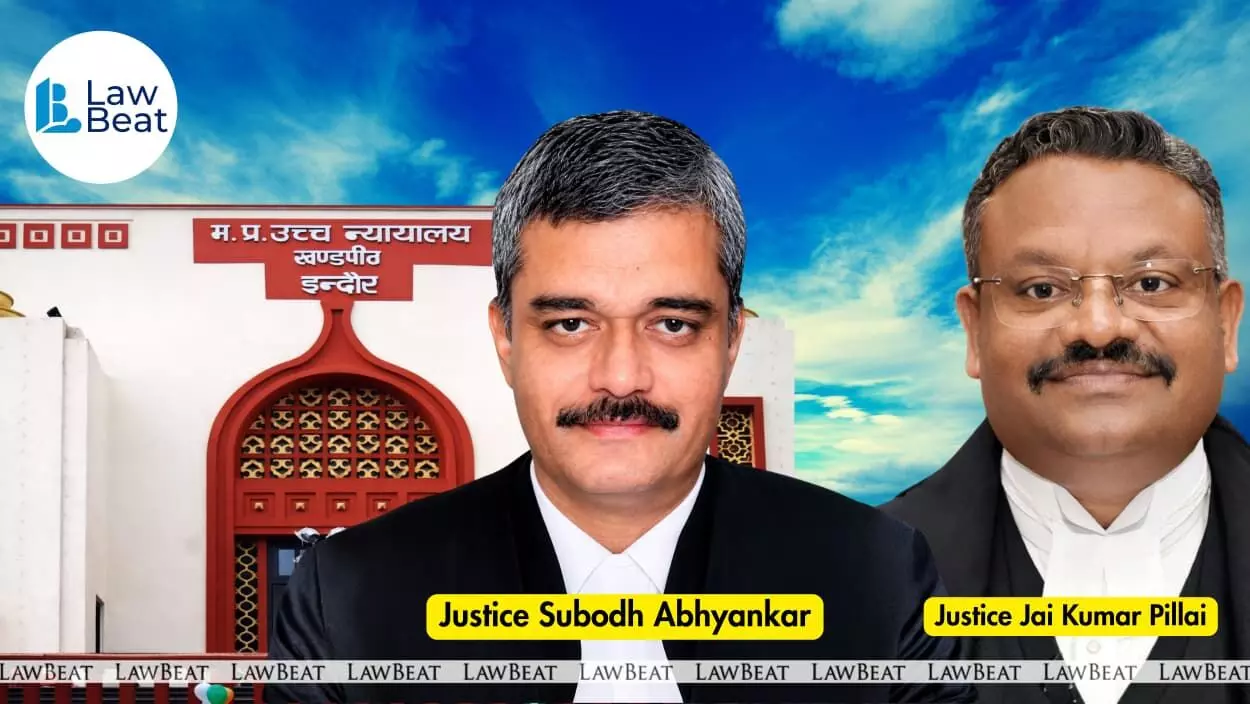
His subsequent writ petition, W.P. No. 32763/2026, seeking relief due to the DRT's non-functionality, was dismissed by a Single Judge. This led Dwivedi to file a writ appeal before a Division Bench comprising Justice Subodh Abhyankar and Justice Jai Kumar Pillai. His advocate, Anil Kumar Namdev, argued that proper notice was not served, the outstanding installment amount was only Rs 2,60,712, and his client was prepared to settle the loan. The core of the argument was that with the DRT non-functional, Dwivedi was left without any effective remedy, a situation the bank, represented by counsel, opposed, asserting that demand notices were duly issued and the Magistrate's order was lawful.
Court's Rationale and Conditional Relief
The Division Bench acknowledged that Dwivedi had deposited the required amount and observed that the DRT had taken no action, leaving his interim relief application pending through no fault of his own. The court emphatically stated that a litigant should not be made to suffer simply because a legally established forum is temporarily vacant. It concluded that the Single Judge had erred by dismissing the petition without adequately considering the severe practical difficulties faced by Dwivedi, and also noted that the exceptional medical history of his family, particularly his wife's cancer, had not been given due consideration.
Consequently, the Madhya Pradesh High Court ruled that Dwivedi deserved protection until the DRT could issue a final order. The court directed the bank to immediately unlock the property and restore possession to Dwivedi. This relief, however, was made conditional upon Dwivedi filing a written undertaking with the High Court Registry within three working days. This undertaking must explicitly state that the protection granted by the High Court would automatically cease if the DRT ultimately declines to grant him interim relief.
Implications of the Decision
While the High Court explicitly labeled this as an "exceptional case" and clarified that it should not be treated as a precedent, its ruling provides a critical avenue for borrowers facing similar predicaments. The decision underscores the judiciary's role in ensuring access to justice when statutory mechanisms, like the Debt Recovery Tribunal, become inaccessible due to administrative vacancies. It highlights that even in the face of SARFAESI Act proceedings, the fundamental right to a remedy cannot be denied due to systemic failures.
This ruling from the Madhya Pradesh High Court offers a significant point of reference for individuals and their legal representatives when a Debt Recovery Tribunal is non-functional. It demonstrates that extraordinary relief from a High Court may be sought to prevent undue hardship and ensure that a litigant is not left without recourse, particularly when their property is at stake and the designated forum for redress is unavailable.
Practical Implications
Lawyers representing borrowers facing SARFAESI Act proceedings should note that the Madhya Pradesh High Court has established a precedent for seeking extraordinary relief from the High Court when a Debt Recovery Tribunal (DRT) is non-functional due to a vacant presiding officer position. This ruling provides a critical avenue for clients to obtain interim protection, such as unlocking seized property, when statutory remedies are stalled, despite the court noting it as an 'exceptional case'.
Source
Source: Original reporting via Live Law
How does this affect you?
Get an AI analysis of this article grounded in your jurisdictions, practice areas, and any policy documents you've uploaded to Wansom.
Finish Reading the Full Story and the Expert Analysis.
Get the latest legal & regulatory intelligence in India
Wansom is AI and can make mistakes.