
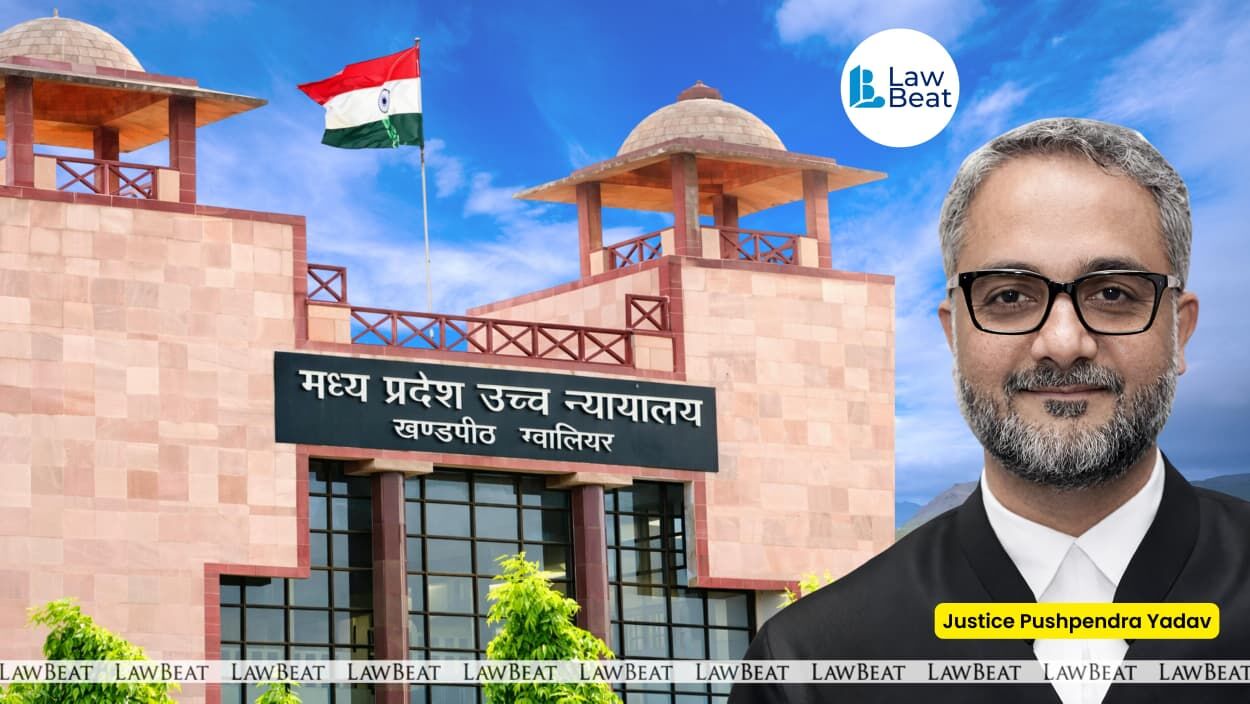
MP High Court: Denies Stalking Charges Discharge for Doctor
Summary
- The MP High Court at Gwalior upheld charges against Surendra Kirar for abetment of suicide, rape, stalking, and sexual harassment.
- The court found sufficient material to raise a "grave suspicion" for framing charges, rejecting the accused's discharge application.
- Defense arguments, including the absence of a suicide note and a prior acquittal, were dismissed as insufficient to warrant discharge.
- The court emphasized that consent and instigation are matters for trial, not to be decided at the preliminary stage.
- Evidence included a DNA match, witness accounts of stalking and obscene messages, and the victim's prior complaints of mental torture.
High Court Upholds Serious Charges
The High Court's decision underscores the critical "grave suspicion" standard applied during the charge-framing stage in criminal proceedings.
The Madhya Pradesh High Court, sitting in Gwalior, has affirmed the framing of multiple serious criminal charges against a doctor accused of abetting a woman's suicide, along with allegations of rape and stalking. Justice Pushpendra Yadav, in a ruling issued on October 13, 2026, dismissed a criminal revision petition filed by Surendra Kirar, a BAMS doctor and Community Health Officer. Kirar had sought to overturn a February 24, 2025, decision by the III Additional District and Sessions Judge in Vidisha, which had rejected his application for discharge and proceeded to frame charges under Sections 306, 376, 354-D, and 354-A of the Indian Penal Code.
The High Court concluded that the evidence presented in the case generated "a grave suspicion" regarding the accused's involvement in the alleged offenses. This standard is crucial at the charge-framing stage, indicating that the court found sufficient preliminary material to proceed to trial. The court emphasized that questions pertaining to consent in the context of the rape charge and instigation concerning the abetment of suicide charge are complex factual matters that must be thoroughly examined during a full trial, rather than being decided prematurely at the discharge stage.
Allegations of Persistent Harassment and Violence
The case originated following the death by suicide of a woman on January 28, 2023. Her family members subsequently reported that Surendra Kirar had subjected her to continuous harassment, including stalking and sending obscene messages, which they contended led to her tragic death. Initially, an First Information Report (FIR) was lodged under Section 306 IPC, pertaining to abetment of suicide. However, the scope of the investigation expanded significantly after a vaginal slide report revealed the presence of human sperm. This new evidence prompted the addition of further charges, specifically Section 376 (rape), Section 354-D (stalking), and Section 354-A (sexual harassment).
The prosecution, represented by Public Prosecutor Vikram Pippal and Advocate Mahendra Singh Yadav, presented a compelling narrative of the alleged events. They highlighted a DNA report from RFSL Bhopal, which reportedly matched a profile found on the woman's clothing to Kirar's blood sample. Furthermore, witness testimonies detailed repeated instances of stalking and the sending of offensive messages. Crucially, a transfer application filed by the woman on July 28, 2022, was cited, in which she had explicitly complained of mental torture and threats directed at her children, painting a picture of prolonged and severe distress. The court also noted specific allegations that Kirar had entered the woman's room while intoxicated, assaulted her, destroyed her mobile phone, and issued threats to kill her parents and children, as well as to disseminate intimate videos of her. He was also accused of intercepting her on her way to work and persistently contacting her from various phone numbers despite being blocked.
Court Rejects Defense Claims
Surendra Kirar's defense, led by Advocate Sanjay Gupta, argued for his client's discharge, asserting that he had been falsely implicated due to pre-existing animosity. The defense contended that the absence of a suicide note from the deceased woman should preclude the abetment charge, arguing that mere harassment or a dispute does not constitute instigation. Regarding the rape allegation, Kirar's counsel maintained that while sperm and a matching DNA profile were present, these facts alone did not negate consent, suggesting the relationship was consensual. The defense also pointed to Kirar's acquittal in November 2022 in an earlier case initiated by the same woman, implying a pattern of false accusations. Additionally, the defense highlighted that a Cyber Cell report concerning a seized mobile phone was not yet part of the official record.
The High Court systematically addressed and rejected each of these defense arguments. It ruled that the mere absence of a suicide note is insufficient grounds for discharge, stating that whether the alleged conduct amounted to instigation, whether criminal intent (mens rea) existed, and whether there was a direct link to the suicide are all complex questions requiring a full trial. On the rape charge, the court found that the sperm report, DNA profiling, and other material collectively established a "grave suspicion," sufficient for framing the charge. It deemed any attempt to determine consent at this preliminary stage as a "premature 'mini-trial'." Furthermore, the court clarified that Kirar's previous acquittal stemmed from "distinct allegations" and therefore did not bar the consideration of the current evidence. The pending Cyber Cell report, the court noted, could not, by itself, serve as a basis for discharge.
The "Grave Suspicion" Standard and Its Significance
The High Court's decision underscores the critical "grave suspicion" standard applied during the charge-framing stage in criminal proceedings. This principle dictates that for charges to be framed, the court does not require conclusive proof of guilt but rather sufficient material to raise a strong suspicion that the accused may have committed the offense. The court specifically referenced Supreme Court precedents on instigation, including *Ramesh Kumar v. State of Chhattisgarh* and *Chitresh Kumar Chopra v. State (Govt of NCT of Delhi)*, to support its finding that the alleged conduct was not an isolated incident but a sustained pattern over time.
This ruling reinforces that an earlier acquittal on different charges or the lack of a suicide note does not automatically warrant the discharge of an accused, especially when other compelling evidence suggests a pattern of criminal behavior. The court's refusal to conduct a "mini-trial" on consent at this preliminary stage highlights the judiciary's commitment to ensuring that serious allegations, particularly those involving multiple offenses like abetment of suicide, rape, and stalking, are thoroughly adjudicated through a full trial process. The emphasis on the cumulative nature of the alleged harassment and the high bar for dismissing charges at the outset provides important guidance for legal practitioners on the robust evidentiary requirements needed to challenge charge framing successfully.
Practical Implications
Lawyers should note the MP High Court's emphasis on the 'grave suspicion' standard for framing charges, particularly in cases involving multiple serious offenses like abetment of suicide, rape, and stalking. This ruling clarifies that prior acquittals on distinct allegations or the absence of a suicide note do not automatically warrant discharge, reinforcing the high bar for dismissing charges at the preliminary stage and the importance of presenting robust evidence to meet the 'grave suspicion' threshold.
Source
How does this affect you?
Get an AI analysis of this article grounded in your jurisdictions, practice areas, and any policy documents you've uploaded to Wansom.
Finish Reading the Full Story and the Expert Analysis.
Get the latest legal & regulatory intelligence in India
Wansom is AI and can make mistakes.