
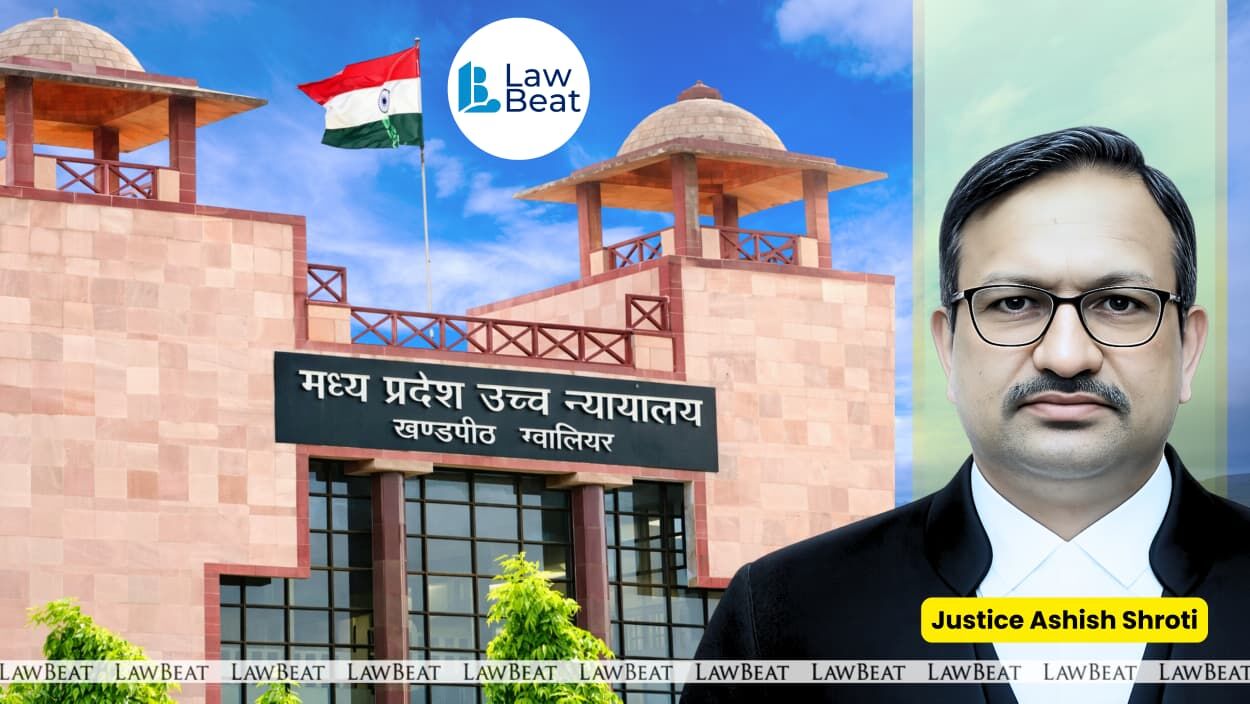
MP High Court: Denies Consolidation, Clarifies Suits Requirements
Summary
- The Madhya Pradesh High Court refused to consolidate two ice factory liquidation suits with a family property partition suit.
- Justice Ashish Shroti dismissed a civil revision, affirming the Principal District Judge's decision against consolidation.
- The court found that the parties, cause of action, and relief sought in the two sets of suits were entirely different.
- The ruling emphasized that a common broader family dispute is not sufficient for consolidation under CPC Section 24.
- The decision applied the Supreme Court's `Chitivalasa Jute Mills vs. Jaypee Rewa Cement` precedent, requiring substantial similarity of issues.
Consolidation Request Denied by Madhya Pradesh High Court
The Madhya Pradesh High Court underscored that the critical requirements for consolidation of suits were not met in this instance.
The Madhya Pradesh High Court, specifically its Gwalior Bench, recently declined a request to consolidate two civil suits pertaining to the liquidation of a family-owned ice factory with an existing, broader family property partition suit. Justice Ashish Shroti dismissed a civil revision application, affirming an earlier decision by the Principal District Judge, Gwalior, which had rejected the consolidation of these distinct legal actions.
The underlying dispute stems from properties accumulated by Prakash Chandra Bhargava, the grandfather of respondent Piyush Bhargava. These assets included several family enterprises such as M/s Gwalior Ice Factory, M/s Bhargava Industries in Bhopal, M/s Refrigeration Industries, and M/s The Ice Machinery Mart. Piyush Bhargava had initiated Civil Suit No.445-A/16 before the 11th Additional District Judge, Gwalior, seeking a declaration of his share and partition of these extensive family holdings. Separately, he also filed Civil Suit No.07-A/18 before the 15th Civil Judge, Junior Division, Gwalior, specifically targeting the liquidation and account rendition of M/s Gwalior Ice Factory.
Applicant Parveen Bhargava had filed a similar action, Civil Suit No.701-A/17, also seeking the liquidation and accounts of the ice factory. These two suits, both focused on the ice factory, had already been consolidated. Parveen Bhargava then sought to further consolidate these already-clubbed ice factory suits with the overarching family partition suit by filing an application under Section 24 of the Code of Civil Procedure (CPC), registered as MJC No.149/2026. This application was rejected by the Principal District Judge, Gwalior, on July 31, 2026, leading to the High Court revision.
Legal Arguments and Judicial Scrutiny
During the High Court proceedings, Advocate Prashant Singh Kaurav, representing Parveen Bhargava, contended that there was substantial similarity in both the parties and properties involved across all three suits. He argued that the lower court had erred in its assessment that consolidation would deprive parties of their right to a single appeal. Kaurav asserted that even if the consolidated suits were decided by the District Judge, the litigants would still retain their right to appeal before the High Court, urging the court to set aside the impugned order.
However, Justice Shroti undertook a meticulous examination of the plaints filed in each case. The court observed that Civil Suit No.445-A/16, the partition suit, encompassed a wide array of family properties, with the ice factory being merely one component among many. In stark contrast, the other two suits (Civil Suit No.07-A/18 and Civil Suit No.701-A/17) were strictly confined to the specific issues of liquidation and rendition of accounts pertaining solely to M/s Gwalior Ice Factory. This fundamental difference in scope proved critical to the court's decision.
Precedent and the Criteria for Consolidation
The Madhya Pradesh High Court underscored that the critical requirements for consolidation of suits were not met in this instance. Justice Shroti explicitly stated that "not only the parties but also the cause of action and the relief prayed for, are entirely different" across the two sets of legal actions. The court found that the issues requiring adjudication and the nature of evidence necessary for each set of suits were fundamentally distinct; one involved the partition of diverse family properties, while the others focused on the liquidation and financial accounting of a specific business entity.
In reaching its conclusion, the court referenced the Supreme Court's authoritative ruling in `Chitivalasa Jute Mills vs. Jaypee Rewa Cement`. This landmark judgment established that `consolidation of suits CPC Section 24` is permissible when there is "complete or even substantial and sufficient similarity of the issues arising for decision in two suits," primarily to prevent parties from having to present identical evidence multiple times. Applying this test, the High Court determined that the evidence required for the partition suit would revolve around family properties, whereas the liquidation suits would necessitate evidence related to the firm's dissolution and account rendition, thus lacking the requisite similarity for `clubbing of civil suits India`.
Implications for MP High Court Consolidation Suits Requirements
This ruling from the Madhya Pradesh High Court Gwalior Bench provides significant clarity on the `MP High Court consolidation suits requirements`. It firmly establishes that while a common broader dispute may exist, it is insufficient grounds for consolidating disparate legal actions. The court's decision emphasizes that for `consolidation of suits CPC Section 24` to be granted, a stringent standard of `similarity of parties cause of action relief` must be met.
The judgment reinforces that the mere fact that suits originate from the same family dispute does not automatically warrant their consolidation. Instead, courts will meticulously examine the specific details of each case, including the exact parties involved, the precise legal basis for the claim (cause of action), and the particular remedies sought (relief). This precedent highlights that a fundamental divergence in these elements will preclude the `clubbing of civil suits India`, even if such consolidation might appear superficially convenient.
Practical Implications
This ruling clarifies that for consolidation of suits, strict similarity in parties, cause of action, and relief is paramount, even if suits stem from a common broader dispute. Lawyers must ensure their applications for consolidation, or arguments against it, rigorously meet these specific criteria, providing a clear precedent for trial strategy.
Source
Source: Original reporting via Live Law
How does this affect you?
Get an AI analysis of this article grounded in your jurisdictions, practice areas, and any policy documents you've uploaded to Wansom.
Finish Reading the Full Story and the Expert Analysis.
Get the latest legal & regulatory intelligence in India
Wansom is AI and can make mistakes.